
by Michael Horton
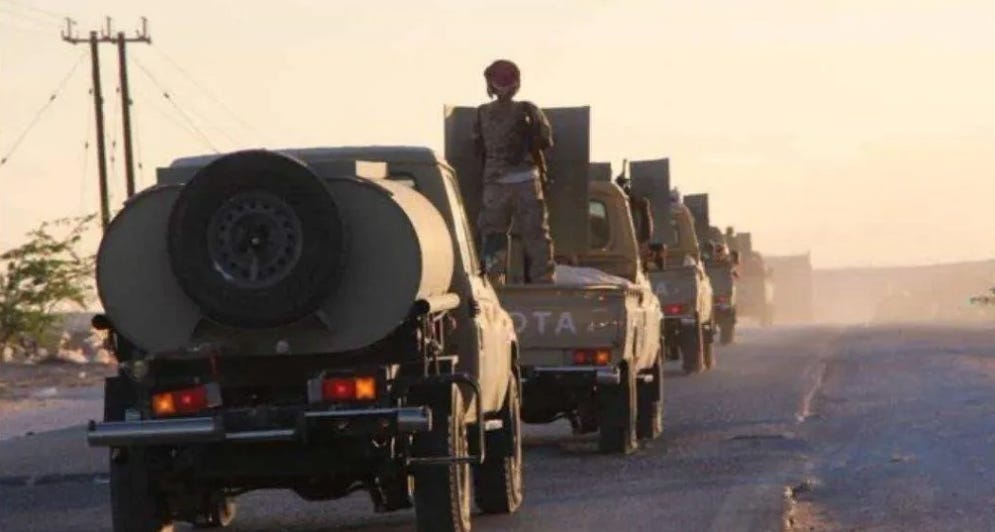
In late 2025, Yemen’s Southern Transitional Council (STC) launched “Operation Promising Future.” The well-planned offensive rapidly seized territory held by forces allied with Yemen’s Internationally Recognized Government (IRG). By December 8, the flag of the formerly independent south Yemen flew over almost all of the territory that once made up the People’s Democratic Republic of Yemen (PDRY). The STC’s lightning-fast advance caught IRG forces off guard and evicted them from Yemen’s two largest governorates, Hadramawt and al-Mahra.
The STC’s goal was clear: move from de facto separation from the north to something more formal and durable. However, the STC and its primary backer, the United Arab Emirates (UAE), underestimated Saudi Arabia’s willingness to tolerate the usurpation of its influence in the Hadramawt and al-Mahra. Saudi Arabia has long regarded both governorates, but especially Hadramawt, as vital security buffers. Israeli recognition of Somaliland, a formerly independent state that subsequently joined Somalia, followed the STC’s move to seize all of the territory of the former PDRY. Israeli recognition of Somaliland set off more alarm bells in Riyadh.
The Kingdom issued multiple warnings to the STC and, more quietly, to the leadership of the UAE about crossing non-negotiable red lines. The STC refused Riyadh’s request to withdraw its forces. The refusal, even more than the initial offensive, marked a major strategic miscalculation by the STC and the UAE. The miscalculation is reshaping Yemen and may have awakened a sleeping regional giant.
A Do-Over in Yemen?
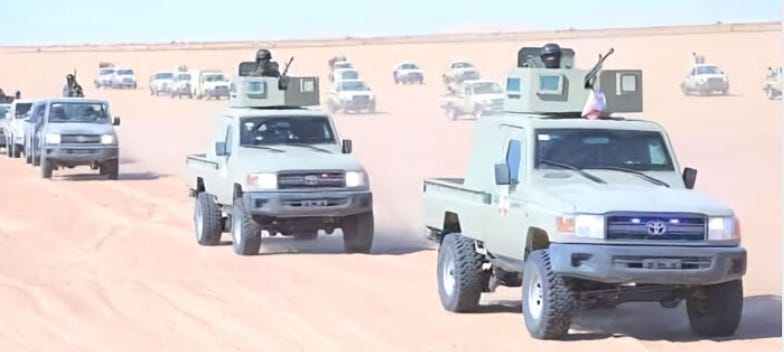
On January 2, the Saudi-backed National Shield Forces (NSF) launched a counter-offensive initially focused on northern Hadramawt. In early 2023, Saudi Arabia helped create, fund, and train the NSF. These forces, drawn from pre-existing less formal military units, operate under the command of the Yemeni president. Before the formation of the NSF, the president did not directly command any military forces. The lack of direct command was due in large part to Yemen’s fractured status and the April 2022 creation of the Presidential Leadership Council (PLC). President Alimi headed the eight-member council, but unlike many other members, did not enjoy direct command of armed forces.
The NSF was the tip of the spear for the counter-offensive. Within days, the NSF and allied units swept across Hadramawt and the neighboring governorate of al-Mahra. The Royal Saudi Air Force (RSAF) provided air support. However, the air support was limited and highly disciplined. Six days after launching the counter-offensive, NSF and allied forces had retaken control of Hadramawt and al-Mahra and were moving to secure Aden. STC-allied forces fled, shifted loyalties, and or returned to their home districts. The rapid collapse of the STC followed the late December withdrawal of Emirati advisors and CT units from Yemen. After warnings from Riyadh, the UAE withdrew its personnel from the Yemeni mainland and the island of Socotra.
While there are no vetted casualty numbers, casualties among STC militias are likely fewer than 400 killed. Low casualties were an objective of the Saudi-backed campaign. Where possible, RSAF used flares and ordinance as deterrents rather than directly targeting STC formations. NSF commanders issued warnings and negotiated surrenders first; only after negotiations failed did they engage STC forces.
This Saudi-backed NSF-led counter-offensive stands in contrast to the Saudi-led Operation Decisive Storm launched against Yemen’s Houthi rebels in 2015. Operation Decisive Storm relied heavily on air power, unreliable Yemeni allies, and failed to achieve its core objective of restoring the legitimate Yemeni government to power. In comparison, the counter-offensive had the clearly defined aim of clearing Hadramawt and al-Mahra of STC forces with minimal casualties to STC militias and civilians. Additionally, the Saudis imposed strict limits on engaging targets where there was a risk of harming civilians or damaging private property and infrastructure. The Saudis incorporated many lessons from Operation Decisive Storm and, so far, have achieved and exceeded the objectives of the counter-offensive.
Reshaping Yemen
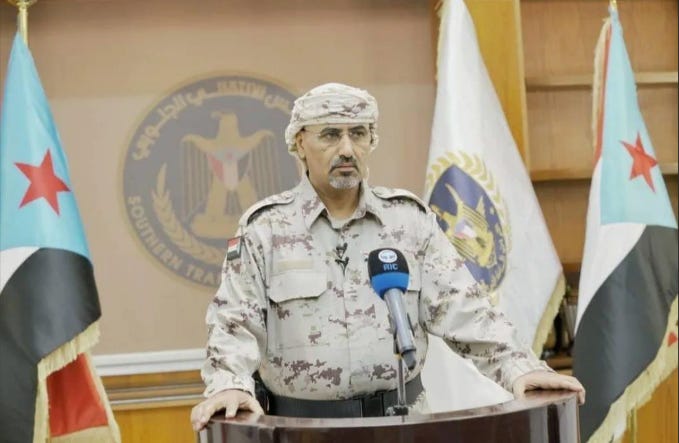
On January 7, the president of the STC, Aidarous al-Zubaidi, fled Yemen, traveling first by boat to Berbera, Somaliland, and then flying via Mogadishu to exile in the UAE. Zubaidi refused Saudi demands that he join the other members of the STC on a flight to Riyadh. Most of the STC’s senior leadership traveled to Riyadh, where they agreed to dissolve the STC. At the same time, NSF units moved to secure all of Aden as well as military bases in multiple governorates that the STC and its allies formerly held.
On the strategically important island of Socotra, Emirati assets were removed, and direct flights from Socotra to Abu Dhabi were cancelled. They will be replaced with flights to the Yemen mainland and Saudi Arabia. Before the end of December, tourists could secure visas through Emirati-licensed tour operators and then fly directly to the island from the UAE. Many Yemenis viewed this as a violation of Yemeni sovereignty. The Yemeni government cancelled the licenses of Emirati companies operating in Socotra, and these companies are evacuating staff and assets.
Building momentum to reassert sovereignty, the Internationally Recognized Government of Yemen (IRG) is establishing mechanisms to re-centralize command of all military units in the areas it controls. Clear chains of command greatly aided the NSF during the counter-offensive. In contrast, fractured chains of command were a feature of STC-allied forces. Many of the commanders of STC-allied units regarded their particular units as private armies. IRG-allied forces face similar issues. However, there are indications that, with firm Saudi backing, the IRG is taking decisive action to assert full authority over military units and militias operating in non-Houthi-controlled areas. If these efforts are successful, they could reshape the martial realities in much of Yemen. However, the window for asserting IRG authority is narrow, and many officers—often self-appointed—who oversee a complex array of quasi-formal military units and hybrid militias will contest these efforts.
Rapid recentralization of authority over military units is critical to sustaining momentum behind the IRG’s attempt to unify areas outside of Houthi control. The dissolution of the STC and the UAE’s removal of its advisors and CT units risk creating security vacuums in vulnerable governorates like Abyan and Shabwa, where AQAP is active. STC-allied militias were engaged in a bloody war against AQAP operatives and smugglers—often the same—in Abyan, Shabwa, and southern Hadramawt. AQAP and the Houthis, which maintain relations with AQAP, will exploit these vacuums. Both organizations will also work to exploit southern grievances.
The defeat of the STC and the reassertion of IRG authority across south Yemen risks sparking a new insurgency that pits well-armed southern separatists against IRG forces. Separatist sentiment remains undiminished across the south. To address this, Saudi Arabia will host a series of dialogues in Riyadh to address southern grievances. However, southerners are unlikely to be satisfied with dialogues alone. Power sharing and significant improvements in governance, security, and economic opportunities will be required to reduce the risk of a return to violent resistance to IRG rule in the south.
Saudi Arabia will need to walk a fine line between backing the IRG, which is required, and not being viewed as a hegemon imposing its will on a weaker neighbor and, in particular, on southerners. Worryingly, there are reports that a Saudi team visiting Shabwa was targeted by an Improvised Explosive Device (IED) on January 13.
Regional Spillover
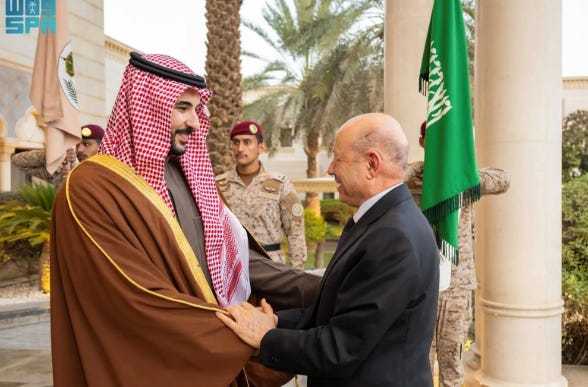
Saudi Arabia’s decisive actions in response to STC moves in Yemen are reverberating well beyond Yemen. The Kingdom has, almost overnight, replaced its subtle and often quiet behind-the-scenes foreign policy with one that is active and robust. Saudi Arabia markedly increased its efforts to aid the Government of Sudan in its fight against the Emirati-backed Rapid Support Forces (RSF) and has condemned Israeli recognition of Somaliland, where the Emirates is a key supporter and investor. Following Israeli recognition of Somaliland, Saudi Arabia increased the tempo and depth of its engagement with the Somali government. On January 12, the government of Somalia annulled all agreements with the UAE. The UAE has long-standing interests in semi-autonomous Puntland, located in northern Somalia, where a DP World subsidiary runs the port of Bossaso.
Saudi Arabia, in coordination with Egypt, which supports the government of Sudan, is also exerting pressure on multiple nations in the Horn of Africa to restrict access to their airspace for cargo flights originating from the UAE. This is an attempt to impede Emirati efforts to deliver supplies to the RSF. The Emirates is a major investor in Egypt. However, the UAE’s support for the RSF and for Ethiopia has led to a cooling of relations between Cairo and Abu Dhabi. On January 9, reports suggested that Saudi Arabia is considering financing the Sudanese government’s purchase of Chinese-designed JF-17 jets and other weapons from Pakistan. Saudi backing, along with enhanced support from Egypt, will almost certainly shift the balance of power in Sudan decisively in favor of the government.
Efforts to deepen cooperation with Turkey and Qatar are also ongoing as the Kingdom explores expanding the defense pact it signed with Pakistan in the wake of the Israeli bombing of Hamas operatives in Doha in September 2025.
Outlook
Except for its 2015 intervention in Yemen, Saudi foreign policy is most often cautious, methodical, and plodding. The Kingdom’s successful backing of the IRG’s counter-offensive in Yemen, along with the linked actions and responses in the region, mark a break with history. After repeated warnings to both the STC and the UAE, the Saudi government acted decisively to reassert its influence in Yemen and in the broader region. The counter-offensive in Yemen and the subsequent dissolution of the STC provide the Yemeni government with what may be its last chance to re-centralize command and control over military forces and reunify Yemen. However, as the Saudis learned in their failed intervention in 2015, Yemen’s political, tribal, and military terrain is fiendishly complex. It favors spoilers as much as it disfavors outside intervention. To sustain momentum in Yemen, the Saudis will need to deftly manage perceptions among Yemenis, especially southerners, while firmly guiding a government that has a history of enervating divisions and mismanagement. At the same time, the Kingdom will be navigating a rapidly changing regional security environment beset with brittle regimes.
About the Author:
Michael Horton is the co-founder of Red Sea Analytics International (RSAI) and a contributing author at Eurasia Outlook. He has two decades of experience as an analyst and researcher in Yemen and the Red Sea region. Michael has written policy briefs and conducted briefings and seminars for the US National Security Council, the British Foreign Ministry, the British Ministry of Defense, the US State Department, and senior members of the British Parliament and the US Congress. He has written extensively about the region for Jane’s Intelligence Review, the Combating Terrorism Center at West Point, Oxford Analytica, The Economist, and other publications.
Thank you for your support! Please remember that The Saratoga Foundation is a non-profit 501(c)(3) organization. Your donations are fully tax-deductible. If you seek to support The Saratoga Foundation, you can make a donation by clicking on the PayPal link below! Alternatively, you can also choose to subscribe on our website to support our work.
https://www.paypal.com/donate/?hosted_button_id=XFCZDX6YVTVKA
Thanks for reading! This post is public, so feel free to share it.