
By Fuad Shahbazov
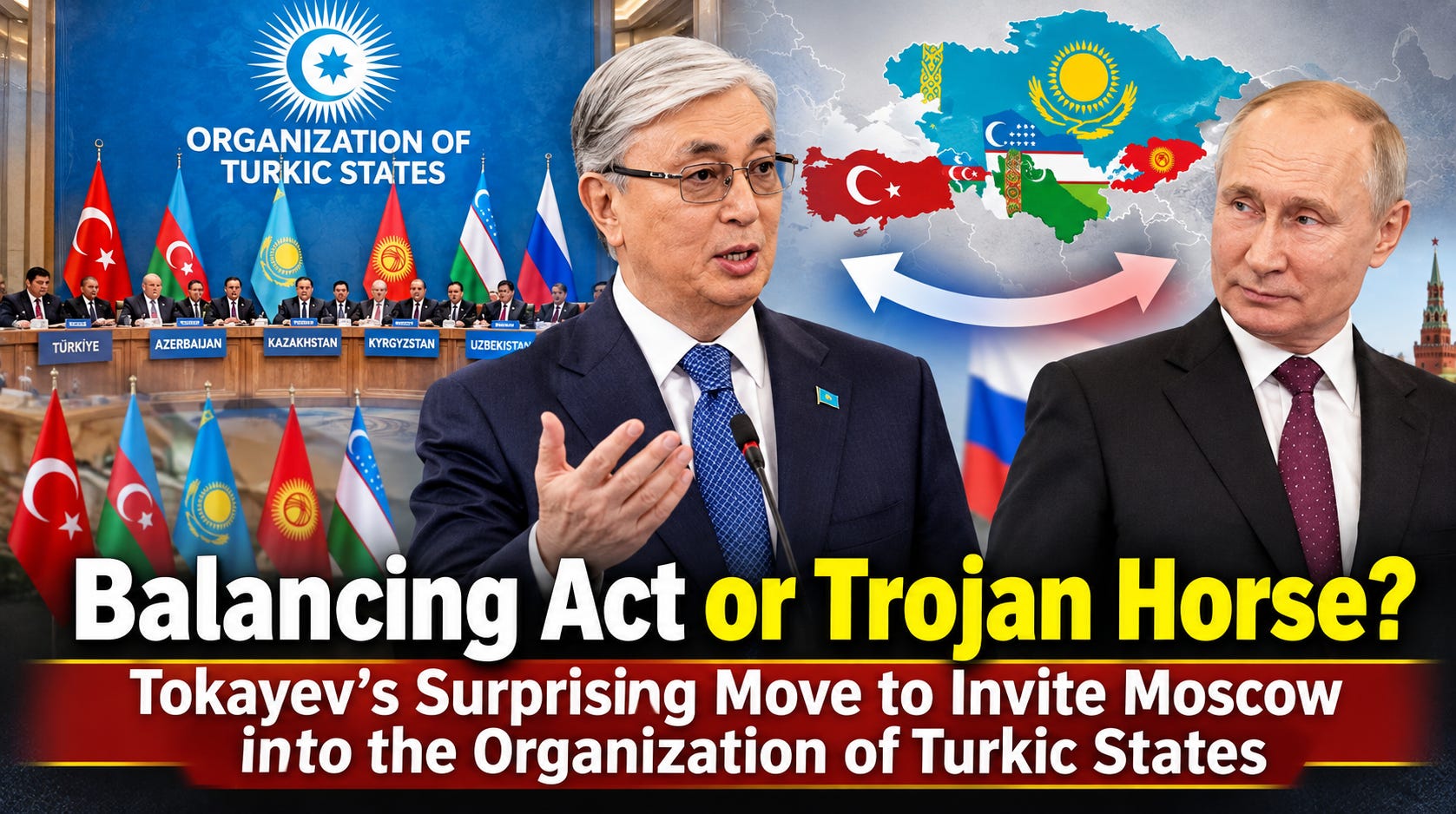
On October 30, members of the Organization of Turkic States (OTS) gathered together in Ankara for the leaders’ 13th annual summit, as the main agenda was about deepening strategic, economic, and cultural integration among member and observer states.
Originally established in October 2009 as the Cooperation Council of Turkic Speaking States (commonly known as the Turkic Council), the Organization of Turkic States (OTS) was officially renamed the Organization of Turkic States on November 12, 2021, during its 8th Summit in Istanbul. The OTS brings together Türkiye, Azerbaijan, Kazakhstan, Kyrgyzstan, and Uzbekistan as full members, and fosters enhanced cooperation across a wide range of strategically important sectors, including the economy, energy, trade, education, tourism, and culture.
Since 2021, the OTS has rapidly evolved into an influential interregional organization spanning the broader Eurasian region, providing its members with an alternative platform for cooperation independent of major regional powers such as Russia and China. However, this issue could be on the verge of changing. During the recent OTS summit in Ankara, Kazakhstan President Kassym Jomart Tokayev made a surprise decision to invite Russia into the organization through the OTS Plus mechanism as an observer. Indeed, such a proposal stirred debates within the organization and beyond regarding the motivations behind Tokayev’s proposal.
President Tokayev justified his announcement by stating that “Russia has maintained centuries-old historical and cultural ties with the Turkic world, is home to many indigenous Turkic populations.” While the Russian authorities enthusiastically reacted to such news, the Kazakh proposal drew sharp criticism within the Turkic community as the organization’s main charter requires an observer state to recognize a Turkic or related language as an official nationwide language, a criterion Russia does not meet. Moreover, the criticism among Turkic states stems mainly from the fact that, with the gradual involvement, Russia may quickly absorb the OTS and turn it into a Russia-centric entity.
Diplomatic protocol generally requires such initiatives to be discussed within the organization before being announced publicly. In this case, however, it appears unlikely that Astana conducted prior consultations with any of the other member states before putting forward its proposal. Azerbaijan and Türkiye seem confident that Russia’s involvement in the OTS will not give the entity a particular impulse, given that Russia is already engaged with some of these Turkic states through the Eurasian Economic Union (EAEU) and the Collective Security Treaty Organization (CSTO). Conversely, Russian involvement in the OTS could result in the delay of implementation of important initiatives within the regional format. Unsurprisingly, Russia reacted positively to Tokayev’s proposal, claiming that Russia’s participation in OTS is entirely understandable and appropriate.
Tokayev’s Balancing Act
At the same time, President Tokayev’s unexpected proposal can largely be understood through the prism of Astana’s broader balancing strategy and its commitment to maintaining stable relations with Moscow. Despite periodic divergences in their foreign policy agendas, Kazakhstan continues to value constructive ties with Russia, not least because of the sizable ethnic Russian population residing in the country’s northern regions, which have occasionally been referenced in territorial claims and revisionist rhetoric by certain Russian nationalist figures.
On the other hand, Tokayev’s statement might have been influenced by a request from Moscow that Astana relay the message to other members on its behalf, thereby allowing Russia to convey its position indirectly and avoid potential criticism or diplomatic pushback from the organization’s member states. Indeed, amid widening security challenges across the broader Eurasian region, compounded by the Russo-Ukrainian War and the conflict involving Iran, Moscow may increasingly view the OTS as an emerging geopolitical factor in its immediate neighborhood.
As such, Russia may seek to establish channels of engagement with the organization in order to mitigate potential risks along its southern periphery and prevent the emergence of strategic blind spots similar to those that preceded the war in Ukraine. Such engagement would also enable Moscow to address concerns at an early stage and gain a better understanding of the organization’s evolving agenda and regional ambitions.
Outlook
Kazakhstan’s proposal to grant Russia an observer status might best be seen as a pragmatic and rational choice, as it will reduce the likelihood that Russia will view a stronger OTS as a threat to its interests. With such a stance, Astana signals that the OTS is not a military bloc and is unlikely to become one in the near future, focusing instead on enhancing trade, economic, and cultural partnerships, as well as developing critically important regional infrastructure.
Nevertheless, two of the leading members of the OTS, Azerbaijan and Türkiye, do not appear to be in a hurry to extend an invitation to Russia at this stage. For Baku, maintaining a degree of distance from Moscow remains a priority given the strains in bilateral relations in recent years. Simultaneously, Ankara has been steadily expanding its soft-power influence across Central Asia and the Caspian region, strengthening its position within the Turkic world. Consequently, both Azerbaijan and Türkiye are unlikely to share Astana’s pragmatic approach toward granting Russia a formal status within the OTS.
Another important reason for adhering to this stance is that Russia’s growing influence within the OTS could hamper the EU’s growing engagement with Central Asia and the Caucasus regions. The EU is one of the major non-regional actors that backs the evolving role of the OTS in Central Asia, providing a suitable cooperation format. Notwithstanding disparities and challenges within the Eurasian region and beyond, Russia’s close engagement with the OTS in the near future can not be ruled out, though accession seems unrealistic going forward.
About the Author:
Fuad Shahbazov is a political scientist and analyst focused on regional security in Eurasia and the Middle East. He holds a master’s degree in Political Science from Vytautas Magnus University, a professional master’s degree in Terrorism and Countering Religious Radicalization from the University of Bergamo, and a master’s degree in Defense and Diplomacy from Durham University.
Thank you for your support! Please remember that The Saratoga Foundation is a non-profit 501(c)(3) organization. Your donations are fully tax-deductible. If you seek to support The Saratoga Foundation, you can make a donation by clicking on the PayPal link below! Alternatively, you can also choose to subscribe on our website to support our work.
https://www.paypal.com/donate/?hosted_button_id=XFCZDX6YVTVKA
If Tokayev engages with the west it is a policy of hedging, multi-vectorial engagement etc
If he invites Moscow into the OTS’s, it is an attempt to bring a trojan horse into the organisation…..
He obviously has an interest in mediating Turkish/Turkic sensibilities and interests with Russia’s. It is a sensible move.