

For at least the last decade, the Circassians have positioned themselves to be the first non-Russian nation to lead what is likely to become a parade of currently colonized peoples out from under Muscovite rule. The last twelve months have increased this possibility, largely because of the coming together of the three sources of the particular strengths of the Circassian people in their struggle against Russian occupation – the increasing moves toward unity of the seven-million-strong Circassian diaspora on an anti-Russian basis, the expanded cooperation of Circassian activists in the remaining bi-national republics and elsewhere with representatives of other nationalities, and the growing ties of both with countries around the world who are committed to justice for and independence of the nations under Moscow’s yoke. That combination and especially its intensification over the last year is something no other non-Russian nation within the current borders of the Russian Federation has come even close to matching.
First and foremost, the Circassians have long had two key advantages: a seven-million-strong diaspora and a 700,000-member nation within the borders of the Russian Federation, which is broken down into three Circassian-populated republics in the North Caucasus consisting of: Kabardino-Balkharia, Adyghea,and Karachayevo-Cherkessia. This means that Moscow in trying to control the national movement must fight on two fronts, something that both the diaspora and the homeland populations have become increasingly adept at countering and whose experience in doing so has made them increasingly anti-Moscow and pro-independence.
Over the past twelve months, the two Circassian communities have become ever more adept at countering Russian penetration and disinformation efforts and now truly constitute a single nation more than ready to stand up to Moscow, including the remarkable first ever gathering of Syrian Circassians held in Damascus since the downfall of Hafez al-Assad, buttressed by the sizable Circassian community in Turkiye, estimated to-be 3-5 million.👇
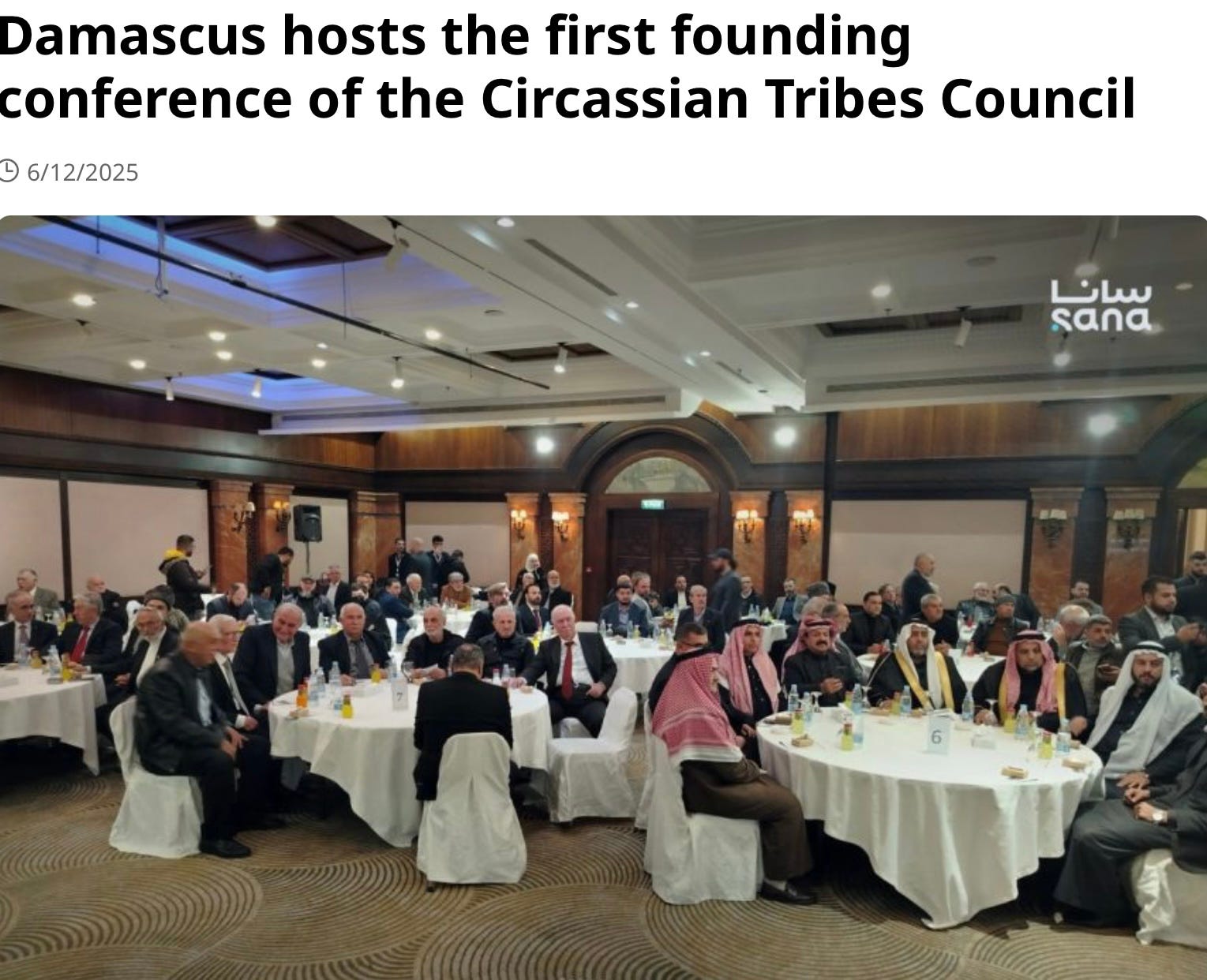
Second, more than most other non-Russian nationalities in the Russian Federation, the Circassians have been compelled by circumstances and tradition to cooperate with other non-Russian groups. In order to control the Circassians, the Soviet state put many of them in bi-national republics, two of which, Karbardino-Balkaria and Karachayevo-Cherkessia, remain. While Moscow hoped that this would divide the Circassian nation and keep it at odds with its neighbors, the reverse has been true. Kabards and Cherkesses overwhelmingly recognize themselves as Circassians; and their leaders because of necessity and because of Circassian traditions have learned to work with other non-Russians more closely than is the case with most non-Russians. In the last year, this pattern has become ever more pronounced. (For a discussion of the most recent examples of this, see: windowoneurasia2.blogspot.com/2025/10/kbr-officials-struggle-to-damp-down.html and the sources cited therein.
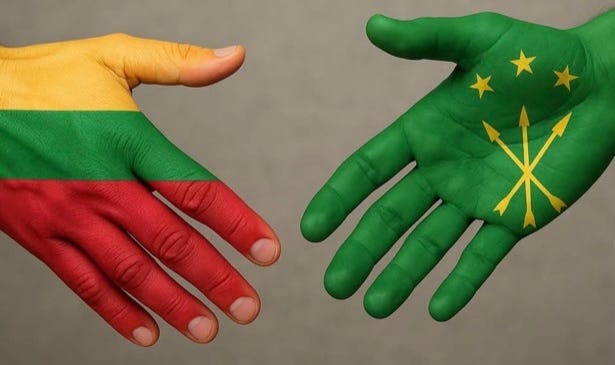
And third, the Circassians have appreciated that they can achieve their goals not only by cooperating with other non-Russians inside the Russian Federation but also with those countries in the international community who support their goals. Among these countries are Jordan where there is a large Circassian population and Turkiye where there is an even larger diaspora. But especially important are Circassian contacts and cooperation with two countries that once were ruled from Moscow: Ukraine and Lithuania. Circassian activists have secured Kyiv’s recognition of the 1864 expulsion of Circassians from the North Caucasus as an act of genocide and its commitment seeking support from other countries around the world to do the same. And the Circassians over the last year have become perhaps the most active in cooperating with Ukrainian efforts to reach out to the non-Russian peoples which has energized the movement.
Moreover, the Circassians have also made important strides in developing contacts with the Seimas, the Lithuanian parliament. On December 17, the Seimas will host an international conference in Vilnius on “The Circassian Genocide in the Context of History and Contemporary Politics.” Circassians view this event as a turning point in their struggle. In the words of Circassian activist Kase Kik, with this meeting “for the first time, a state – a member of the European Union – is not only recognizing the importance of the Circassian tragedy but also creating an international forum to discuss a genocide, exile and historical justice that has lasted for more than 160 years;” and that represents “a moment when the Circassian diaspora can speak in one voice, not fragmented and not just locally but at the level of world politics and international law.”
“For the Kremlin,” he continues, “this event is a painful signal. Moscow has ignored the Circassian issue for decades, tried to dissolve the memory of the genocide in the formulations of ‘tragic circumstances’ and ‘historical complexity.’” But this international conference translates the problem into the plain language of politics, law and responsibility. This is no longer a topic that can be simply silent.” And it is clear that Moscow is worried and has already launched a series of measures to counter this upsurge of Circassian activism and the support it receives around the world.
Russian propagandists, of course, have stepped up their campaign against Circassian “secessionists” But more seriously, the Russian authorities are working to divide the titular nations of the binational republics and to dispatch extreme right Russian nationalist thugs into them to cause trouble. (For background on that policy, see windowoneurasia2.blogspot.com/2024/10/extreme-right-russian-community.html.)
But as so often with Putin’s repressive efforts, these moves are likely to prove counterproductive in the coming year, not only leading Circassians to work even harder to expand ties between the diaspora and the homeland, to work with other non-Russians within the Russian Federation, and to get support from those countries which are ever more interested in supporting the Circassian cause. And that means what has occurred in 2025 is likely to be even more fateful for what happens in the Circassian homeland in 2026 than even the most optimistic Circassians and people of good will now think.
Thank you for your support! Please remember that The Saratoga Foundation is a non-profit 501(c)(3) organization. Your donations are fully tax-deductible. If you seek to support The Saratoga Foundation, you can make a donation by clicking on the PayPal link below! Alternatively, you can also choose to subscribe on our website to support our work.
https://www.paypal.com/donate/?hosted_button_id=XFCZDX6YVTVKA
Thanks for reading! This post is public, so feel free to share it.