
By Yuri Lapaiev
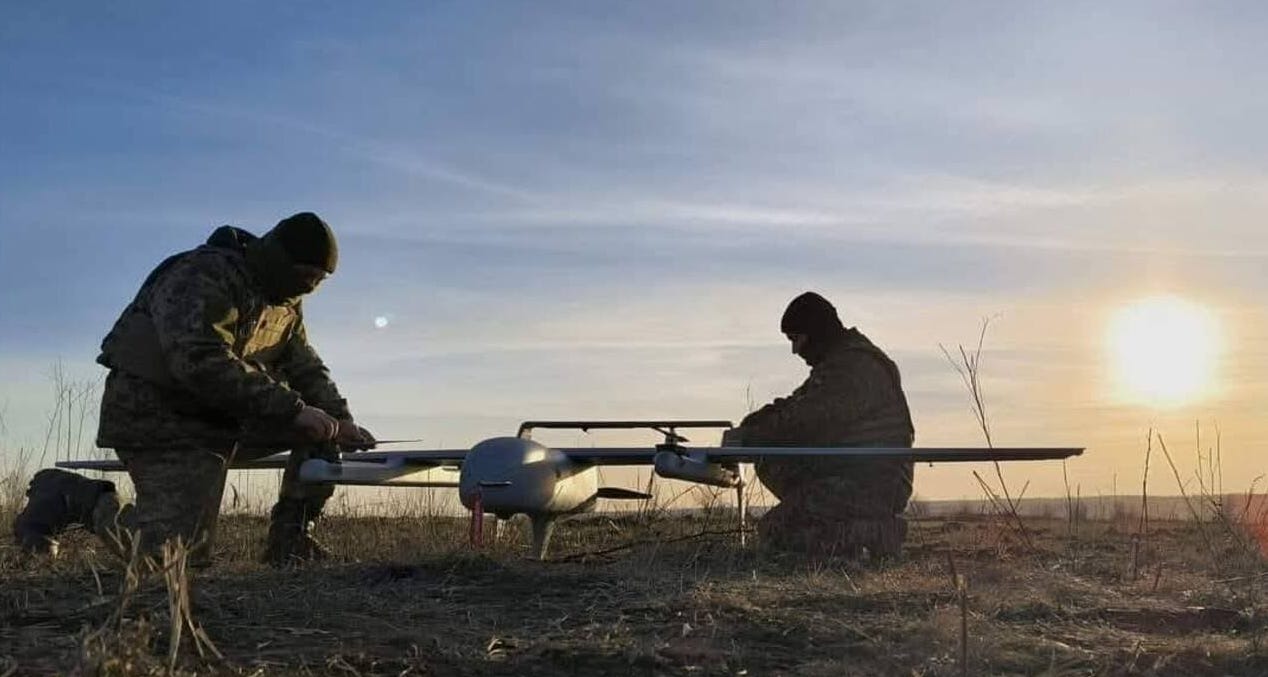
The development of unmanned systems technology of all types and purposes is rapidly increasing its intensity in the ongoing Russia-Ukraine war, as the use of drones for both sides is turning into a high-speed race. The use of drones and their rapid evolution, in all their various modifications, has become a symbol of the extremely rapid development of technologies, which have turned into an endless cycle of competition between offensive and defensive weapons. This means that no new weapons or systems can remain effective on the battlefield for a long time, as countermeasures are also constantly changing.
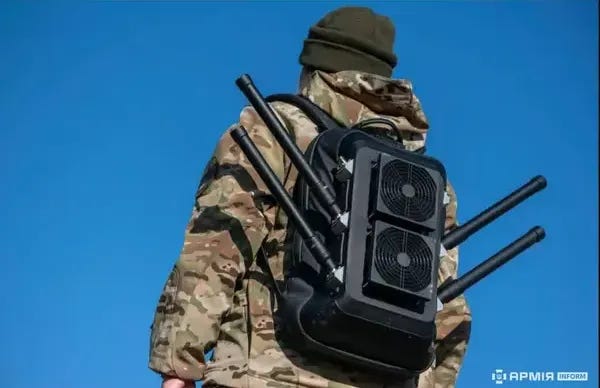
Despite the rapid pace of change, preliminary conclusions for the future of drone warfare can be drawn today from the war. Ukraine’s experience for the time being will be more accessible due to open sources than Russian forces, but both sides to date face similar successes, challenges, and problems. For example, this applies to the development of Electronic Warfare (EW) systems. The appearance of a large number of drones on the battlefield immediately prompted the development of countermeasures, primarily EW systems. Today’s front lines are impossible to imagine without various EW systems: dome-shaped, directional, “guns,” “backpacks,” mobile versus stationary, proliferating throughout the front lines.
The Impact of Electronic Warfare
The development and creation of such EW systems is extremely complex and expensive. Often, the EW systems required to counter First Person View (FPV) drones are more expensive than the drone itself, which can end up destroying them. Given that FPV drones frequently change frequencies, it sometimes makes countermeasures completely useless. At the same time, the increased use of EW has affected not only drones but also other high-precision weapons that use GPS guidance, such as HIMARS and 155mm M982 Excalibur precision-guided shells, making them less effective.
These developments require a rethinking of the protection of important military equipment/weapons and critical infrastructure, retrofitting them with relatively inexpensive modular EW systems capable of quickly changing the frequency spectrum. The problem is becoming even bigger with the introduction of fiber-optic-controlled drones, which are virtually immune to EW-jamming. At the time of their appearance, they became an extremely effective weapon with no defense. However, there are now several ways to combat this type of drone, demonstrating the speed with which technologies and countermeasures emerge to counter Russian innovations on the battlefield.
UAV Supply Chains: The Risk of External Dependence
Another key lesson from the drone battlefields of Ukraine is the importance of sustaining UAV development and mass production. In modern warfare, drones are expendable and consumed in large quantities, creating constant pressure to ensure an uninterrupted supply and rapidly scale effective designs. This exposes production bottlenecks: if access to critical materials or components is disrupted, development and output can quickly stall. Suppliers of such components gain leverage that can be translated into political influence. Conversely, political decisions by supplier states can restrict access to essential parts, directly affecting battlefield capabilities and operational effectiveness.
This arose when China supplied spare parts for UAVs to Russia, but also somewhat restricted supplies to Ukraine while continuing to sell components to Russia despite official bans. When a country like Ukraine cannot produce all the components for its drones, it must rely on imports, which creates a gap between battlefield lessons and the manufacturer’s ability to adapt. In Ukraine’s case, many key components initially came from China, either directly or through third parties. This distance slowed the feedback loop between frontline experience and technical modification. However, as Ukraine expands domestic production of drone components, that gap is rapidly narrowing.
The irony for Ukraine is that Chinese restrictions actually had a positive impact. It forced Ukraine to seek options for maximum localization of production. Already in 2025, a Ukrainian manufacturer presented the first serial batch of UAVs made entirely from domestic components. One of the benefits of local production is that it allows immediate feedback and permits rapid improvement of the technology, which enhances military effectiveness. In this regard, close cooperation and communication between some mil-tech companies and the military personnel who use them is immensely important.
Building the Right FPV: Drones as ‘Lego Blocks’
Designing effective military drones increasingly resembles assembling Lego bricks from interchangeable parts. Each component has distinct features—especially in electronic frequencies. If one frequency is jammed, it must be quickly replaced with another. This modular approach allows rapid adjustment of the final product, making drones more adaptable and better suited to evolving battlefield conditions.
The issue of dependence on technology stands apart. For example, the use of Starlink gave Ukrainian drones a significant advantage, but it was quickly copied by the Russian military. Blocking Starlink for Russia at Ukraine’s request revealed the strategic vulnerability of the Russian army. However, the Ukrainian armed forces have the same vulnerability and are completely dependent on the political preferences of SpaceX owner Elon Musk or the whims of American authorities.
The Race for Cheaper, Simpler, & Easier Solutions
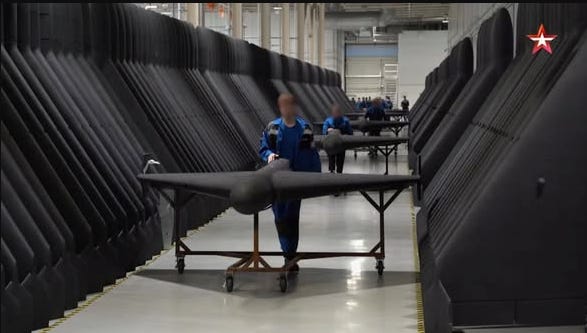
Measures to ensure sustainability demand the constant search for simpler and cheaper solutions. It is worth noting that the successful Russian strategy of using Geran/Shahed strike UAVs is attributed to their relative cheapness. As of September 2025, for example, one Shahed drone costs approximately $70,000. Simplicity matters. This is especially true when compared to the cost of cruise or ballistic missiles. Each has a price tag estimated to be between $4 to $1 million, and remains the main mass terror weapon used by Russia along Ukraine’s entire strategic depth. However, Moscow has not stopped there and is constantly developing newer versions of this specific kind of drone, while also creating other, even cheaper UAVs.
Particularly noteworthy is the Molniya drone, which, due to its extremely low cost and simplicity, has become widespread and therefore poses a significant threat. Currently, inexpensive Molniya’s have become the primary means for striking Ukraine’s tactical depth instead of the more expensive Russian-made Lancets (one of the main UAV weapons used by Russia back in 2023). This also applies to air defense. After all, shooting down large numbers of cheap drones with expensive and scarce missiles, as happened in Poland in September 2025, for example, is economically unfeasible to use F35s against inexpensive drones, as the Arab Gulf states are now experiencing with the current war with Iran.
The answer to this problem is the use of interceptor drones, with corresponding changes in military doctrines and the deployment of production. Mouad M’Ghari, head of France’s defense company Harmattan AI, notes that Western defense companies are entering an era where the outcome of conflicts is determined not by the technological superiority of individual models, but by the mass production of inexpensive unmanned systems. In today’s world, armies cannot wait years for defense manufacturers to produce an expensive ideal model. Instead, simpler, mass-produced, quick-to-manufacture solutions are urgently needed.
New Weapons, New Rules: The Expanded Radius of FPV Kill Zones
The emergence and use of the first unmanned combat systems at the beginning of the full-scale invasion of Ukraine in 2022 had an immediate and significant impact on the tactics and principles of warfare that existed at the time. Some of these, such as massive mechanized assaults, have become simply impossible in today’s conditions of maximum battlefield transparency and extremely fast cycle chains of “detect-kill.”
Nearly every month, there is a news report from the frontlines about yet another new type of UAV, ground drones, or autonomous combat modules emerging, including reports by sea of Uncrewed Surface Vessels (USVs), underwater drones, interceptor drones, AI drones with machine sight, jet drones, drone carriers. This, in turn, allows commanders to invent new tactics, constantly changing their approaches to unmanned warfare.
Probably, the most prominent example was back in 2025, when, during the Operation Spiderweb, the Ukrainian security services managed to destroy about a third of Russia’s strategic bombers right in their home airfields. The same is true for the constantly increasing radius of the unmanned kill zones. In 2022, the kill zone used to be around 3 kilometers; now, FPVs have a kill zone up to 25 km and growing. In the future, we can expect to see even more options and tactics for using FPV drones; sometimes, they will become quite exotic. This requires changes in the deployment of forces and military training. Some NATO countries are already gradually introducing the use of drones and countermeasures in exercises with their armies. Here, the Ukrainian army can fill the important role of instructors, sharing their advanced and up-to-date experience with allied armies.

The Race for Training Qualified Personnel
The rapid rise in the use of unmanned weapons and the tactics related to their use means that urgent changes are needed in the organizational and staffing structure of military units. The changes currently taking place in the Ukrainian armed forces and the Armed Forces of the Russian Federation are quite indicative. For example, both armies are actively developing their own Unmanned Systems Forces (USF), turning them into separate branches of their military. In 2026, Russia plans to increase the number of its USF troops by 79,000, bringing the total number of Russian unmanned troops to 165,000.
At the same time, however, they are gradually increasing the number of UAV units in other branches of the military, abandoning less relevant weapons such as anti-tank missile systems in favor of drones. For the Ukrainian army, increasing the number of unmanned units is one way to overcome problems with mobilization and the shortage of recruits. The ability to fight remotely instead of directly on the battlefield has become quite attractive to many prospective recruits and is used by most Ukrainian units to find new personnel. For Western countries, this is an example of the direction in which their armies should develop. Without unmanned systems units (and countermeasures against them), no army stands a chance in modern conflict.
UAVs: Neither a Panacea Nor Wunderwaffe
At the same time, the increased emphasis on the development of unmanned systems and the growing use of drones also creates negative consequences for the capabilities of the Ukrainian armed forces. For example, the Ukrainian army has repeatedly faced situations where virtually all the reconnaissance efforts in a certain area of the frontlines are carried out exclusively by drones. In the event of deteriorating weather conditions, this often leaves the command practically blind, while Russian forces frequently take advantage of this to launch their attacks.
In addition, some Ukrainian frontline commanders complain about the deterioration of their soldiers’ skills due to this new phenomenon. Ukrainian officers argue their units are paying less and less attention to fire and tactical training. Despite their increasing effectiveness, drones cannot fully replace human soldiers on the front line; control over territory still requires “boots on the ground.” At the same time, the influx of new recruits into Ukraine’s new USF units is, in a sense, “cannibalizing” or diverting potential recruits needed for slots in other branches of the Ukrainian army, primarily the infantry, thereby indirectly adding to the personnel shortage.
The Nightmare of Frontline FPV Coordination
With the increase in the number of UAV crews and drones of various types, surfaces, and ranges of operation, the issue of coordination of efforts becomes more acute. Unfortunately, there are quite a few cases in the Ukrainian armed forces when several drones from different units are simultaneously engaging the same target on the frontlines. Often, the reason for this is the lack of normal communication between units and the desire to earn points for hits. This, in turn, is creating a coordination nightmare as units frequently compete against units, creating a new type of friction on the frontlines.
Another common problem that emanates from this frontline competition in the Ukrainian Army is the rise in the number of FPV-related incidents of friendly fire. This occurs when the frontline drones cannot perform tasks due to EW-“friendly fire” from other neighboring units. This problem could be partially solved by improving the ‘mission control’ system, which Defense Minister Fedorov recently announced would be corrected.
The growing number of various unmanned systems on the battlefield also poses a growing challenge for modern commanders in terms of complicating the coordination of ongoing combat operations. The solution to this problem may lie in increasing modern situational awareness and command systems that use Artificial Intelligence (AI) to reduce the burden on frontline commanders, which could ease, if not eliminate, the coordination problem.
Rubicon’s Exploitation of Drones at the Operational Level
Another remaining challenge is the division of tasks in terms of depth, from the tactical to the strategic level. According to one prominent military expert, Ryan O’Leary, Ukraine is currently losing the battle for depth by paying too much attention to the tactical level of war. Not all experts and commanders agree that the current focus on destroying as much of the enemy’s manpower as possible is the right approach to conducting the war.
This contrasts with the tactics employed by Russia’s Rubicon UAV unit. Rubicon focuses its efforts almost exclusively on the operational-tactical level of war and achieving operational depth, namely, using its drone units to destroy Ukrainian logistical capabilities. For Ukraine, the solution could be to clearly prioritize targets and scale up the USF (without cannibalizing other units, especially from front-line brigades). It is also necessary to delineate areas of responsibility. Ukrainian USF Commander Robert Brovdi recently noted that the USF plans to devote more attention to its efforts at the operational level, leaving tactical operations to the newly established corps, for example, the 3rd,7th, 10th, and 14th corps. However, this can only happen after the relevant units have built up their capabilities to a sufficient level.
Outlook
In the final analysis, the Russian-Ukrainian war has demonstrated the high effectiveness of drones in modern armed conflict, and the rapid rise in the development of technology, primarily AI, promises even greater military effectiveness in the near future. In preparation for a possible future conflict with Russia, Western armies should intensify their learning from the Ukrainian experience by accelerating the introduction of drones (as well as means to counter them) into their frontline units.
At the same time, drones alone will not be an advantage; they require trained personnel, new tactics, and more advanced coordination and control systems. Ukraine, as a bearer of the most modern combat experience and sophisticated technologies, will be an important partner for the rest of NATO. The United States and its European allies should review their current economic and production models in order to be self-sufficient in the production of unmanned systems and means of countering them.
Solutions and systems must be sufficiently inexpensive, standard among allies, and easily scalable. Supporting Ukrainian production of unmanned systems (through direct financing or joint companies) presents our allies with a unique opportunity to test the systems in real combat conditions and identify the most effective drone systems for further production.
About the Author:
Yuri Lapaiev is currently the editor-in-chief of Tyzhden (The Ukrainian Week) magazine. He graduated from the Ivan Kozhedub Air Force University in Kharkiv with an MA in computer network engineering. Between 2006 and 2011, he served in the Ukrainian Defense Intelligence, including as an analyst. In 2011-2015, Lapaiev worked as a marketing analyst in the head office of one of Ukraine’s largest mobile operators. From 2015 to 2016, he served in the Ukrainian Special Operations Forces and participated in the Anti-Terrorism Operation (ATO) in eastern Ukraine.
Thank you for your support! Please remember that The Saratoga Foundation is a non-profit 501(c)(3) organization. Your donations are fully tax-deductible. If you seek to support The Saratoga Foundation, you can make a donation by clicking on the PayPal link below! Alternatively, you can also choose to subscribe on our website to support our work.
https://www.paypal.com/donate/?hosted_button_id=XFCZDX6YVTVKA
Thanks for reading! This post is public, so feel free to share it.