
by Yuri Lapaiev
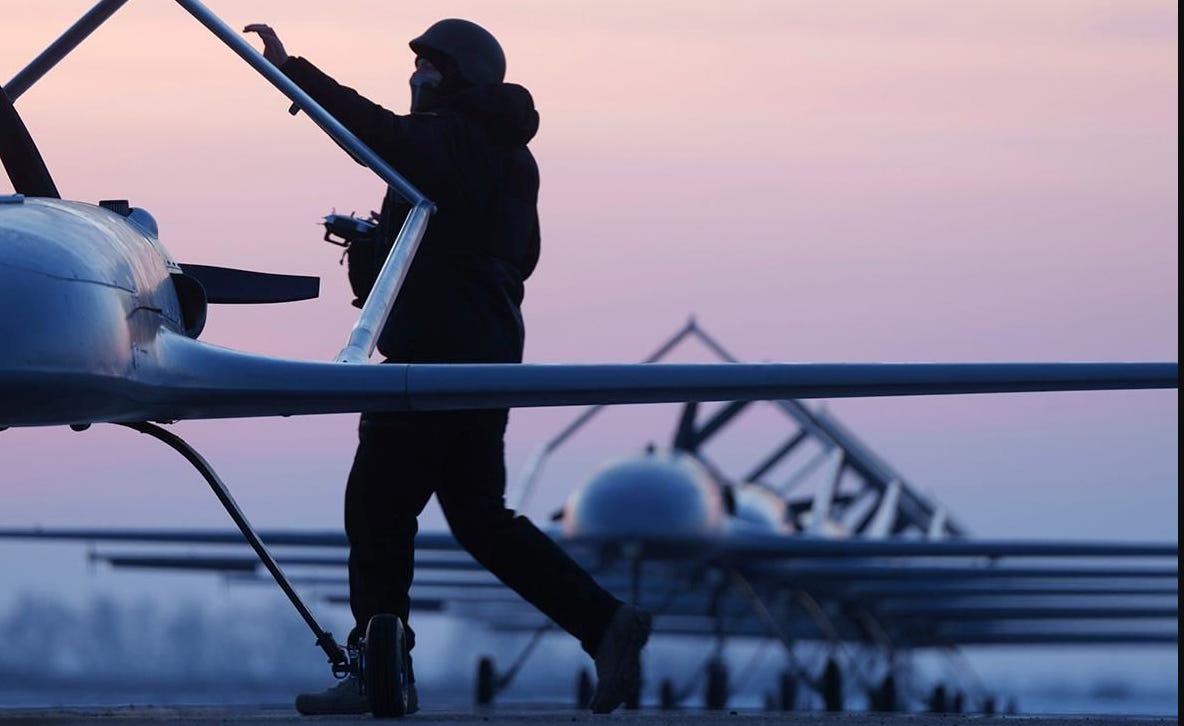
On January 23, newly appointed Ukrainian Defense Minister Mykhailo Fedorov announced the creation of Mission Control, a unified system for coordinating, managing, and reporting on all missions involving Ukrainian forces’ unmanned aerial vehicles. This decision, one of the first for the new defense minister, demonstrates the vital importance that drones have gained on the battlefields of Ukraine. Fedorov’s appointment can also be seen as part of this trend, since, as Deputy Prime Minister and Minister of Digital Transformation of Ukraine, he was one of the main drivers for the development of the Ukrainian army’s capabilities in unmanned warfare.
At the very beginning of Russia’s full-scale invasion of Ukraine, drones played a rather secondary role, their use being limited mostly to aerial reconnaissance and artillery targeting. However, this changed quickly when Ukrainian operators first adopted the idea of dropping hand grenades and improvised explosive devices from commercial Mavic-like quadcopters in ground combat. But the real revolution came with the start of using First Person View (FPV) drones as disposable weapons. Their appearance was rather forced as the Armed Forces of Ukraine (AFU) sorely lacked artillery and anti-tank weapons. This effectively transformed what was deemed a civilian toy into a high-precision, versatile system capable of striking both infantry and armored vehicles, at a price of approximately $500 per drone. Therefore, in terms of its military utility, FPV drones offered an extremely high cost-to-kill ratio relative to the cost of potential targets.
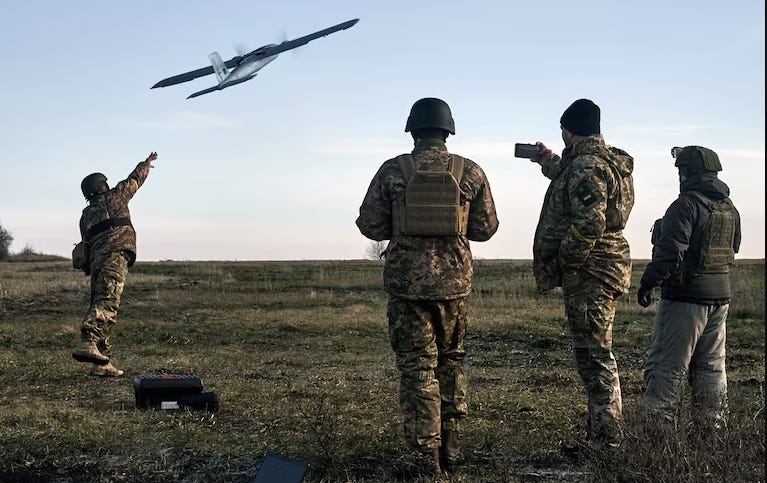
The combat effectiveness of FPV drones has led to the gradual emergence of drone crews in most Ukrainian frontline units. Initially small in number and rather amateurish, some of these units began to show truly significant results, creating a certain system and infrastructure around themselves as their role and missions evolved. The success and uniqueness of these units led to a review of the strategy for their use, resulting in a historic decision—the creation of the world’s first Unmanned Systems Forces (USF) as a separate branch of the military.
The Formation of the USF
The corresponding decree was signed by Ukrainian President Volodymyr Zelenskyy on December 6, 2024. According to this decision, the most successful military units versed in drone warfare were separated from the Land Forces (mainly), and the USF was created along these lines. This spurred the transformation of classic mechanized units, such as the K-2 battalion and the 59th separate motorized infantry brigade, into separate USF brigades, which is quite indicative. It was these groups of enthusiastic pioneers who laid the foundation for the creation of UAV companies, then battalions, regiments, and now brigades of unmanned systems.
As of January 2026, there are now an estimated 12 units within the structure of USF. The most famous among them are the 412th Separate UAV Brigade Nemesis, the 414th Separate UAV Brigade “Birds of Magyar,” the 429th Separate UAV Brigade “Achilles,” and the 1st Separate Unmanned Systems Center. In December 2025, General Oleksandr Syrskyi, Commander-in-Chief of the AFU, stated that unmanned systems now account for up to 60% of all battlefield strikes.
The attitude of state authorities and the military top brass towards UAVs has notably evolved as well. From the rather dismissive name “wedding drones” used by former Ukrainian Defense Minister Oleksiy Reznikov in the winter of 2022 to the somewhat naive call to Ukrainian citizens to assemble drones at home (to help soldiers on the frontline) made by the aforementioned Minister of Digital Transformation Fedorov back in 2024, Ukrainian officials are now touting the effectiveness of drones. Today, officials are making statements touting their vital strategic importance to the “Line of Drones” (a state program to scale up the best UAV units and introduce an automated damage evaluation system), to the expansion of the “18-25” recruitment program to fill UAV units in 2025.
In another notable milestone made last year, the state program of direct defense procurement, DOT-Chain Defense, was expanded to include drones, which permit Ukrainian military units to directly sidestep the cumbersome military acquisitions bureaucracy by directly purchasing the most effective UAVs themselves. From 2024 to 2025, drones not only became widely used but also began to be used at all levels, tactical, operational, and strategic. Needless to say, Ukraine is actively catching up with Russia in terms of the number of middle and long-range strikes it is now conducting.
Another unique Ukrainian innovation was in the area of surface and, later, Unmanned Surface Vehicles (USV). Thanks to the USV forces, the Russian Black Sea Fleet was initially neutralized, and the Black Sea was virtually liberated, which opened up the possibility of exporting Ukrainian goods (mostly grain) from the ports of Odesa. Moscow was forced to urgently relocate the ships from its Black Sea Fleet (BSF) in Sevastopol to the base in Novorossiysk. Ukrainian drones (air and sea) also reach them there as well, demonstrating that there is little or no safe haven for the Russian navy to operate in the Black Sea. Ukrainian USVs, such as the Magura 5, operated by the Ukrainian Defense Intelligence unit, and SeaBaby by the Security Service of Ukraine, have also destroyed several helicopters and even combat jets. Recently, Ukrainian aerial drones began targeting Russia’s oil industry, attacking oil terminals in Novorossiysk and Tuapse, as well as striking Russian-operated oil tankers belonging to the Kremlin’s “shadow fleet.”
The Innovation Race with Russia
One of the major takeaways from the Russian-Ukrainian war is the unique innovation race between the two sides, as one side achieves an exclusive advantage technologically, but often only for a short period of time. The other side immediately copies the weapons of the opponent. In 2022, thanks to the active use of drones and modern Western weapons, the Armed Forces of Ukraine had an advantage in reconnaissance and strike capabilities (UAVs for target detection and strike coordination, long-range weapons for striking the enemy). However, the Russian army also set about improving its own capabilities and, by 2023-2024, had gradually achieved at least parity and, given the greater number of long-range weapons (primarily Iskander ballistic missiles), even superiority in this area.
A major factor accounting for the Russians’ success was the reduction in the time between target detection and target engagement. As the war evolved, that gap narrowed. For example, in 2022, this could take up to several days; now it takes only a few dozen minutes before modifications are made. But most importantly, there has been a significant increase in the use of reconnaissance drones such as Zala, Supercam, Skat, and Orlan at the tactical and operational levels of war. This success, along with the growing use of strike drones such as FPV, Lancet, and Geran, has forced Ukrainian military engineers to look for ways to win the skies in the conditions of a lack of traditional air defense systems. The response was again drones, but this time it was in the realm of unmanned anti-aircraft systems. Currently, modified Ukrainian-made FPV drones have become interceptors of various types used against aerial targets, from strike UAVs to helicopters. Their effectiveness and cost-effectiveness (compared to air defense missiles) have been proven on the battlefield and have already attracted the interest of Ukraine’s foreign partners.
The problem of copying and countering could be seen in another game-changer in modern warfare: the introduction of fiber-optic-controlled drones, which are invulnerable to the effects of electronic warfare systems. First introduced by the Russian military, they were quickly copied and scaled up by the Ukrainians. Now, fiber-optic-controlled drones are being used extensively by both sides, while they simultaneously try to find effective solutions to counter their use. Another race - the development of ground robotic platforms, mostly used by both sides for logistics and medical evacuation, but also for testing them in combat missions.
Outlook
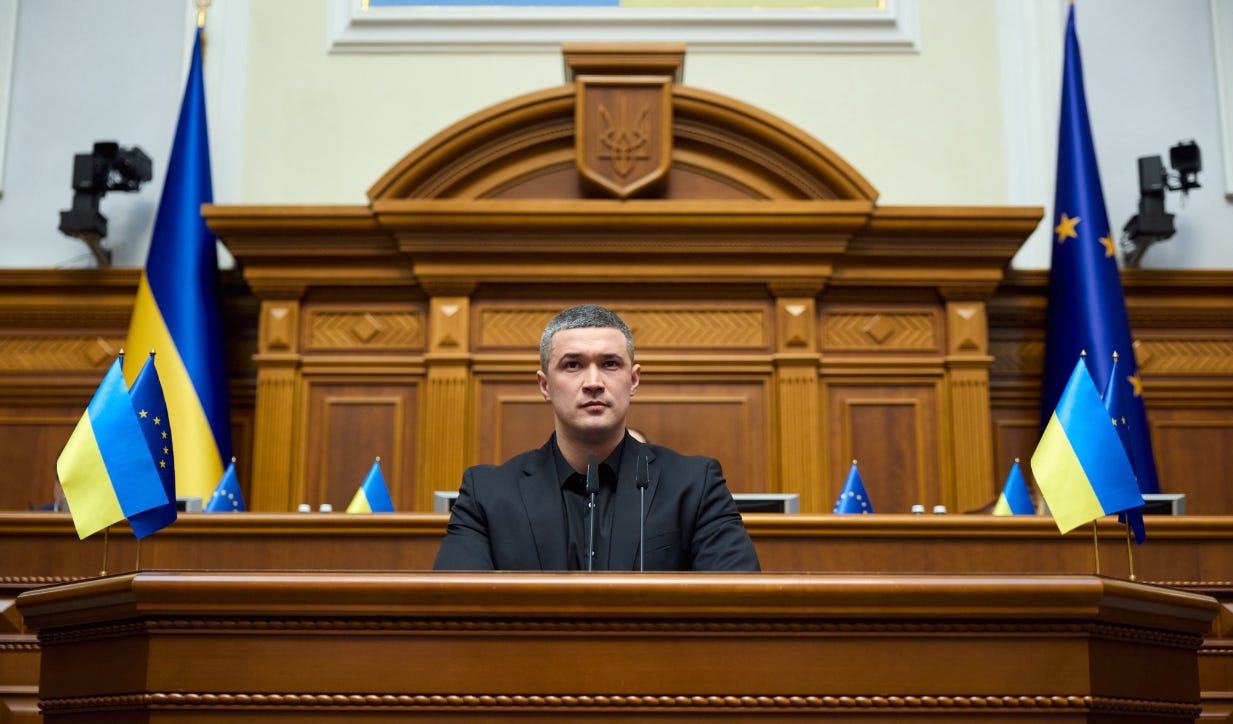
The appointment of Mykhailo Fedorov as the new Ukrainian Minister of Defense is poised to vastly accelerate the development of the unmanned capabilities of the Armed Forces of Ukraine (AFU). Fedorov underscored this priority during his parliamentary confirmation speech and reinforced it through his initial personnel appointment decisions made since taking the reins as defense minister.
On January 19, he appointed Pavlo Yelizarov—the founder of the highly effective ‘Lazar’ unmanned unit—as deputy commander of the Ukrainian Air Force to spearhead the integration of interceptor drone systems designed to neutralize Russian strike drones. This was followed by the appointment of veteran advisor Serhii Sternenko, on January 23, further signaling a commitment to long-term unmanned systems development.
Facing an adversary with vast conventional superiority, Ukraine’s path to victory relies on maintaining a technological edge on the battlefield. The institutionalization of unmanned systems across all domains—air, land, and sea—serves as the critical pillar of Ukraine’s asymmetric strategy and played a critical role in Fedorov’s appointment as defense minister. By prioritizing these systems under a unified command, Ukraine can achieve the flexibility necessary to reverse Russian advances and codify the hard-won lessons of the last four years.
About the Author
Yuri Lapaiev is currently the editor-in-chief of Tyzhden (The Ukrainian Week) magazine. He graduated from the Ivan Kozhedub Air Force University in Kharkiv with an MA in computer network engineering. Between 2006 and 2011, he served in the Ukrainian Defense Intelligence, including as an analyst. In 2011-2015, Lapaiev worked as a marketing analyst in the head office of one of Ukraine’s largest mobile operators. From 2015 to 2016, he served in the Ukrainian Special Operations Forces and participated in the Anti-Terrorism Operation (ATO) in eastern Ukraine.
Thank you for your support! Please remember that The Saratoga Foundation is a non-profit 501(c)(3) organization. Your donations are fully tax-deductible. If you seek to support The Saratoga Foundation, you can make a donation by clicking on the PayPal link below! Alternatively, you can also choose to subscribe on our website to support our work.
https://www.paypal.com/donate/?hosted_button_id=XFCZDX6YVTVKA
Thanks for reading! This post is public, so feel free to share it.