
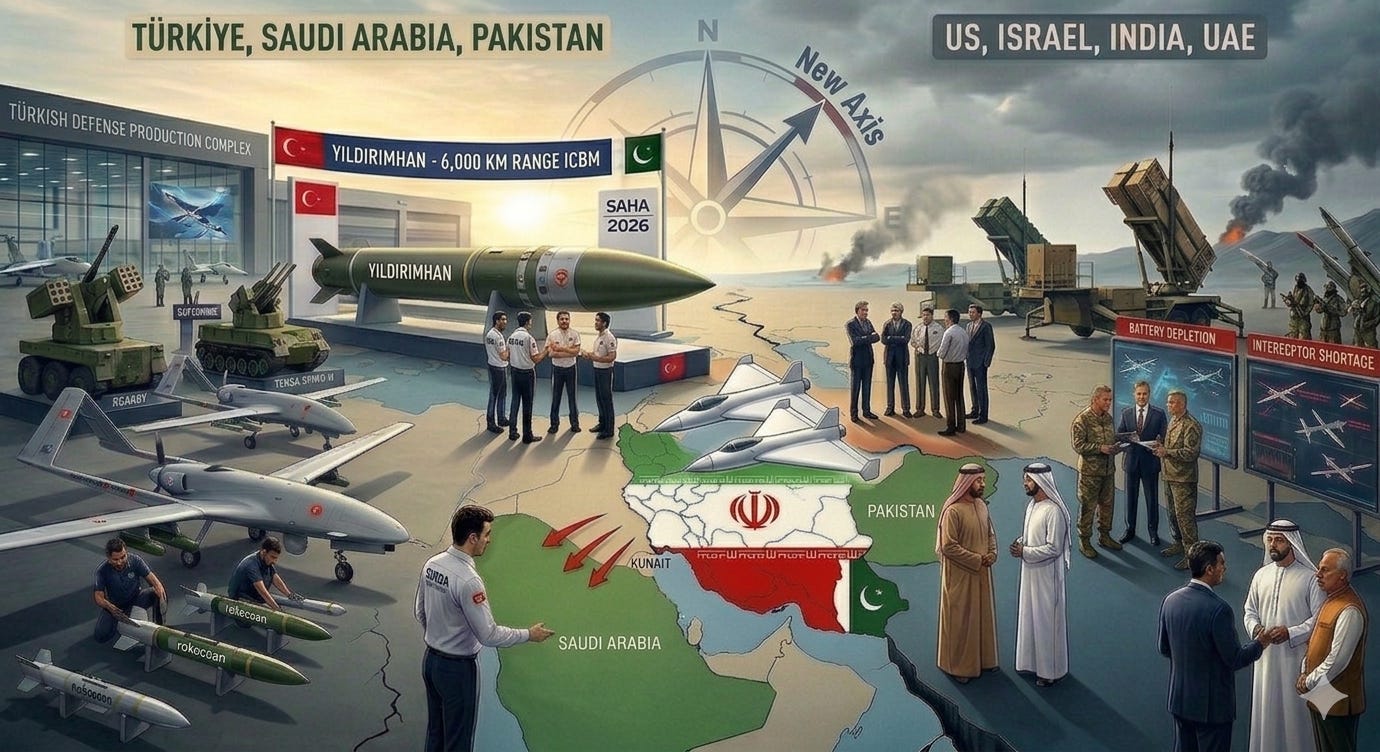
The ongoing US-Iran war and its fallout are driving Middle Eastern countries, particularly the Gulf states, to reconsider the traditional US-backed security architecture and opt for swifter diversification of defense partnerships in order to tackle security challenges caused by the three-month-old Gulf War III. The Gulf states’ decision is a rational choice, as the recent Iranian missile attacks targeting military and energy targets demonstrated the limitations of the US-led support and local air defense systems during Iranian drone and missile attacks on the Arab Gulf states.
While currently the United States is engaged in peace talks with Iran to end hostilities and restore maritime movement in the Hormuz Strait, wealthy Gulf states are searching for new security partners to mitigate potential future risks of war, and Türkiye is moving quickly to fill that vacuum. Moreover, as a result of this shifting strategic environment, a new axis is seemingly taking shape that includes Türkiye, Saudi Arabia, and Pakistan amid the war that will likely further alter the geopolitical landscape, alongside the existing long-term Türkiye-Qatar axis.
Indeed, such a stance reflects Türkiye’s ruling Justice and Development Party’s (AKP) vision of “an alliance of Muslim countries to minimize dependence on countries outside the region.” On the other hand, the new axis is poised to counter the US, Israel, India, and the United Arab Emirates (UAE), thereby emphasizing the decades-long estrangement between the two blocs. Ostensibly, there are several significant motivating factors behind the emergence of this axis, such as shared concerns regarding Israel’s expanding power in the Middle East, ongoing instability in the Red Sea, and renewed attempts by Iran and its proxies to regain influence in the immediate neighborhood by escalating violence.
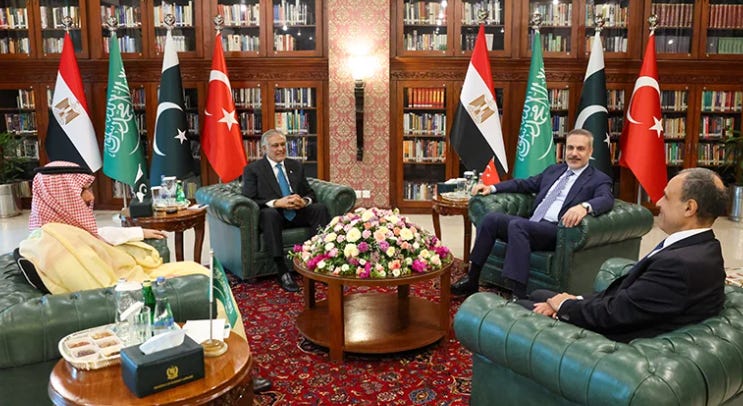
Amid deepening discontent with the war and the US-Israel alliance that has altered the regional balance of power, Gulf countries are increasingly turning toward Turkish-made defense products, namely drones and smart-guided missiles, to thwart Iranian drone and missile attacks. Despite robust air defense systems, which remain effective against ballistic missiles, Kuwait, the UAE, Qatar, and Saudi Arabia are facing ammunition shortages at a time of growing threats. Since the very beginning of the war, Iran has succeeded in striking no less than 12 US and allied radar and SATCOM terminals deployed in the Gulf states. According to satellite imagery, four AN/TPY-2 radars have been hit in al Sader and al Ruwais in the UAE, Muwaffaq Salti Airbase in Jordan, and Prince Sultan Airbase in Saudi Arabia.
Turkish Defense Industry Fills the Gap
In contrast to the Gulf states, which face acute ammunition shortages despite possessing advanced air defense systems, Türkiye is on the verge of becoming one of the Middle East’s foremost military powers. Ankara is forging a modern-day industrial equivalent to Germany’s legendary Krupp defense industrial giant (or even multiple Krupps) capable of mass domestic defense production and global export.
With this goal in mind, Ankara is increasingly positioning itself as a leading supplier in the global defense sector. Ankara has spent the last decade cultivating an integrated domestic defense ecosystem in an effort to bypass Western embargoes and secure total strategic autonomy. During this time it has moved into the ranks of the Middle East’s top missile exporters. This transformation is anchored by a massive network of nearly 4,000 localized small and medium-sized enterprises (SMEs) scattered across the country, creating a resilient, insulated supply chain that resembles the vast industrial depth once developed by Krupp’s in the historic Ruhr Valley.
Drawing upon lessons learned from recent conflicts worldwide, most notably the war in Ukraine, Türkiye has leveraged battlefield data to shape its defense innovation strategy, prompting ROKETSAN to develop cost-effective first-person-view (FPV) and AI-enabled kamikaze drones. In addition, the most significant achievement of the Turkish defense industry is the recent unveiling of Yildirimhan (the Turkish word for Lightning), an indigenous Intercontinental Ballistic Missile (ICBM), on May 7 at the SAHA 2026 Defense and Aerospace Exhibition. With a planned 6,000-kilometer range, a maximum speed of Mach 25, and a 3,000 kg payload capacity, in theory, the missile launched from Türkiye could use its newly created ICBM to strike targets anywhere across Europe, Africa, and Asia.
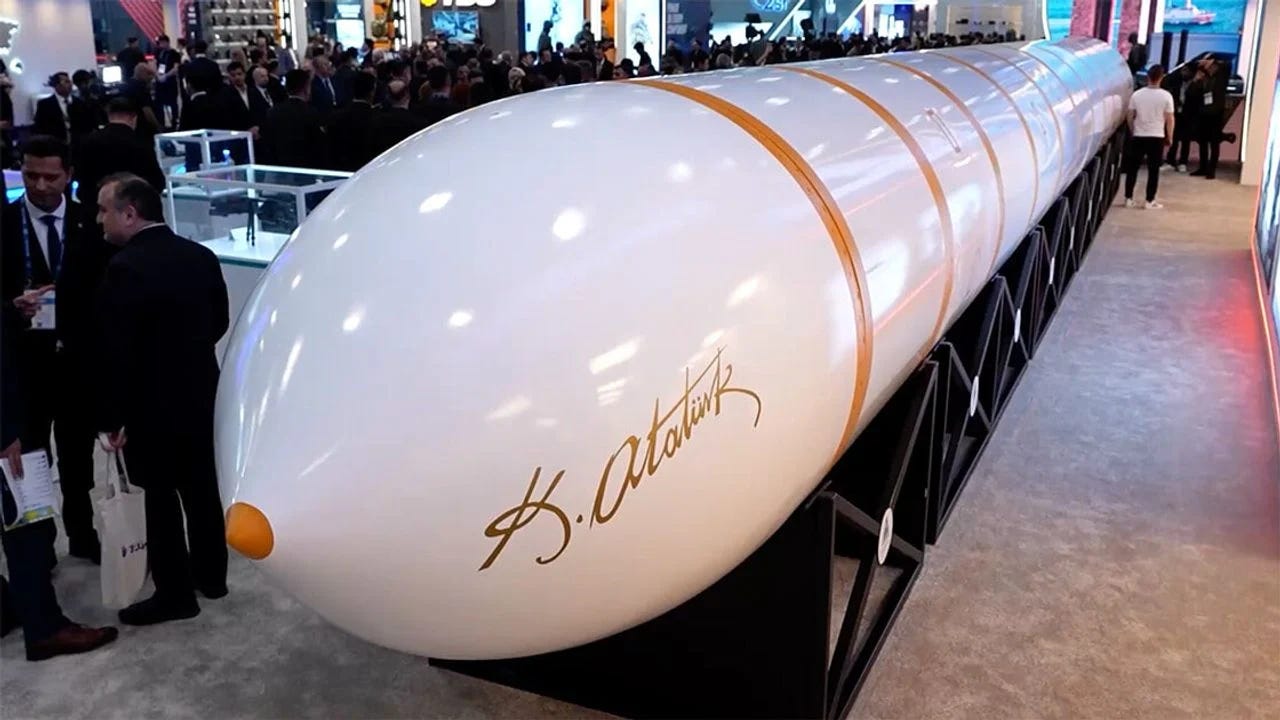
*Image above: Türkiye’s first ICBM prototype, the Yildirimhan
The unveiling of Türkiye's first ICBM prototype, the Yildirimhan, marks a massive strategic shift for the Middle East. While Ankara’s ICBM is currently a concept mock-up rather than an active, fielded weapon, its development carries profound geopolitical, technical, and military implications for the Middle East. It also directly signals Türkiye’s emergence as a major regional power that its neighbors will take with great seriousness and further motivates the Arab Gulf states to pursue closer security ties with Ankara in the aftermath of the ongoing US-Iran confrontation.
Given such cutting-edge military technology, the Gulf states’ desire for a deeper partnership with Türkiye should come as no surprise. As such, on May 7, Kuwait’s Defense Minister, Sheikh Abdullah Ali Abdullah Al-Sabah, signed an intergovernmental protocol of intent for military-technical cooperation with the Turkish Defense Industry Administration. Alongside Kuwait, both Qatar and Saudi Arabia have expressed particular interest in ASELSAN’s Korkut 100/25 anti-aircraft artillery system, designed to counter small and ultra-small UAVs using 25 mm programmable high-explosive fragmentation rounds. Moreover, Qatar became the first importer of the newly developed Tolga Shorad short-range air defense system.
Undoubtedly, Türkiye’s strong commitment to achieving defense autonomy, significant production power, and proximity to the Gulf make Ankara a vital actor in the new geopolitical axis unfolding in the Gulf. As a rising regional power, Türkiye has successfully found a balance between soft and hard power, leaning mostly into mediation diplomacy and supporting several regional states due to its pragmatic vision.
Hence, while Middle Eastern states are eager to deepen defense partnerships with Türkiye through increased military imports and by reinforcing anti-Iranian narratives, some Western observers contend that Ankara’s expanding military footprint, driven by the rapid development of ballistic, cruise, and potentially hypersonic missiles, raises questions about whether Türkiye is acting as a stabilizing NATO ally or could evolve into a revisionist power.
Despite periodic criticism of Türkiye, the Trump administration has maintained a largely conciliatory stance toward the ruling AKP and forged stronger ties that have only deepened after the US military withdrawal from Syria. Meanwhile, critical delivery backlogs of U.S. Patriot and THAAD missile systems to the Gulf—combined with Europe’s scramble to rearm amid mounting geopolitical uncertainty—have enabled Ankara to position itself as a stable, reliable alternative supplier to the Gulf states. Moreover, Türkiye’s rising status will further cement its role in the new emerging order following the NATO summit in Ankara from July 7-8, which the President of the United States and other world leaders plan to attend.
Outlook
Türkiye’s recent advances in defense production and its growing alliances with Gulf states amid severe security challenges come at a pivotal moment for the global arms trade. The repercussions from the prolonged and violent drone and missile wars in Ukraine and Iran have drastically depleted global stockpiles of advanced weapon systems. During the recent conflict with Iran, the United States and its Gulf allies relied heavily on sophisticated Patriot and THAAD interceptors to counter inexpensive Iranian drones, yet concerns over limited inventories compelled the monarchies to seek alternative suppliers and partners. In this context, Türkiye appears to be well-positioned to outmaneuver established global arms producers, viewing the current crisis as a strategic opening for its arms industry and future exports to the Gulf.
Türkiye’s deepening ties with the Gulf monarchies mark a pivotal juncture in the Middle East’s security architecture. With Washington’s long-standing influence increasingly exposed, Ankara has gained fresh momentum as a strategic power broker in the region. The emerging geopolitical axis—anchored by Türkiye and reinforced by Gulf demand—signals a recalibration of regional alliances that will carry ripple effects that extend well beyond the Middle East into the wider global order that emerges in the aftermath of the ongoing US-Iran confrontation.
About the Author:
Fuad Shahbazov is a political scientist and analyst focused on regional security in Eurasia and the Middle East. He holds a master’s degree in Political Science from Vytautas Magnus University, a professional master’s degree in Terrorism and Countering Religious Radicalization from the University of Bergamo, and a master’s degree in Defense and Diplomacy from Durham University.
Thank you for your support! Please remember that The Saratoga Foundation is a non-profit 501(c)(3) organization. Your donations are fully tax-deductible. If you seek to support The Saratoga Foundation, you can make a donation by clicking on the PayPal link below! Alternatively, you can also choose to subscribe to our website to support our work.
https://www.paypal.com/donate/?hosted_button_id=XFCZDX6YVTVKA