
By Vusal Guliyev
The sharp escalation of the Iran-related crisis in the Strait of Hormuz has once again exposed the fragility of global energy supply chains dependent on maritime chokepoints. Nowhere is this vulnerability more visible than in the Strait of Hormuz, through which a substantial share of the world’s oil and liquefied natural gas flows. As the war enters its second month, its impact is immediate and far-reaching. The war is causing higher shipping risks, rising insurance costs, and increased volatility across energy markets. What began as a regional security crisis has quickly emerged as a global economic concern, reminding energy-importing states that maritime disruption in the Gulf is reverberating far beyond the Middle East.
For East Asian economies, the implications are especially serious. Japan, South Korea, and China remain deeply reliant on Middle Eastern crude, making them highly vulnerable to disruptions in Gulf transport routes. Japan is the most reliant, with roughly 95% of its imports coming from the region, followed by South Korea at about 70%, and China at approximately 52%. Japan alone imports about 2.8 million barrels per day, with approximately 70% of these volumes passing through the Strait of Hormuz. This heavy reliance on a single source is intensifying the urgency of diversification efforts, pushing East Asian governments and energy conglomerates to accelerate efforts to secure alternative suppliers and develop more resilient supply routes beyond the Gulf.
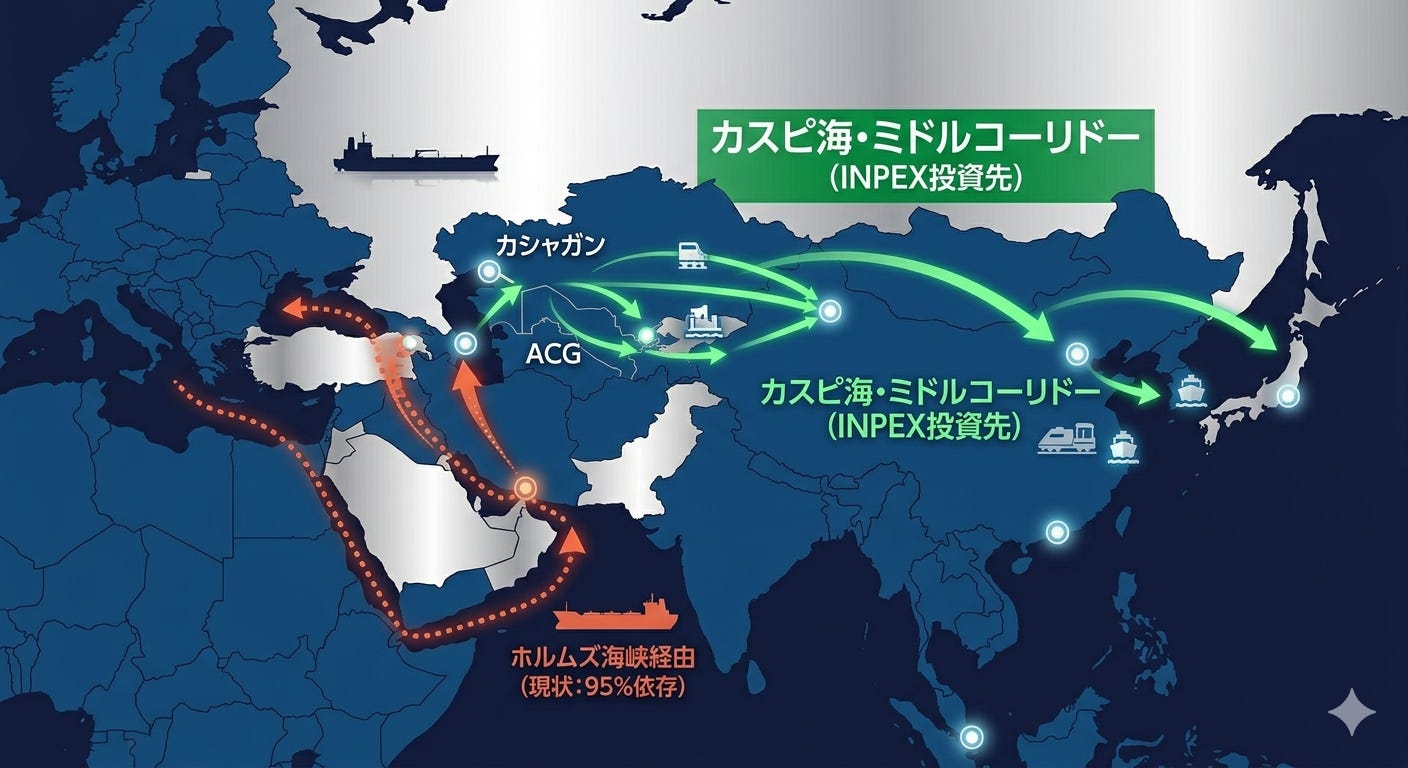
Recent reporting by NHK World-Japan suggests that Tokyo is actively intensifying its search for alternative sources of supply, including deeper engagement with producers in the broader Caspian region. In this sense, the Iran crisis is functioning less as a sudden rupture than as a catalyst pushing Tokyo's existing strategic thinking into a more urgent phase of implementation. Japan’s response is particularly notable because it is not new to the race for Caspian oil and has been involved in the region for several decades.
Unlike countries that are only now beginning to diversify, Tokyo is building on a long history of diplomatic engagement with the Caspian region and prior upstream investment experience through firms such as INPEX Corporation, Japan’s largest exploration and production company. This provides Japan with a relative advantage in accessing Eurasian energy resources.
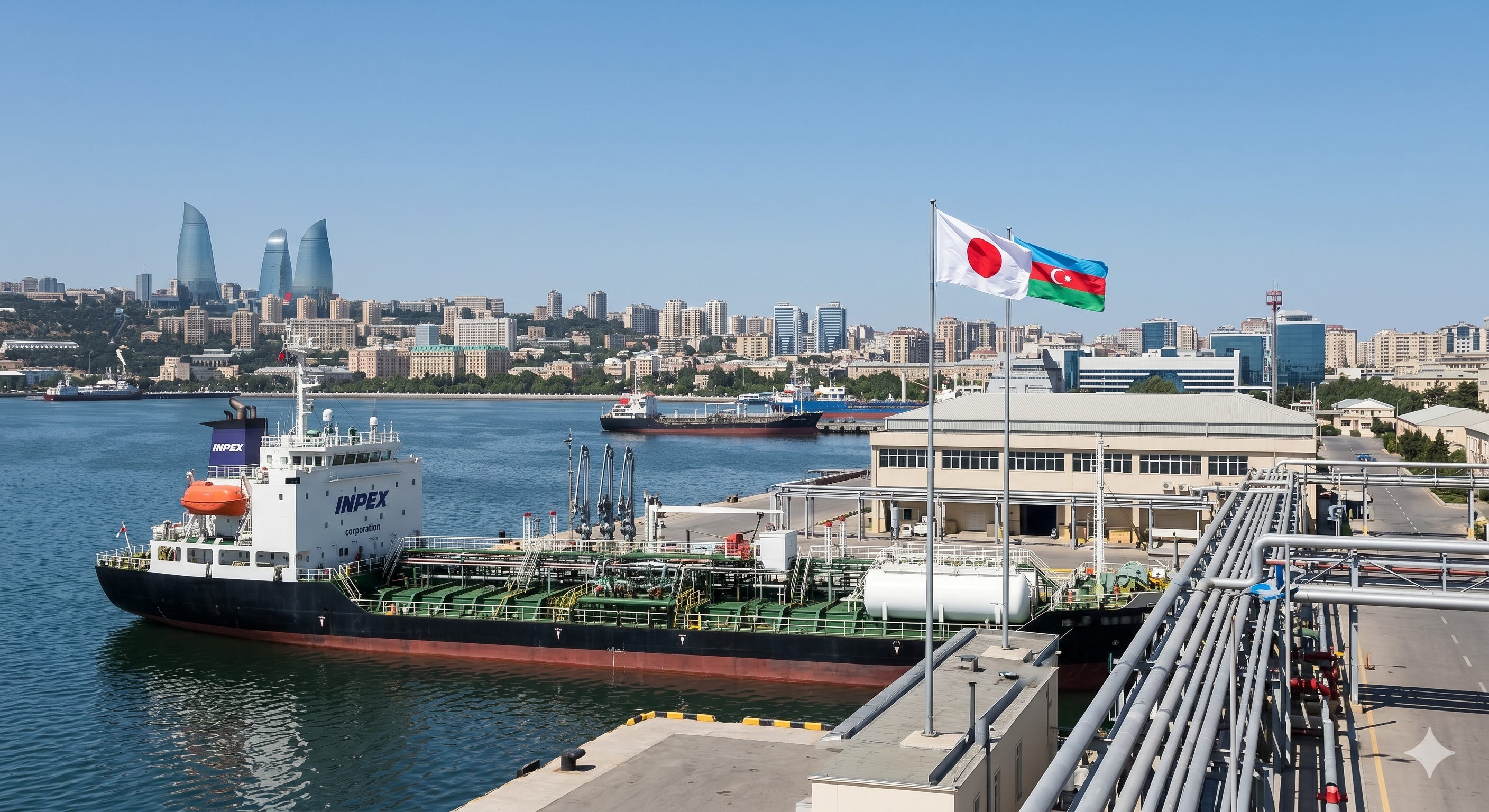
The Caspian Basin, particularly Azerbaijan and Kazakhstan, has long been an important component of Japan’s regional strategy. More specifically, INPEX Corporation has held a 7.56% stake in the Kashagan Field in Kazakhstan since 1998. This major offshore project produces roughly 430,000 barrels per day, with ongoing expansion plans aimed at further increasing capacity. On the western shore of the Caspian Sea, INPEX has also strengthened its position in the Azeri-Chirag-Gunashli (ACG) oil fields in Azerbaijan, becoming a significant stakeholder through its subsidiary, holding a 9.31% stake since 2003. Producing over 330,000 barrels per day, the ACG stands as the largest oil field in Azerbaijan’s sector of the Caspian Basin. INPEX holds rights under Production Sharing Agreements (PSAs) in both Azerbaijan and Kazakhstan. The PSA for the ACG remains in force until 2049, while the PSA for the Kashagan Field is valid through the end of 2031, with an option to extend it to 2041 under the existing terms
From Tokyo’s perspective, these producers offer more than just additional barrels. They represent a pathway toward greater supply security at a time when dependence on the Strait of Hormuz is highly fraught with geopolitical risk. At a time when energy importers are searching for reliable and politically resilient alternatives, the Caspian stands out as a region that can contribute to diversification away from the most vulnerable maritime routes. Its strategic value lies not only in resource abundance but also in its potential for integration into broader cross-Eurasian trade and transportation networks.
Japan and the Middle Corridor
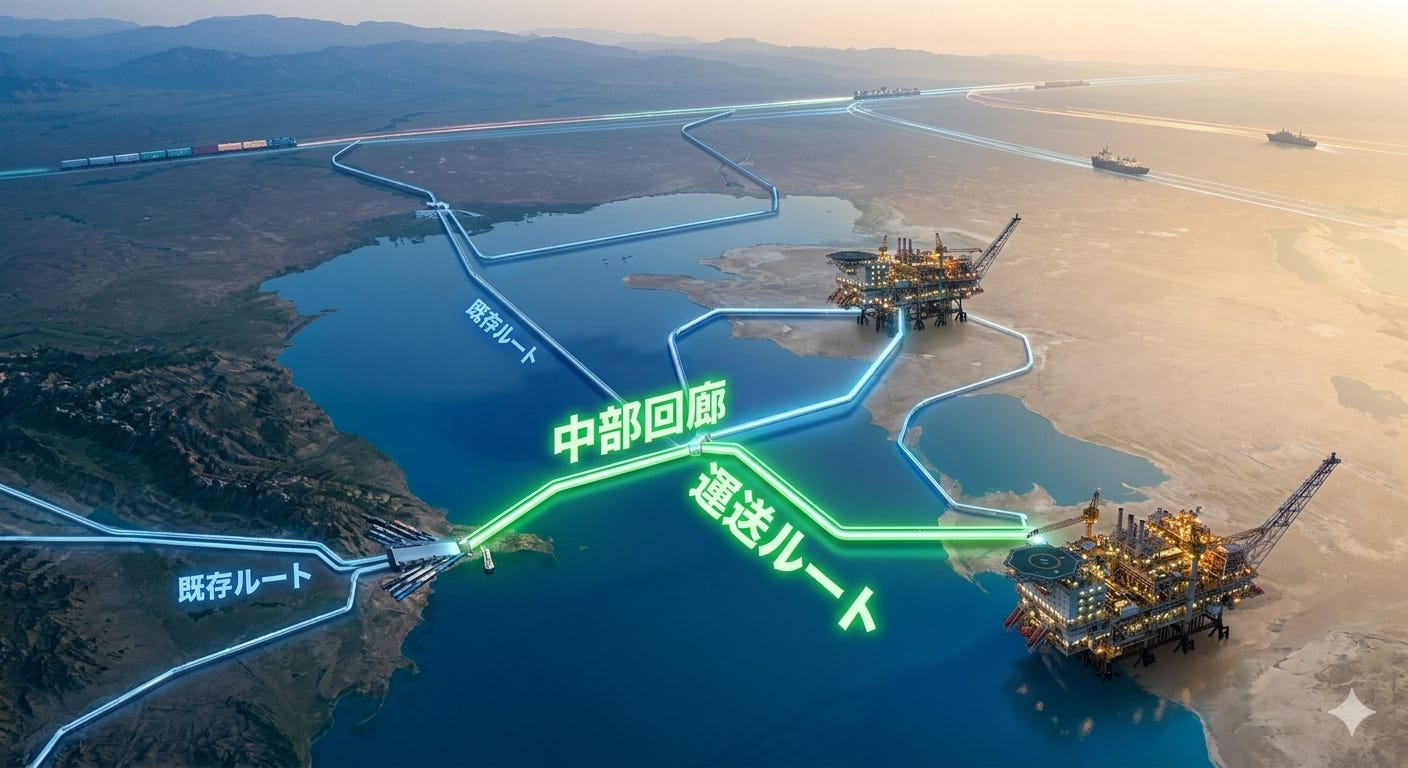
This is where the Middle Corridor becomes central to Japanese strategy. Often seen mainly as a trade and logistics route linking Asia and Europe, it is increasingly gaining importance as an energy corridor as well. In the current context, its role goes beyond simple connectivity. If further developed and effectively operationalized, it can enable more secure and diversified energy flows from the Caspian to East Asian and global markets. Japan has already demonstrated its interest and commitment by investing significant effort in developing and digitalizing the Middle Corridor through a range of Central Asia–Japan initiatives, particularly under the Tokyo Declaration announced in December 2025 at the inaugural Summit of the Central Asia plus Japan Dialogue. These efforts directly respond to Japan’s growing concerns about transit security and broader supply chain vulnerabilities.
At the same time, Japan’s renewed focus on the Caspian could give rise to a quieter yet more meaningful form of strategic competition with China. Over the years, China has steadily expanded its economic, infrastructural, technological, energy, and security presence across Central Asia through major economic initiatives such as the Belt and Road Initiative and multilateral platforms like the Shanghai Cooperation Organization. Through sustained investment, the development of transport corridors, and bilateral energy partnerships, Beijing has significantly deepened its footprint in a region at the heart of Eurasian connectivity, as demonstrated by the second China–Central Asia Summit and its decades-old engagement with the region.
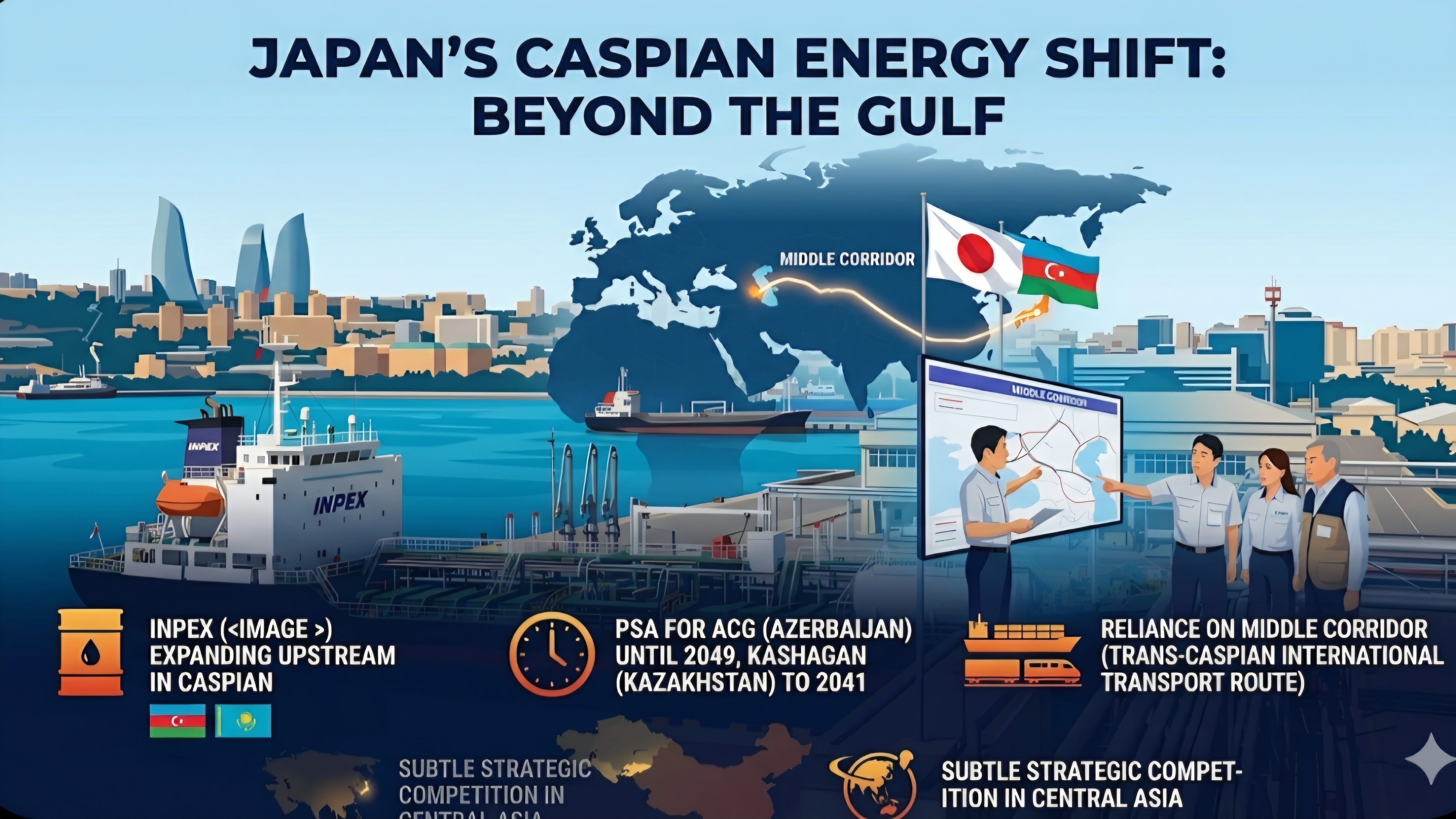
Japan’s return to the region, even if framed in commercial and security terms rather than open rivalry, is likely to increasingly intersect with Chinese interests. This is unlikely to take the form of open confrontation, but rather a more layered competition over influence, access, and long-term positioning within Caspian energy and trade networks. This possibility reveals an important transformation in Asian energy geopolitics. The Caspian Basin is no longer just a secondary source of supply on the periphery of the global energy map. It is becoming a strategic arena in its own right, where major Asian powers seek to secure redundancy, resilience, and leverage. Japan’s energy strategy, shaped by the Iran crisis, reflects a broader recognition that supply security now depends as much on geography and diplomacy as on market prices. In this context, Caspian engagement is not merely about replacing one source with another. It is about constructing a more durable architecture of energy security.
Outlook
The crisis in the Strait of Hormuz not only affects Japan. South Korea also remains highly exposed, with roughly 61% of its crude oil imports passing through the strategic chokepoint. Recent agreements between South Korea and Kazakhstan highlight a similar shift toward Eurasian energy diversification. Kazakhstan is set to supply around 18 million barrels of oil, supporting Seoul’s efforts to secure volumes through routes that bypass the Gulf chokepoint. While modest relative to South Korea’s overall import needs, this partnership carries clear strategic weight. It signals a deliberate effort to reduce reliance on Middle Eastern transit routes and to integrate the Caspian Basin into a more diversified and resilient energy supply framework.
In sum, the deeper significance of the current shock lies in its structural effects. It is accelerating East Asia’s shift away from chokepoint-dependent energy supply chains toward more diversified Eurasian corridors. The Strait of Hormuz remains indispensable, but it is now also understood as a vulnerability that cannot be ignored. In response, the Caspian Basin is gaining great strategic importance as a critical node in the emerging geography of energy security. What is unfolding is not just a temporary adjustment to crisis conditions, but a broader reconfiguration of how East Asian states think about risk, resilience, and strategic access in a more uncertain global environment.
About the Author:
Vusal Guliyev is a frequent contributor to The Saratoga Foundation. He is a Sinologist, TCSOL Specialist, and Policy Analyst specializing in the geopolitical affairs of Eurasia and the Indo-Pacific region. Mr. Guliyev currently works as a Leading Advisor at the Baku-based Center of Analysis of International Relations (AIR Center) and serves as the Head of the Shanghai Office at AZEGLOB Consulting Group.
Thank you for your support! Please remember that The Saratoga Foundation is a non-profit 501(c)(3) organization. Your donations are fully tax-deductible. If you seek to support The Saratoga Foundation, you can make a one-time donation by clicking on the PayPal link below! You can also subscribe to our website to support our work.
https://www.paypal.com/donate/?hosted_button_id=XFCZDX6YVTVKA