

BRIEFS:
Chinese Trade with Russia Posts First Decline in 5 years
The downturn in the Russian economy is now affecting trade with China. China–Russia trade in 2025 fell for the first time in five years, signaling a slowdown in an economic relationship that had surged after Russia’s invasion of Ukraine and its isolation from Western markets. According to Chinese customs data, bilateral trade fell 6.5% year on year to 1.63 trillion yuan ($234 billion). Chinese exports to Russia dropped sharply, driven mainly by a collapse in car sales after Moscow raised recycling fees and borrowing costs, while imports from Russia also declined amid falling commodity prices.
Detailed data for January–November show China reduced purchases of most Russian natural resources: oil imports fell about 20%, oil products 16–40%, coal 29%, and LNG slightly. Only pipeline gas and certain raw materials increased, including ferrous metals, aluminum, nickel, and copper, reinforcing Russia’s growing role as a low–value–added supplier. Despite December showing tentative improvement, the slowdown has alarmed the Kremlin. While China remains Russia’s largest trading partner, the imbalance has deepened, with Beijing benefiting from steep discounts on Russian oil and gas and Moscow increasingly cast as a junior partner.
Chinese Portal 163.com: ‘China Must Secure the Russian Far East in the Event of a Russian Collapse’
Shortly before the end of last year, 163.com, one of the big four internet portals in China, published an article that went viral, generating thousands of views and comments by experts from around the world. The anonymous article explored a provocative contingency: whether Beijing must prepare for a worst-case scenario involving the total disintegration of the Russian state. The article highlighted what many in China might be thinking privately about the impact of the Ukraine war on the Russian economy and its overall stability. The author asks if Russia collapses, what would happen to the roughly 7 million square kilometers of the Russian Far East?” The conclusion is quite alarmist: 'it must not be lost'."
The author presents an interesting scenario that, should Moscow lose control, the Far East will not remain a neutral vacuum; instead, it would rapidly become a contested zone for outside powers unless China intervenes first through non-military means. To provide historical context, the article recalls the Treaties of Aigun (1858) and Beijing (1860), when Qing China—weakened and vulnerable—lost vast territories to Tsarist Russia. Today, the region is described as a “chicken rib” for Russia—vast and resource-rich, yet costly and difficult to manage—while simultaneously representing a “treasure” for China due to its timber, minerals, energy, and strategic depth.
Russia’s current position is also painted in dark economic terms. Russian GDP is described as “less than that of a single Chinese province.” In sheer strategic terms, the author refers to Russia as being militarily weak in the Russian Far East, in reference to the toll caused by the Ukraine war, and uses the term “hollowed out,” referring to the fact that “fewer than 50,000 troops remain” in the region, and represent an “empty shell”, implying in the event of a collapse Russia would not be able to defend it. The author explicitly notes that: if chaos erupts in Russia, the Far East would rapidly become a zone of instability that external forces—particularly the United States and Japan—would inevitably focus on, with South Korea also watching closely. The author notes that the region’s proximity to Alaska, Japan, and the Korean Peninsula makes it especially vulnerable to the possible deployment of foreign military forces, which directly affects the security of northeastern China.
What is particularly striking is that the author argues that “China has long been preparing for this scenario” and highlights the years of expanding Chinese economic and infrastructure presence through pipelines, bridges, ports, mining, agriculture, long-term energy contracts, and growing use of the renminbi. “If Russia really collapses, 7 million square kilometers of the Far East should not go to waste,” the author writes, arguing that China has already paid for weakness in the past and must not repeat that mistake.
At the same time, the article strongly rejects open territorial seizure, warning that force would trigger international isolation, as in Crimea. Instead, the author advocates a go “soft” strategy of sustained investment, support for pro-Chinese local forces, and tying them down with loans and contracts. The objective is made explicit—“nominally independent, actually dependent on China.” As the article bluntly asks, “Whose land is this? It is only a name—the life arteries are in our hands.”
Within this framework, the author concludes by pointing out that the Shanghai Cooperation Organization (SCO) is the best diplomatic shield to deter external interference and can provide political cover for deepening economic integration. The article concludes that China should act out of national interest. While Russian rhetoric celebrates “friendship,” China should be focusing on outcomes. If the Russian Far East is simply too much of “a burden” for Moscow to maintain, then China should treat the Russian Far East “as a treasure,” and if the political landscape changes, only those prepared in advance will shape what follows.
Russia Blocks Chinese Rail Ambitions With an Amur River Tradeoff
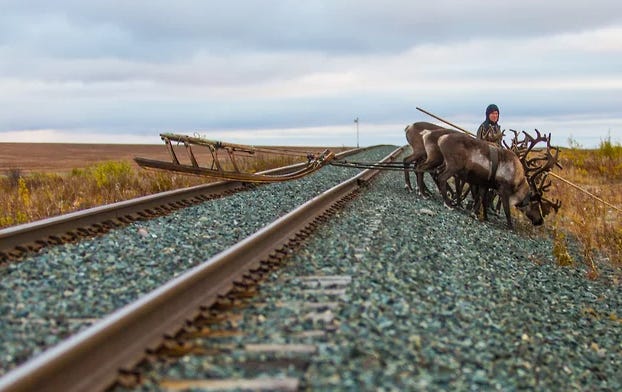
Since Tsarist times, Russian governments have laid railroad tracks 1520 millimeters apart and not the 1435 mm that is the standard gauge used almost everywhere else in the world, a difference Russian officials see as key to enhancing their national security in the case of invasion, but one that adds to the costs of moving cargo across Russian borders. Despite efforts by both Moscow and Beijing over the last five years and ambitious projects now on the table, the border crossing points between Russia and China remain a transportation bottleneck for the development of economic relations between the two countries.
Only nine crossing points exist along the more than 2,000-mile Sino-Russian border that handle trucks or railcars, although there are more than 150 that handle pedestrians or personal cars. Truck traffic has been growing rapidly in recent years, but increases in rail traffic have been limited by the fact that China and Russia use different rail gauges – the Russian gauge is slightly wider than the international gauge China uses. It is something that requires either intermodal transfers via trucks, shifting goods directly from the rail lines coming from one country to the gauge of another, or, in some cases, transferring cars from undercarriages built for one gauge to those constructed for another.
China, however, has called for radical changes, which almost certainly include installing within Russian-gauge railways in the border region Chinese-gauge tracks; but Russia has not responded positively to that. Unless that changes, Chinese-Russian trade and China’s ability to project additional power into even the Russian Far East are likely to be far less than Beijing and some in those regions want. (For a comprehensive discussion of both these challenges, see the Tearline survey on this topic published here).
China has invested heavily in the development of intermodal transfers and indeed is now a leader in that aspect of railway management, given its promotion of the “one belt, one route” project between Asia and Europe, where it has pushed for improved handling of transfers of cargo where necessary and even the expansion of double-tracked rail lines (Ibid.). Russia, in contrast, has faced serious problems in this area, not only due to the technical difficulties of implementing the necessary changes, but also because of a lack of funding, according to Kommersant. Most studies, including the Tearline survey, suggest that there is little chance for a major change in the next several years. However, in addition to China’s ongoing interest in expanding trade with and influence in Russia’s Far East and Siberia, three new developments suggest Moscow may be prepared to take steps it had previously avoided. Indeed, their coming together has already led the Russian government to announce major plans to address the border crossing problems it has with China and possibly to make concessions to Beijing that would transform the geopolitics of this part of the world.
First, problems at the border and also at Russian ports that might serve as an alternative route appear to be on the rise, prompting officials to think about what needs to be done to improve transportation in the border region. Putin seeks to create a Chinese-style transportation corridor from China north to the Northern Sea Route, something that makes sense if and only if trade with China takes off. And third, the Kremlin is desperate for Chinese economic and diplomatic support, given Russia’s deepening problems as Putin’s war in Ukraine continues. That these have now come together to produce a change in Moscow’s approach to the issue is suggested by the Russian government’s announcement of a five-year plan, projected to cost 180 billion rubles ($2 billion) to expand some existing border points to be able to handle heavy trucks and more trains, notes arctic.ru.
Moscow Offers Beijing Expanded Use of the Amur River
Not surprisingly, Moscow’s plan focuses on building more bridges and customs facilities; but most Russian experts acknowledge that will not be enough unless the transportation links are developed and unless it becomes easier for China and Russia to move goods from one country to another, with the most likely way being the double tracking of rail lines at least in the border portions of the Russian Far East. As Russian experts point out, however, to make the development of these crossings truly stable and effective will require not only the modernization of the industry of the Russian side of the border but the further integration of the two countries so that trade between them will continue to fit together. Otherwise, they say, “even the most up-to-date border crossing points and terminals ill remaining underused,” adding that “the scale of this project inspires optimism, but the real results of it will depend not on the number of automobiles crossing the border but on how many Russian regions and the Amur Oblast in articular will be able to fit in completely into these production and logistical processes.” Officials in Moscow and their counterparts in Beijing both remember that almost a decade ago, Moscow did approve dual-gauge tracking between the Chinese border and a Russian port, an event that China in fact celebrated.
Will Rail Gauges Determine the Balance of Power?
Because China is almost certain to continue pushing for double-gauge rail lines, and because it would likely be forced to pay for much or even all of the project, this precedent alone could shift the balance of power in Russia’s border regions away from Moscow and toward Beijing. This risk is a major reason Moscow is likely to resist for as long as it can, or to instead promote alternative cross-border trade routes, including expanded use of the Amur River, as it has already begun to do. Such collateral projects, while important, are not likely to be sufficient to draw China into major expansion in cross-border transit. Consequently, it seems increasingly likely that the Kremlin may soon be forced to think the unthinkable about a change in its approach to trade with China that could help Russia in the near term but put its dominance of much of the territory it now controls at risk.
Chinese Economic Encroachment Sparks Sincization Backlash in Primorye
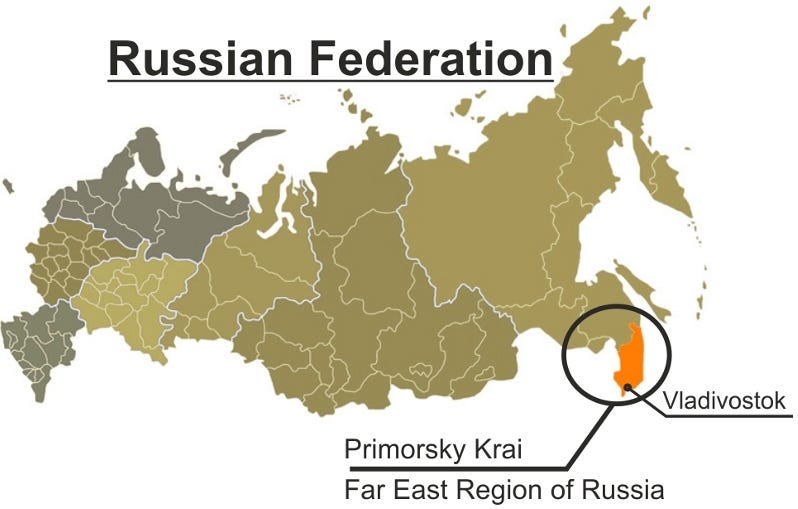
On December 19, following a meeting with a Chinese delegation, Vitaly Altabayev, the Deputy Minister of the Russian Federation for the Development of the Far East and the Arctic, announced that a large-scale agro-industrial cluster is being planned for deployment within the territory of the first International Advanced Special Economic Zone (M-TOR) in the Russian Far Eastern province of Primorsky Krai, often referred to Primorye. This ambitious large-scale project envisions the construction of the following facilities: grain terminals; enterprises for deep processing of agricultural raw materials; plants producing agricultural machinery; production facilities for dairy and confectionery goods.
This news development illustrates the ongoing economic takeover by China in Russia’s remote and resource-rich Primorye, located in Russia’s Far East along the northwest edge of the Pacific Ocean. The resource-rich region borders the Sea of Japan and the Russian–Chinese frontier, and lies directly north of North Korea. Its capital, Vladivostok, sits on the Sea of Japan opposite Japan’s main islands and hosts Russia’s principal Pacific Fleet naval base, underscoring the region’s strategic maritime importance.
Since Russia’s large-scale, unprovoked invasion of Ukraine in 2022, Primorye – akin to other regions of the Russian Far East – has increasingly and irreversibly gravitated toward China’s economic sphere of influence. This said, the deeper analysis suggests that the situation in Primorye is far more complex than might appear on the surface, as trade data indicates that Russia’s Pacific outpost is deepening its dependence on China, which is giving rise to greater regional backlash in response to Chinese economic encroachment.
Primorye Spearheads Russian Pivot to China
Following 2022, Russian and Chinese sources began to describe Primorsky Krai as the focal point of Moscow’s ‘pivot to the East.’ Due to its exclusion from Western markets, Russia has become increasingly dependent on China as its sole provider of capital and industrial partnership in the Pacific. This overarching tendency, already clear by 2023, accelerated further after 2024.” According to Russian sources, by 2024, Chinese investments in Primorsky Krai totaled 5.5 billion rubles ($68.7 million), accounting for more than 40 percent of all foreign investments in the region, creating approximately 2,500 new jobs. In total, as of 2024, Chinese financial capital had implemented at least 40 regional projects: 36 of which were conducted in the scope of the Free Port of Vladivostok regime and 4 within the Advanced Development Territories (TORs). The sectors receiving the most attention from Chinese investors were shipbuilding and ship repair, transport and logistics, agriculture, and the extraction and processing of marine and forest resources.
While official Russian statistics have yet to provide consolidated – and independently verifiable – data on the extent of Chinese economic involvement in the region in 2025, fragmentary information, largely disseminated by local officials eager to highlight their role in promoting Sino-Russian cooperation, nevertheless sheds some light on recent developments. Eager to tout the results of 2025 investment, the governor of Primorsky Krai, Oleg Kozhemyako, for example, noted significant investment growth during the past year and pronounced the strengthening of Primorye’s position as one of the most attractive regions for business in Russia. Among other things, he stated that in 2025 the region attracted 300 billion rubles ($3.9 billion), an 8 percent year-on-year (YoY) increase—far exceeding both the national average (0.5 percent) and the Far Eastern Federal District average (1.6 percent). This, according to the governor, primarily resulted from the region “becoming the country’s leader in cooperation with China.”
Economic Dependency on China Accelerates
Based on Russian open sources, Primorye`s economic dependency on China has significantly grown in the past several years. If by 2024, China’s share in the region`s foreign trade reached 68 percent, by 2025, it had further climbed to an overwhelming 70 percent. At the current pace of encroachment, it could reach as high as 80 or 90 percent by 2035, especially if Russian isolation from the West continues. What this trend indicates is that the structure of bilateral trade remains markedly asymmetrical. Despite Moscow’s repeated emphasis on attracting Chinese investment into the localization of higher value-added production, trade patterns continue to reflect a similar pattern of dependence: Russia largely exports petroleum products, timber and wood-processing goods, fish, and agricultural commodities, while China supplies machinery and equipment, as well as consumer and light-industry goods.
This trade pattern ultimately constrains Russia’s ability to move up the value chain and reinforces its position as a supplier of raw materials and semi-processed products within an increasingly China-centric economic relationship. Below is a concise, domain-based analysis of four key areas that underscore the region’s accelerating economic dependence on China that highlights the strategic implications and emerging points of friction inherent in this trajectory.
First: Chinese domination of the local agro-industrial complex. Chinese farmers and firms expressed an avid interest in leasing Russian farmland in Primorye well before 2022 and Russia`s breakup with the West. In fact, such attempts date back at least two decades, starting in the 2010s. However, it was only after 2022 that Chinese offers and initiatives increasingly became more specific and much more strategic. For instance, the Chinese side repeatedly introduced more specific proposals featuring plans to create Russian-Chinese agro-industrial parks and processing clusters, oriented toward exports to China. Critically, in these cases, end markets, logistics, and quality standards are tied to Chinese buyers, de facto contributing to the gradual transformation of the local agricultural sector into an integral part of China`s domestic industry. Although no comprehensive official statistics exist for total Chinese agricultural investment in Primorye from 2024 to 2025, project-level data points to significant involvement. For example, the “LegendAgro/PrimAgro” initiative (2025) was backed by approximately 22.8 billion rubles ($286.8 million) for expanded crop production and processing, targeting export markets including China.
Second: the veneer of “import substitution.” Following the economic and political breakdown between Russia and the West (and its regional allies, such as Japan and South Korea), Russia embarked on the policy of import substitution. In this regard, Primorye was not an exception: local firms were encouraged to produce localization of production, which became particularly visible in such domains as agricultural machinery and equipment. On paper, local firms reported success; in reality, however, the majority of local producers were limited to assembly from imported components and technologies that arrive from China. It is also important to acknowledge that Russian sources openly note that import dependence includes critical reliance on foreign (Chinese) components, leaving the sector vulnerable, thereby creating a veneer of change. In reality, however, local technological advancement does not occur, which leaves domestic producers technologically dependent on China. Moreover, due to the financial challenges of the post-2022 period, the import of foreign components and spare parts has significantly increased costs and expenses, thereby reducing profit margins and threatening the long-term economic sustainability of production. Therefore, it would not be an exaggeration to claim that the post-2022 period did not eliminate foreign dependence, but rather transformed it.
Third: logistics – Primorye as a “gateway” or infrastructure appendage? At the micro level, 2025 witnessed a qualitative shift, with the region evolving into a key logistical hub between Russia and China. Russian sources estimate that cargo turnover through Primorye’s road checkpoints with China increased by 36 percent in that year alone, with approximately 800 trucks crossing daily. Moreover, by early 2026, road traffic between China and Primorye is expected to quintuple as three additional checkpoints are expected to open.
At a macro-level, however, several strategic shifts are occurring as well. Chinese financial capital is playing a key part in major infrastructural projects on the territory of Primorye that are likely to dramatically increase cargo volume flow that will turn Primorye into a low-margin transit corridor serving Chinese trade strategies. Yet, even more telling is the example of the China-based dry port at Suifenhe – located in Heilongjiang Province on the border with Primorsky Krai – which is developing into a major logistical hub for Sino-Russian trade, but is concentrating the supply-chain management on the Chinese side of the border. This de facto places Primorye and the areas beyond it under the direct and overarching dependency on China. Not only in terms of cargo flow, but it also exposes the Russian border region to policy decisions made in China (including tariff changes and customs regulations). While undoubtedly enhancing trade and economic ties, completion of this and similar projects deeply embeds Primorye into China-dominated transport and logistics networks, resulting in the emergence of a structural asymmetry that strongly favors China economically, technologically, and above all, strategically.
Fourth: the domain of hydrocarbons. In this domain, the region has also strengthened structural reliance on Chinese energy requirements. Between 2024 and 2025, a new Liquefied Petroleum Gas (LPG) export terminal – primarily oriented toward exports to China – with a capacity of 150,000 tons per year was launched in the Khasansky District (Lake Khasan is the site of the famous Soviet battle against Japan in 1938 when another Asian power was encroaching on the Russian Far East). Moreover, during the same time period, another Chinese company from Mishan began importing LPG from Primorye, planning up to 10,000 tons annually via the Mishan–Tury Rog crossing. Analysis conducted by The Moscow Times indicates that
Russian LPG exports to China are rapidly expanding, reinforcing structural reorientation toward meeting Chinese energy demand. Within this broader trend, one critically important dynamic stands out. An examination of China’s energy strategy toward the Primorye region reveals a clear pattern: Beijing appears to be prioritizing agreements in the LPG sector rather than LNG. This preference is strategic rather than incidental. Due to its cost structure and operational characteristics, LPG—unlike LNG—allows China to maximize leverage while minimizing long-term commitment. It does not require participation in capital-intensive infrastructure projects or binding, long-duration contracts. As a result, LPG offers China greater structural flexibility and lower capital exposure than LNG, enabling shorter commitments and reduced infrastructure lock-in, while simultaneously increasing the exporter’s dependence on the end user.
Regional Backlash to Sinicization
China`s growing presence and domination in selected areas of the local economy have traditionally sparked negative sentiment among the local population. For example, in 2011, 2012, 2014, and 2017, local media reported negative sentiments expressed by local farmers leveled against “foreign” workers, i.e., Chinese workers involved in the local agricultural sector who use ecologically unsustainable practices in their ongoing operations. Chinese activity appears to be taking a heavy toll on the local environment and ecosystem. Importantly, in 2015, the issue went well beyond local media and information outlets: The Ministry of Agriculture of the Russian Federation, for example, came up with a legislative proposal urging restricting foreign access to farmland, stating that: “According to the Federal Service for Veterinary and Phytosanitary Surveillance (Rosselkhoznadzor), land plots provided to foreign persons – especially citizens of the People’s Republic of China – are being used in a predatory manner: they are littered with industrial waste, the fertile topsoil is mixed with polyethylene film, pesticides that are not registered for use in the Russian Federation are applied, or the regulations governing their use are violated.”
These sentiments were toned down later and completely disappeared in Russian public discourse between 2022 and 2023. After 2024, however, a new and most important development – apparently, with approval from the top (Moscow) – resurfaced. First, the former governor of the region, Sergei Darkin, spoke publicly about Russia’s “bad dependency” on China in certain sectors of the economy, particularly in the areas of agriculture and forestry. He also expressed concern about the increasingly adverse demographic situation in the Far East (an almost taboo topic for Russian officials since 2022), citing this factor as a clear “risk” in Sino-Russian relations. Later, Andrey Bronts, the Minister of Agriculture of Primorsky Krai, publicly stated that “Chinese dumping practices and credit policies were exerting significant pressure on local agricultural producers. The most controversial statements, however, came from the local governor, Oleg Kozhemyako, who claimed that “the region urgently needs to strengthen its historical identity,” a subtle hint that Chinese sources are increasingly presenting interpretations suggesting that these territories were originally Chinese.
Interestingly, Kozhemyako`s arguments have been supported by influential members of Russia`s academic community. For example, Director of the Center for the Study of Far Eastern Countries, Kirill Kotkov, stated that:
“According to the Chinese authorities, Northern Primorye and the Amur region have, since ancient times, been an integral part of the Chinese state. In Chinese historiography, the Treaties of Beijing and Aigun of 1858 and 1860 – under which these territories were peacefully transferred to Russia – are regarded as unequal treaties. China harbors latent claims to these territories, but for now, they are not voiced, as long as there is ‘peace, friendship, and chewing gum’. It would take just a snap of the fingers for the Chinese media to switch to openly articulating territorial claims; at present, however, voicing such claims is not advantageous for China.”
Conclusion
The post-2022 trajectory of Primorsky Krai illustrates how Russia’s economic isolation from the West can rapidly translate into structural dependency on China, especially in the Russian Far East. While official Russian narratives emphasize investment growth, infrastructure expansion, and Primorye’s role as a flagship of Russia’s “Pivot to the East,” the evidence points to a far more ambivalent outcome. Across agriculture, logistics, manufacturing, and energy, Chinese capital and demand have become not merely dominant but system-forming, reshaping production chains, trade patterns, and development priorities in ways that significantly constrain regional autonomy.
By early 2026, Primorye will have the makings of becoming almost completely subordinate to Chinese economic needs. At this juncture, however, it is important to trace the shifts in the discursive environment. The re-emergence of concerns by both the local public and concerns by the Russian elite is even more striking as local Russian officials are now openly lamenting about a once taboo topics in Putin’s Russia, ranging from China’s agricultural dumping to historical narratives and even latent Chinese territorial claims against the Russian Far East, which suggests that economic dependency due to Sinicization is beginning to spill over into the political domain.
Whether these signals reflect genuine local anxiety or a carefully calibrated message from Moscow remains unclear, but they do strongly underscore the emerging and possibly new fault lines within what is publicly framed as a “strategic partnership: between Russia and China. In this sense, Primorye is not merely a beneficiary of Sino-Russian strategic alignment, but a testing ground as to where the asymmetries, costs, and internal contradictions of that alignment are increasingly exposed—and where its durability may ultimately be tested.
Thank you for your support! Please remember that The Saratoga Foundation is a non-profit 501(c)(3) organization. Your donations are fully tax-deductible. If you seek to support The Saratoga Foundation, you can make a donation by clicking on the PayPal link below! Alternatively, you can also choose to subscribe on our website to support our work.
https://www.paypal.com/donate/?hosted_button_id=XFCZDX6YVTVKA
Thanks for reading! This post is public, so feel free to share it.