
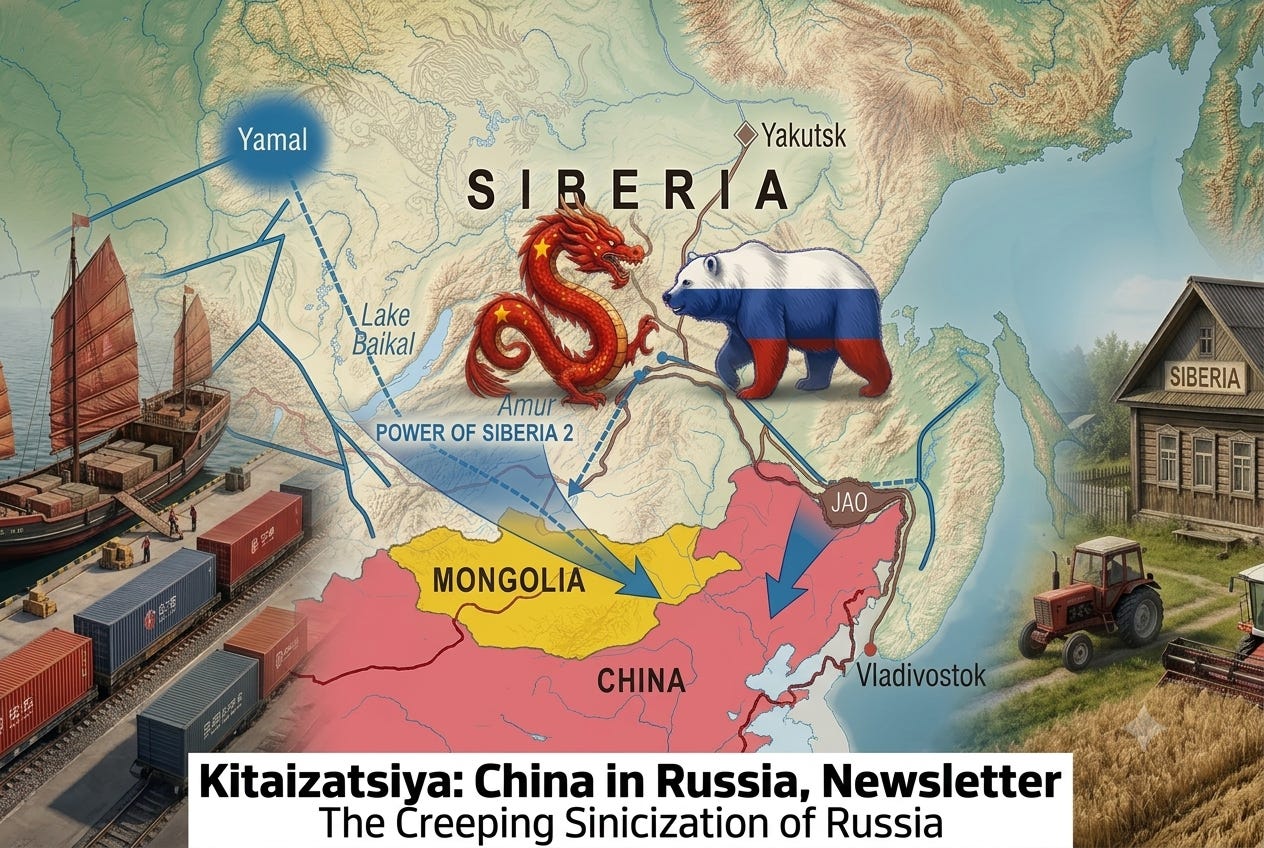
BRIEFS
China Blocks Putin’s Stalled Mega-Icebreaker Project Over Sanctions Fears
On July 16, the Russian newspaper Vedomosti ran an article about the critical and multifaceted crisis paralyzing President Vladimir Putin’s largest Arctic ambition: the transformation of the Northern Sea Route (NSR) into a premier global trade artery rivaling the Suez Canal.
Documents and expert testimony obtained by the Russian newspaper reveal that the defining element of this strategy, the creation of a massive, technologically advanced fleet of ice-class cargo vessels, has suffered a massive breakdown. As a result of this crisis, Moscow has been caught between its own technological deficiencies and Beijing’s refusal to provoke Western sanctions (more on this below by Paul Goble).
Whereas Putin’s initial 2018 shipbuilding goal for the NSR was 80 million tons by 2024, this aim was projected to rise to 200 million tons by 2030. In reality, however, the 2024 performance fell far short, managing only 37.9 million tons, leading to dramatic and lasting downward revisions in September 2024, first to 117 million tons by Rosatom, and then to a grim new assessment by President Putin himself, now predicting only 70–100 million tons by 2030.
Russia’s existing ice-breaker fleet is in a dismal state. According to an estimate from the Russian Central Research Institute of Finance (CRIF), Moscow will require a minimum of 23 large new ice-class Arc7 vessels (oil tankers, LNG carriers, bulkers) by 2030. Alexander Buyanov of CRIF confirms that Russian shipyards lack the capacity to build them, stating, “there is no Russian [equipment], the Western one is under sanctions.” The key to resolving Moscow’s problem is China. CRIF documents reveal that China is unwilling to provide essential propulsion complexes for Arc7 vessels out of a fear of Western sanctions and can do so only if “sanctions pressure is weakened.” This development places a clear red line on Arctic cooperation that effectively paralyzes Russia’s NSR strategy.
China Refueling Services Surge in Trans-Baikal Amid Petrol Shortages
Russian entrepreneurs in the Transbaikal region have created a “China Fuel Shuttle” to Chinese Manchuria to alleviate fuel shortages in the Russian Far East province caused by widespread Ukrainian drone strikes on refineries inside Russia. The ad-hoc border service has introduced a vital lifeline for residents in Trans-Baikal, trying to find a way to cope with an acute fuel crisis that began on June 25.
Regional Governor Alexander Osipov described the situation as “extremely tense,” with residents waiting days in queues so long that they are even visible from space. Authorities declared a high alert regime, capping gasoline sales to individuals at just 15 liters per day. Into this logistical void stepped independent entrepreneurs offering a “shuttle” service through local city chat rooms. For a fee, these agents drive Russian cars across the border to neighboring Manchuria, refuel them at Chinese pumps, and then return them to owners in Chita or Trans-Baikal.
The crisis in Trans-Baikal mirrors a national pattern. Ukrainian drone attacks on refineries have disrupted supplies across almost all of Russia, with restrictions in force in 41 of Russia’s regions. As domestic solutions falter, the improvised Chinese fuel shuttle is providing an essential, stabilizing connection for a distressed Russian market. At the same time, it also threatens to force Russian border regions into deeper economic dependence on China.
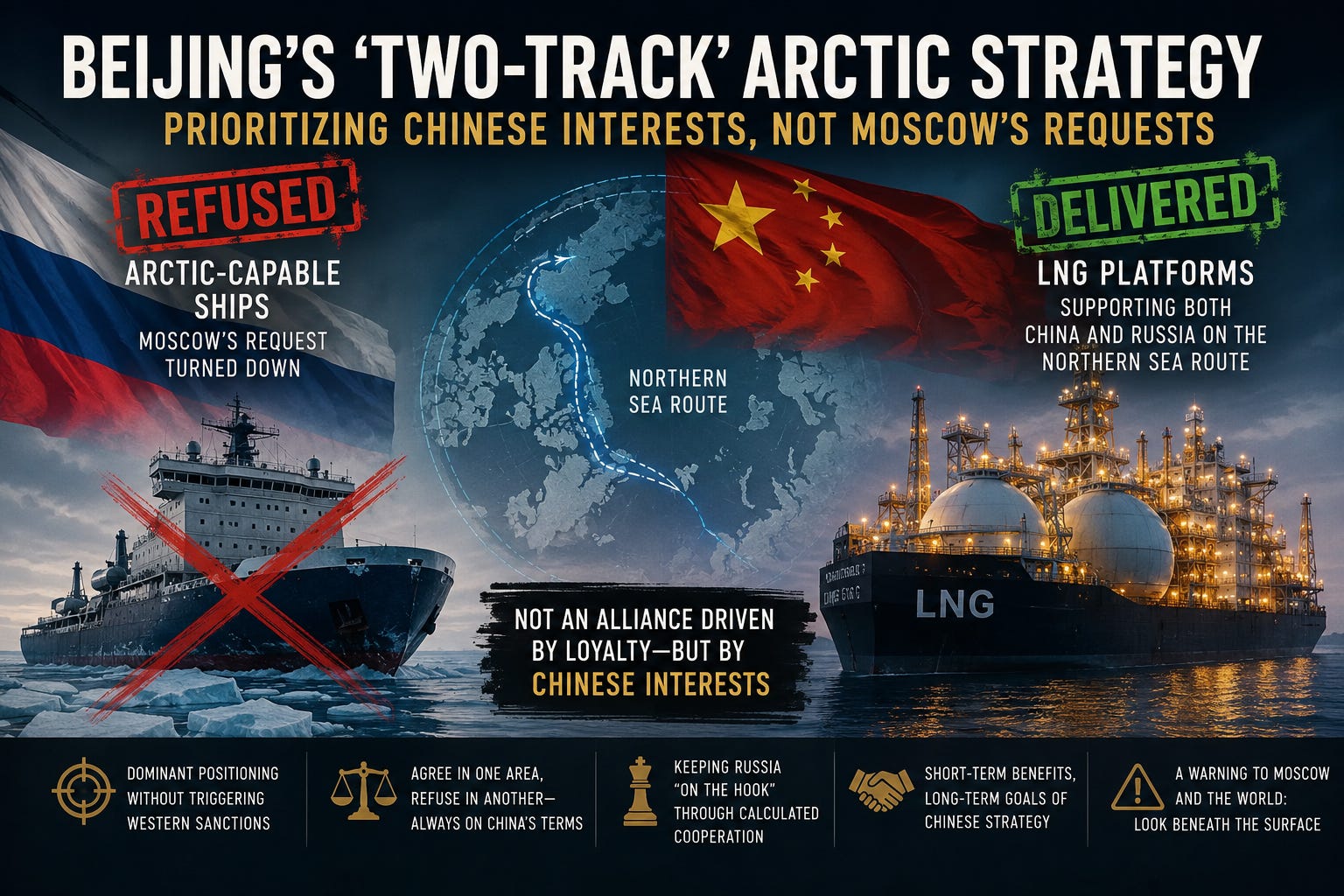
Beijing’s ‘Two-Track’ Arctic Strategy and the Limits of Alliance
China is carefully dosing out its sales of critical equipment to the Russian Federation, reflecting its own national interests rather than simply meeting the requests of its Russian partners. Nowhere is this clearer than in the Arctic. In recent weeks, Beijing has simultaneously refused to sell Arctic-capable ships which Moscow had counted on securing, but delivered LNG platforms both countries could use on the Northern Sea Route.
This two-track approach not only shows that the terms of the alliance are being set less by a commitment to cooperate than by what Beijing believes corresponds to its own national goals. These aims include dominant positioning without risking Western sanctions on Chinese industries as Beijing calculates what suits Chinese interests best. That pattern—which is all too often ignored—should serve as a warning to analysts and governments in Russia and beyond. Those who reach conclusions about the direction of Sino-Russian relations based on a single action will likely be proven wrong, as there is almost always more going on beneath the surface.
Beijing’s decision to turn down Moscow’s request for the production of Arctic-capable ships has drawn scrutiny, as it highlights the persistent problems plaguing Russia’s own shipbuilding sector, particularly its inability to build enough icebreakers. This development is further complicated by Vladimir Putin’s urgent call for a faster expansion of the Arctic fleet than domestic capacity allows, and by China’s proven success in constructing these specialized vessels far more quickly and cheaply than Russia has ever been able to do. For all these reasons, but especially because of cost savings and Russia’s need to build up its naval presence quickly, Russian commentators and officials have been urging Moscow to order Arctic-capable ships from China, including Chinese-built destroyers, noting that other countries, such as the United States, routinely buy ships built elsewhere. While others in Moscow strongly objected saying that Russian ships must be built in Russia, they remain confident that Beijing’s interest in exploiting the Northern Sea Route would result in a favorable decision and Murmansk would become the “hub” for Beijing’s ‘Icy Silk Road.’
That made the Chinese rejection of the Russian request on July 17, much more disturbing to officials in Moscow. Some in the Russian capital were alarmed by what they saw as Beijing’s decision to desert Russia and join the West by agreeing to act within the limits of Western sanctions. But now that China has agreed to fund the construction of LNG plants along the NSR, it is clear those conclusions were unjustified. The Sino-Russian relationship is far more complex than many thought—yet Beijing's actions are entirely consistent with how it has quietly advanced its interests in Russia for over a decade.
Outlook
China has long sought to expand its influence across the Russian Federation but has done so without sacrificing its interests not only with regard to other concerns, such as relations with the United States and the EU, but also in ways that do not undercut its longer-term goals of dominance in the pursuit of short-term mediagenic successes. Thus, Beijing has acted and continues to act as the dominant partner in relations with Moscow, one that will agree to what Russia wants but only if it is consistent with broader Chinese interests - both short and long term - and that it will combine any refusal to cooperate with Moscow in one area with evidence that it still wants cooperation by doing something Russia welcomes in another.
This calculated approach keeps Russia “on the hook,” as it were. After all, given Russia’s current multi-faceted weakness, Moscow has little choice but to continue seeking benefits from China, even when, as is happening now, Beijing turns it down on something critically important. This dynamic is uncomfortable for many in Moscow and is a reality some Western observers appear completely unaware of, leading commentators and officials in both places to lurch between judgments that the relationship is either thriving or that it is collapsing.
Neither of these views is justified by the facts; and it is striking that the Russian government, albeit the weaker partner in this relationship, is acting in a somewhat similar way regarding China when it can. Thus, while it has been stung by China’s refusal to build ships Russia needs and Beijing’s hardline negotiating position on a new pipeline to carry Russian gas to China, the Kremlin has announced that it is extending the period for visa-free travel by Chinese to Russia until the end of 2027, a low-cost action to be sure but one that signals that Russia wants the relationship to continue even though its junior partner status is ever more frequently confirmed.
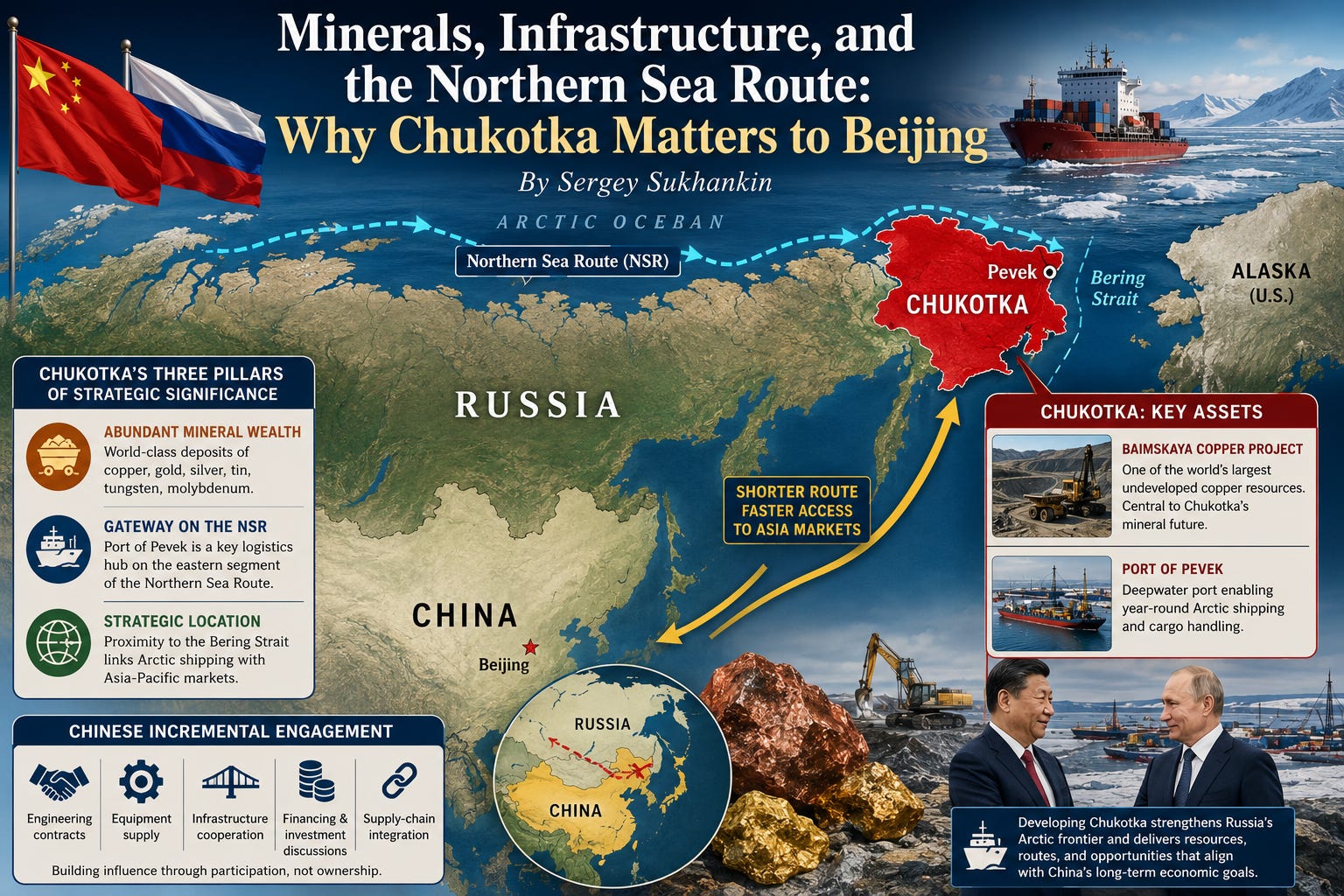
Minerals, Infrastructure, and the Northern Sea Route: Why Chukotka Matters to Beijing
No region of the Russian Far East better illustrates the convergence of China’s long-term economic priorities in the Arctic than Chukotka. Analyses of Sino-Russian Arctic cooperation have largely focused on energy projects, while comparatively little attention has been paid to the Arctic littoral of the Russian Far East. Pre-2022 analyses of the region by Russian experts argue that Sino-Russian Arctic cooperation is driven primarily by complementary economic interests, including the development of the Northern Sea Route (NSR), Arctic infrastructure, and access to natural resources. Chinese motivation is driven by investment and commercial cooperation rather than challenging Russian sovereignty. Chukotka represents an important case study through which these broader dynamics can be examined, as recent developments at both the regional and federal levels increasingly connect the region to China’s long-term economic priorities in the Arctic.[1]
Recent developments at both the Russian regional and federal levels reinforce this trend. Regional authorities continue to prioritize the Baimskaya mineral district, transport infrastructure, and Arctic logistics. Federally, Moscow and Beijing have expanded institutional mechanisms linking the Russian Far East with Northeast China, emphasizing transport connectivity, investment, energy cooperation, and greater utilization of the Northern Sea Route (NSR), where Chukotka might play an important connecting role. Although Chinese investment in Chukotka remains limited, current ownership patterns alone understate the region’s strategic significance. Its large copper resources, location on the eastern segment of the NSR, and proximity to the Bering Strait increasingly align with China’s voracious demand for critical
Chukotka’s Three Pillars of Strategic Significance
Located at Russia’s northeastern extremity across the Bering Strait from Alaska, Chukotka Autonomous Okrug occupies a strategic position between the Arctic and Pacific. Indigenous peoples who reside in the area include the Chukchi, Siberian Yupik, Evens, Yukaghirs, and Chuvans. Traditionally, these groups have relied on reindeer herding, marine hunting, and fishing for their livelihood. With a population around 50,000, it is an enormous region covering over 737,000 square kilometers and is equal in size to the US state of Texas. Moreover, it has a population density of roughly 0.07 persons per square kilometer, making it the least densely populated region in Russia.
Russian expansion into the region first began in the 17th century, although the region’s extreme remoteness and fierce resistance by its indigenous groups delayed effective imposition of government control over the area. Chukotka became a national (later autonomous) okrug in 1930, marking its formal incorporation into the Soviet administrative system. During the Soviet period, the region acquired wider political, economic, and notably military-strategic significance. Moscow expanded its administrative control over the region by heavily investing in mining, transport, and energy infrastructure. It also developed strategic industries based on gold, tin, and tungsten deposits, while new settlements supported Arctic industrialization. At the same time, Chukotka’s proximity to Alaska made it a highly strategic Cold War frontier supporting Soviet border security, military planning, and surveillance in the Bering Strait region.
After the Soviet collapse, Chukotka experienced rapid economic decline, population loss, and deteriorating infrastructure. The region experienced a major revival during the governorship of Roman Abramovich from 2001–2008. Since the 2010s the region has become increasingly important within Russia’s Arctic strategy. Today, its significance rests on three interconnected pillars: abundant deposits of metals (gold, copper, silver, tin, tungsten, molybdenum). Central to that extraction strategy is the port of Pevek, which serves as a major logistical hub for the eastern portion of the Northern Sea Route (NSR). Its strategic location near the Bering Strait connects Arctic shipping directly with Asia-Pacific markets. These advantages collectively position Chukotka as a vital component in the development of the eastern littoral of Russia’s Arctic borderline and a pivotal platform for economic cooperation with China in the Russian Far East.
Chinese Incrementalism in Chukotka
Rather than seeking direct ownership of strategic assets, China has adopted a strategy of “incremental industrial participation” in Chukotka’s extractive economy. This mode of economic engagement builds influence by layering engineering contracts, equipment supply, infrastructure cooperation, financing discussions, and supply-chain integration. This approach was established as early as 2011, when Chukotka Governor Roman Kopin and the chairman of China’s Shenhua Corporation signed a comprehensive cooperative agreement. That pact encompassed geological exploration, resource extraction and processing, power generation and transmission, and the construction of roads, railways, and ports. Shenhua showed particular interest in the Bering coal basin, whose estimated resources reached 4.5 billion tons and whose development would require a deep-water port, new generating capacity, and the Beringovsky–Anadyr Road.
The Baimskaya copper-gold project is the clearest contemporary example of this indirect participation. Its strategic importance derives from its planned capacity to process up to 70 million tons of ore annually, produce approximately 300,000 tons of copper per year during its initial full-production period, and generate a stable mineral-export cargo base for the NSR. Russian academic research identifies the Baimskaya mineral zone as the foundation of a future mining and infrastructure cluster in Chukotka. Available evidence, however, does not demonstrate Chinese control over the mining license or serving as project operator. Following the 2023 sale of GDK Baimskaya to Kazakhstan-based Trianon Limited, the ownership structure remained separate from the Chinese companies involved in construction and procurement.
Taken together, these arrangements suggest that China’s influence derives less from ownership than from participation in the project’s industrial architecture. This role is most apparent in engineering and construction. The principal contractor is China Nonferrous Metal Industry’s Foreign Engineering and Construction Company (NFC), an engineering subsidiary of the state-owned China Nonferrous Metal Mining Group (CNMC). NFC-linked ChukotTsvetMetStroy has been connected to construction of the processing plant and the supply of major technological equipment; NFC’s previous cooperation with KAZ Minerals on Kazakhstan’s Aktogay project likely provided relevant institutional and technical experience. Beyond construction, these contracts create longer-term industrial linkages through equipment supply, maintenance, spare parts, and technical servicing. Chinese shipbuilder Wison has also constructed hulls for floating nuclear power units intended to supply the project, although the reactors, turbines, final outfitting, and operational control remain Russian.
Similar limitations also exist in financing. Earlier negotiations included the China Development Bank, a Chinese state policy lender, and KAZ Minerals had previously used Chinese developmental financing in Kazakhstan. Nevertheless, Baimskaya’s current financing is primarily Russian and led by VEB.RF, Russia’s state development corporation. Pevek, the Chaun terminal, new roads, power lines, Arctic shipping, and the NSR together connect the mine to external markets. These systems do not establish Chinese ownership, but they facilitate China’s gradual incorporation into Chukotka’s mineral-processing and export supply chains. Collectively, these developments underscore that China’s expansion in Chukotka relies chiefly on a strategy of incremental industrial participation, as opposed to the direct acquisition of strategic assets.
How Chukotka Fits into China’s Long-Term Arctic Strategy
While individual Chinese projects in Chukotka appear commercially modest, viewed collectively, they closely mirror Beijing’s stated Arctic priorities, and reveal a coherent pattern of economic engagement defined by incremental industrial participation.
The previously mentioned Baimskaya copper-gold project is not only expected to become one of Russia’s largest new copper producers thereby generating a stable cargo base for the NSR but also stands to become the nucleus of a future mining and infrastructure cluster in Chukotka, and through this prism should be closely examined in terms of understanding Chinese interests.
Moreover, as a strategic commodity, copper’s growing importance reinforces the project’s significance. According to the International Energy Agency (IEA), expanding electricity grids, electric vehicles, renewable energy, and energy storage are expected to increase global copper demand by roughly 30 percent by 2040, with Chinese grid expansion representing the largest single driver of recent demand growth.
Chinese academic studies likewise identify copper as a strategic resource essential for the country’s energy transition and long-term resource security. Critical minerals represent only one dimension of the project’s strategic significance. Its transport infrastructure also aligns closely with China’s connectivity objectives in the Arctic.
Released in 2018, China’s “Polar Silk Road” policy encourages Chinese firms to become involved in Arctic infrastructure, shipping, and resource development projects in neighboring states. The Baimskaya project—with its integrated road, port, and NSR export energy infrastructure—aligns closely with these objectives, though there is no proof it was custom-designed for Chinese interests. This combination of factors indicate that Chukotka exemplifies a distinctive feature of Chinese engagement in the Arctic. Rather than pursue high-profile acquisitions, China appears to be embedding itself in the Russian Arctic through engineering expertise, industrial supply chains, infrastructure participation, and commercial partnerships, a model that minimizes political exposure while establishing a durable economic presence.
Conclusion
While China’s role in Chukotka appears modest when measured by foreign direct investment alone, a broader examination of incremental industrial participation reveals a different pattern. Despite limited asset ownership, Chinese companies have become increasingly involved in engineering, equipment supply, infrastructure construction, and specific areas of project financing, particularly within the Baimskaya mining cluster.
These activities closely correspond to China’s publicly stated priorities of securing critical mineral supply, improving Arctic connectivity, and expanding commercial use of the Northern Sea Route. Rather than replicating the large-scale acquisitions associated with some Belt and Road projects, China appears to be pursuing a more incremental approach in the Arctic littoral of the Russian Far East, seeking to embed itself within industrial and logistics networks through partnerships and commercial contracts. Whether this incremental model becomes characteristic of China’s broader Arctic engagement will be an important indicator of the future evolution of Sino-Russian economic cooperation in the High North.
[1] Leonov, S. N. 2019. “Vzaimodeiistvie Rossii i Kitaia v Arktike,” Rossiisko-kitaiskie issledovaniia 3, no. 3: 7–1.
Thank you for your support! Please remember that The Saratoga Foundation is a non-profit 501(c)(3) organization. Your donations are fully tax-deductible. If you seek to support The Saratoga Foundation, you can make a one-time donation by clicking on the PayPal link below! You can also subscribe to our website to support our work.
https://www.paypal.com/donate/?hosted_button_id=XFCZDX6YVTVKA