
Briefs
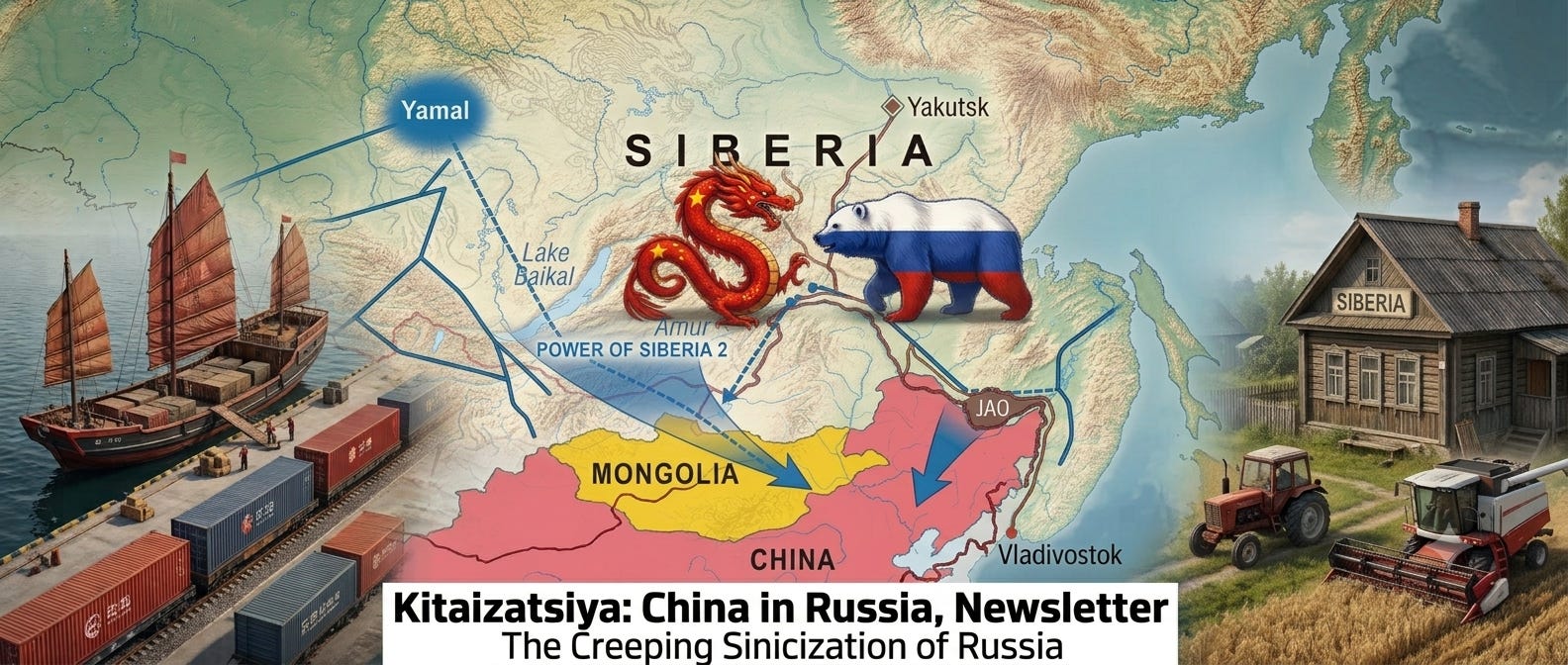
Russian Z Bloggers Turn Critical of Moscow’s China Policy
Russian pro-war military bloggers, commonly known as the “Z” community, are becoming increasingly critical of Moscow’s growing dependence on China, warning that Russia’s strategic partnership with Beijing risks becoming an unequal relationship that leaves Moscow as the junior partner.
Radio Free Europe/Radio Liberty (Radio Svoboda) in a recent report highlighted growing frustration among nationalist and pro-Kremlin commentators who argue that Russia’s confrontation with the West has unintentionally deepened its reliance on China. According to Radio Svoboda, their criticism is not directed at the Kremlin’s war policy, but at what they see as an erosion of Russian sovereignty through economic dependence on Beijing. Some Z bloggers warn that Russia risks becoming a “raw materials supplier” for China, providing oil, gas, and other resources while receiving fewer strategic benefits in return. They argue that Moscow’s isolation from Western markets has strengthened China’s negotiating position and reduced Russia’s leverage.
One of the particular targets of their online criticism is the proposed Power of Siberia 2 gas pipeline. Z bloggers argue that Moscow needs the project more urgently than Beijing because Russia has lost much of its former European energy market. They claim China is in a stronger position to negotiate prices and terms, turning the pipeline into an example of Russia’s growing dependence on its eastern neighbor.
The criticism is significant because it comes from voices that generally support the Kremlin’s nationalist agenda. The Z bloggers are not calling for reconciliation with the West; rather, they fear Russia’s pivot toward China may place the country in a subordinate position within a China-centered Eurasian order. The debate reveals a growing tension inside Russia: while the Kremlin portrays the partnership with China as an alliance of equals, some of its strongest nationalist supporters increasingly question whether the relationship truly benefits Moscow.

Image Source: EastRussia.ru
Russia-China Economic Partnership Faces New Strains Over Beijing’s Growing Leverage
In a rare criticism of Sino-Russian relations, EastRussia.ru, a Russian publication focused on Siberia and the Russian Far East, reports that growing tensions are emerging beneath the surface of the Russia-China partnership. While the Kremlin continues to portray Beijing as Russia’s most important strategic partner, Russian analysts and business circles are increasingly concerned that the economic relationship is becoming increasingly unequal, with China holding greater leverage over critical supplies, technology access, and trade.
EastRussia.ru notes that one of the most sensitive issues is Chinese control over rare earth elements and other strategic materials. Beijing’s dominance over global rare earth processing, combined with tighter export controls on critical technologies and materials, has raised concerns in Moscow that Russia remains vulnerable to Chinese decisions affecting key industrial sectors. Rare earths are essential for advanced manufacturing, electronics, energy technologies, and defense production, making China’s control over these supply chains a significant source of economic influence.
The issue highlights a broader challenge in bilateral economic ties. Since Western sanctions sharply reduced Russia’s access to European markets, China has become Russia’s primary alternative source of manufactured goods, industrial equipment, and technology. However, Russian businesses increasingly worry that this dependence is creating a one-sided relationship in which Chinese companies enter Russian markets from a position of strength while domestic industries struggle to compete.
EastRussia.ru notes that Russian companies are increasingly concerned about the growing presence of Chinese firms in sectors ranging from automobiles and machinery to consumer goods and industrial production. While Chinese investment and trade provide important economic benefits, some Russian observers fear that local manufacturers could become increasingly dependent on Chinese suppliers and lose competitiveness.
Another area of concern noted by the author in EastRussia.ru is that Chinese companies have become more selective and cautious in dealing with Russia. Despite political statements about a “limitless partnership,” Chinese firms continue to prioritize commercial interests and remain sensitive to secondary sanctions risks by the West. This has created frustration among some Russian businesses that expected greater economic support from Beijing after Moscow’s break with the West. The result is a growing debate inside Russia over the long-term consequences of its economic pivot toward China. Trade between the two countries has expanded, but the structure remains uneven: Russia primarily supplies energy and raw materials, while China provides manufactured goods, technology, and industrial products.
For Moscow, China continues to be an indispensable partner. Yet the concerns over rare earth supplies, technology dependence, and Chinese market dominance reveal a deeper dilemma: Russia sought greater strategic autonomy after breaking with the West, but its increasing reliance on Beijing may be creating a new form of economic dependence — one centered not on Western markets, but on a China-led Eurasian economy.
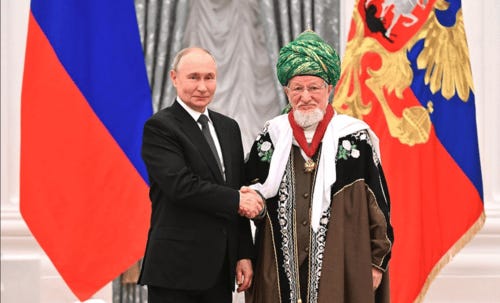
*Image above: President Putin & Talgat Tadzetdinov, Grand Mufti of Russia
Moscow Moves toward Chinese Model of Controlling Islamic Community
The Kitaizatsiya of Russia involves not only the expansion of Chinese activities inside the current borders of the Russian Federation but also the adoption by Moscow of Chinese approaches to various aspects of its governing style. Nowhere has this been more striking than in the case of the way the Russian authorities are now dealing with the management of Russia’s Muslim community. A new article by an anonymous Russian writer that recently appeared in The Moscow Times outlines the origins of this shift and how it is transforming the way the Kremlin is seeking to manage its Muslim population.
According to the author of the article, the reason this is happening is that Putin’s war in Ukraine has made the Russian authorities “less tolerant of any semi-autonomous Muslim institution, even if it is loyal,” and even if the existence of rivalry among multiple muftiates within Russia helped Moscow “manage Muslims.” The model that is now emerging, he continues, still values such rivalry as “useful” but within it, “strict control matters more;” and what is thus emerging is something “closer to the Sinicization of Islam” as practiced in China were imams’ sermons are vetted by party officials, where religious texts are filtered through state-approved values, and the goal is not a state that manages religion but a religion that serves the state.”
That the Kremlin should now want to exert greater control is no surprise, but the challenges it faces in imposing it are far greater. While the total number of Muslims in Russia and China is roughly comparable—approximately 20 to 25 million—their share of the population is vastly larger in the Russian Federation, given that Russia has a much smaller total population than China. Muslims make up roughly 15 to 20 percent of the Russian population, whereas the Muslim share in China is only two or three percent. The difficulties introduced by this demographic difference are further compounded by the distinct traditions that Russian Muslims and the Russian state have developed in dealing with one another over the centuries. Ultimately, this much larger population share, combined with 250 years of institutionalized relations, suggests that any attempt by Moscow to adapt the Chinese model to Russian conditions is likely to be fraught.
The Moscow Times author is fully cognizant of that. He notes that although “for most outside observers, Russian Islam looks like a single official structure that speaks in a loyal voice when the Kremlin needs it to … in reality, Russia’s Muslim institutions have never been so simple. They are fragmented, competitive, and deeply shaped by the state.” The Russian imperial state beginning in the 18th century set up structures to try to bring Islam to heel, a task that has always been problematic because there is no theological justification in Islam for any hierarchies until the formation of a caliphate and because the Muslim communities within the Russian state are so diverse as to make competition among them almost inevitable as Soviet power weakened and then disappeared and especially in the first decades of post-Soviet Russia.
The three most important of these MSDs – or “super MSDs” as they are often referred to because they include within themselves smaller regional Muslim directorates – are the Central MSD based in Ufa, headed by Talgat Tajuddin, which traces its origins to the times of Catherine the Great, the Muslim Spiritual Directorate of the Russian Federation, headed by Ravil Gainutdin and set up in 1996, and the Spiritual Assembly of the Muslims of Russia, headed by Albir Krganov and operational since 2016. (There is a fourth super-MSD, the Coordinating Center for Muslims of the North Caucasus, which emerged in the 1990s but whose influence is largely restricted to the Islamic community in that region and therefore does not present the same institutional challenges posed by the other three).
Tajuddin has been slavishly loyal to the Kremlin in all things, but his often outrageous behavior – he is sometimes referred to as “the drunken mufti” because of his very public consumption of alcohol – makes him a problem for Moscow. Gaitnutdin has been loyal on political issues like Putin’s war in Ukraine, but has spoken out in defense of Muslims on issues of religious concern, something Tajuddin has tried to avoid. And Krganov has been the most loyal of all, taking a loyalist position on all issues and refusing to speak even on behalf of Muslim needs for more mosques; but he is the least influential, and that explains why Moscow has not tried to build a single MSD around him and has now selected the Chinese model.
These tensions and calculations have been present for more than a decade, but in May, the Russian government arrested a number of lesser Muslim leaders in ways that suggest the Kremlin is now prepared to change the way it runs Islam in the Russian Federation, the Moscow Times author says. In support of that suggestion, he cites the words of Roman Silantyev, a Russian specialist on Islam with close ties to the FSB, who said that the Muslim leaders who have now been arrested will be charged with terrorism, a significant change from earlier arrests of such people who had been accused of radical Islamism, foreign funding, or separatism. That new government line is directed in the first instance at Gainutdin because it indicates that for the Kremlin now, “loyalty is no longer enough if a religious institution still behaves like an institution. In wartime Russia, even official Islam is being pushed toward a late Soviet model” or more precisely to the Chinese one now “where religion may exist in public, but only as long as it does not really speak for itself.”
Beyond doubt, that is the Kremlin’s goal; but whether it can achieve it remains an open question given that at least some Muslims will resist, possibly exiting from one or all of the super MSDs and thus leaving Moscow with even less leverage than it has had up to now – yet another way the Kitaizatsiya of Russia is proceeding albeit in ways that neither Moscow nor Beijing may want.
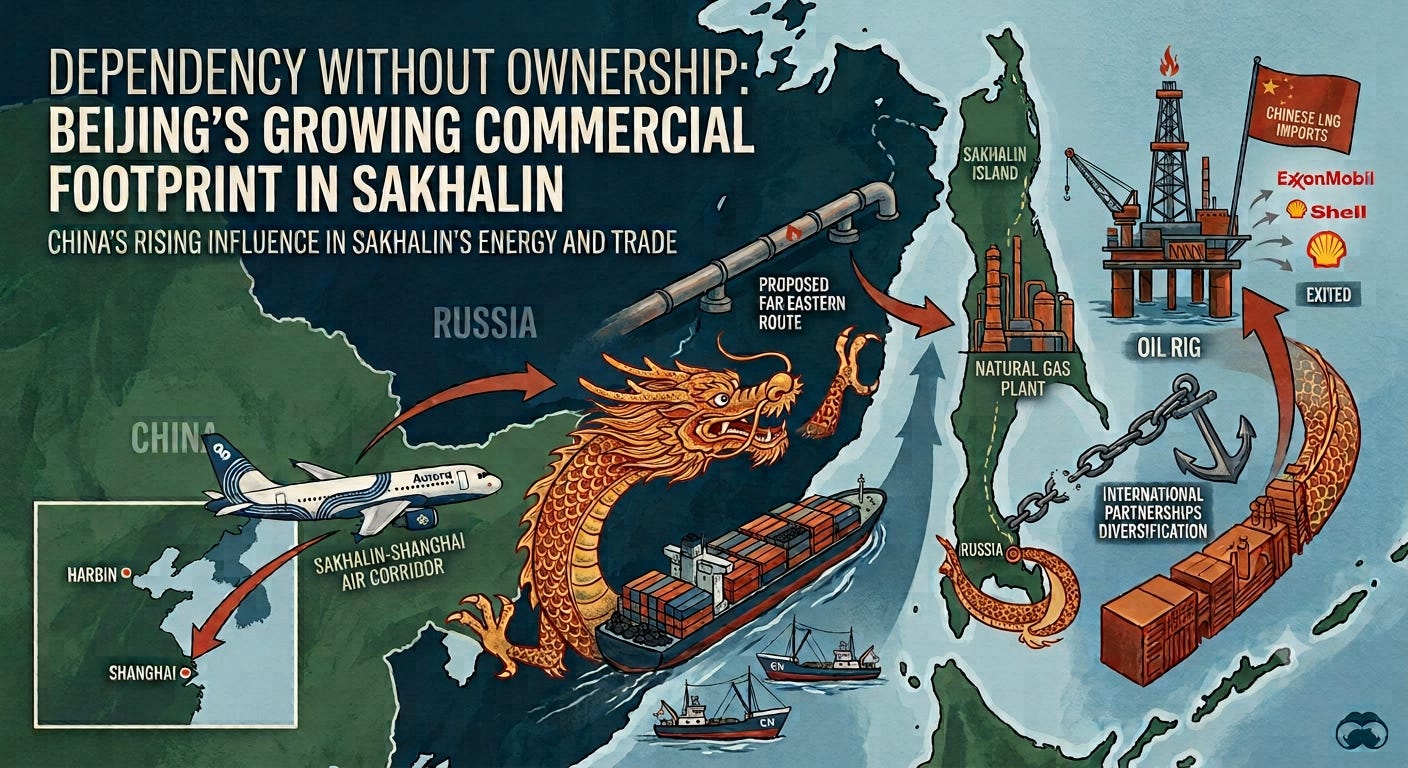
Dependency Without Ownership: China’s Rising Influence in Sakhalin’s Energy and Trade
Sakhalin is rapidly becoming one of the clearest examples of China’s growing influence in the Russian Far East. Its trajectory, however, differs from that of other mainland regions bordering China. Unlike Amur Oblast, the Jewish Autonomous Oblast (JAO), or Primorye, where Chinese influence is driven by a certain logistics-related logic, Sakhalin’s reorientation toward China is emerging through four key areas: energy exports, seafood trade, investment promotion, and air connectivity. The result is a softer but more durable form of dependence whereby Moscow retains formal ownership and political control, while Beijing is increasingly reshaping the commercial environment in which the island’s economy develops.
Launched in May 2026, Aurora Airlines announced the creation of a direct Yuzhno-Sakhalinsk–Shanghai route, the first civil aviation link connecting Sakhalin directly with Shanghai. Weekly flights are scheduled to begin on July 2. The announcement fits into a broader post-2022 pattern of deepening Sakhalin–China economic connectivity. Since 2022, China’s presence and influence have expanded across Sakhalin’s key strategic industries and export sectors, especially LNG, pipeline gas, coal, fisheries, and transport connectivity. Sakhalin’s exports to China were projected to reach up to $8 billion in 2025, with LNG, seafood, and coal forming the core of the trade relationship. Russian Energy Minister Sergei Tsivilev also stated that Moscow intended to increase LNG exports to China from the Arctic LNG-2 and Sakhalin-2 projects.
More consequentially, Russia is expected to begin pipeline gas deliveries to China from Sakhalin in 2027, with planned volumes of 10 bcm annually, integrating the island’s gas base into the broader “Far Eastern route” to China. The fisheries sector is also moving in the same direction: in January–May 2026, Primorye and Sakhalin exported 591,000 of fish and seafood, with China accounting for the main share of locally sourced seafood exports. Taken together, these trends suggest that Sakhalin’s external economic orientation is becoming increasingly China-centered, even in the absence of a direct land border.
In light of these emerging developments, Sakhalin illustrates a new model for Chinese interaction with the Russian Far East that can be characterized as “dependency without ownership.” Based upon this model China need not control strategic assets directly if its leverage grows through demand, logistics, financing, and long-term market access.
Sakhalin After 2022: From Diversified Energy Frontier to China-Facing Economy
For much of the post-Soviet period, Sakhalin’s greatest strength was not only its offshore oil and gas potential but the diversity of its international partnerships. It arguably remained Russia’s most internationally embedded energy frontier. Its offshore projects were not built around a single actor (China) but around a broader Asia-Pacific strategy that combined Western, Japanese, Chinese, and South Korean investment and expertise. This structure gave Moscow access to capital, LNG technology, project-management expertise, and a diversified Asian customer base. The region’s broader export structure reflected this diversification. In 2021, Sakhalin’s exports totaled $11.5 billion, with South Korea accounting for 56.6 percent, Japan for 22 percent, China for 17.4 percent, and Taiwan for 2.4 percent. This structure gave Sakhalin strategic flexibility. While China was important, it was not indispensable: Japan, South Korea, Taiwan, Western firms, and Chinese buyers together created a diversified external environment that limited any single actor’s leverage over the island’s economy.
However, following Russia’s reinvasion of Ukraine in 2022, and the onset of western sanctions, this diversification strategy came under severe pressure. Sakhalin like the rest of the Russian economy experienced the exit of Western corporations, and the re-registration of Sakhalin projects under Russian jurisdiction greatly narrowed Moscow’s room for maneuver. For example, on February 28, 2022, Shell announced that it would exit its Russian joint ventures, including its 27.5 percent minus one share stake in the Sakhalin-2 LNG project. On March 1, ExxonMobil announced its withdrawal from Sakhalin-1, where it had held 30 percent and acted as operator. Japanese Mitsui and Mitsubishi so far have failed to exit Sakhalin-2 and continue to hold minority stakes of 12.5 and 10 percent, respectively. Yet their involvement has become more constrained and politically sensitive: they are now minority shareholders in a Russian-controlled operator, while Gazprom’s position strengthened after Shell’s exit. Japan has justified its continued participation primarily on energy-security grounds, as Sakhalin-2 remains an important LNG source for Japan but Japanese participation expires between 2028 – 2033.
The future of Japanese involvement is therefore one of the key variables shaping Sakhalin’s economic trajectory. As long as Japan remains a major LNG buyer and Japanese firms retain minority stakes in Sakhalin-2, the island preserves some degree of external diversification. If Japanese investment weakens after the late 2020s, China would be positioned to absorb a larger role as Sakhalin’s principal external economic counterpart. From a technological standpoint, South Korean firms – which previously played an important role in providing solutions for Sakhalin-based energy projects – have also largely suspended their participation in projects on the island.
The gap created by the reduced activity of Russia’s foreign partners has increasingly been filled by China. One key post-2022 marker of China’s growing economic footprint in Sakhalin was the September 11, 2023 agreement signed at the Eastern Economic Forum, under which China’s Shouneng Investment Management committed to invest $264 million (20 billion rubles) in production and logistics projects across Sakhalin, including timber processing, a marine transshipment complex, coal extraction, and a logistics center in Yuzhno-Sakhalinsk. Therefore, China’s presence in Sakhalin after 2022 was neither sudden nor unprecedented: China had already been a significant export destination before the war. The crucial change that occurred was that Russia lost alternative investors. As foreign participation receded China became not merely an important partner but an increasingly indispensable buyer, logistics partner, investor, and future gas-market anchor.
Hydrocarbons: The Core of China’s Emerging Leverage
Energy is the strongest channel through which Chinese influence over Sakhalin is expanding. The shift did not begin after 2022, as the first significant Chinese investment in a Sakhalin energy project occurred in 2005, but the post-2022 period clarified this strategic trend. After Russia’s rupture with the West, Sakhalin-2 remained one of Moscow’s most important surviving LNG assets in the Asia-Pacific. The project’s LNG plant has a design capacity of 9.6 million tons per year and has continued to operate above that level despite sanctions pressure and corporate restructuring. In 2025, news reports citing Sakhalin Energy stated that shipments rose slightly to 10.3 million tons, suggesting stabilization rather than decline. This resilience is strategically important: Sakhalin-2 has not merely survived sanctions; it has remained one of the few Russian LNG platforms still capable of sustaining Russia’s energy presence in premium Asian markets.
China’s role in this structure is increasingly asymmetric. In LNG, Japan remained Sakhalin-2’s largest buyer in 2025, taking 58 percent of shipments, while China consolidated its position as the second-largest market with 24 percent, despite a 3.8 percent decline compared with 2024. In oil-gas-condensate exports, however, China has acquired a near-monopolistic position, taking 97.7 percent of local output. This distinction matters. Sakhalin has not become a China-dominated LNG platform, but Beijing is already dominant in another key hydrocarbon stream and is positioned to expand its role should Japanese participation weaken. Given the possibility that Japanese partners may eventually reduce their presence in the project, Moscow has repeatedly signaled that it sees China as the natural alternative market. In October 2025, Energy Minister Sergei Tsivilev stated that Russia planned to increase LNG exports to China, especially from Sakhalin-2.
The more consequential development is pipeline gas. The Sakhalin–Khabarovsk–Vladivostok gas transportation system – originally designed between 2007 and 2009 as a project connecting Russia with Indo-Pacific energy markets – is now being repurposed into part of a China-facing export architecture. Deliveries to China through the Far Eastern route are scheduled to begin in January 2027. The Gazprom–CNPC contract envisages deliveries of up to 10 billion cubic meters annually for at least 25 years, creating a long-term infrastructure commitment rather than a temporary export arrangement. This will not give China ownership, but it will tie Sakhalin’s resource base to Chinese demand for decades. Russian commentary has been cautious about the commercial terms of Gazprom’s China pivot. Some experts have argued that the earlier Power of Siberia contract was concluded on terms favorable to China and could be only minimally profitable or difficult to recoup for Gazprom. Analyst Alexei Grivach has similarly described Far Eastern volumes as “small by Chinese standards”, even if politically useful for bilateral gas cooperation. Western assessments are more explicit about the strategic asymmetry. One study asserted that China can partly compensate for Russia’s lost European demand, but Chinese contracts are inferior to former EU contracts in both volume and price terms.
The strategic implications from these developments is quite clear: Beijing does not need to own Sakhalin’s energy infrastructure to acquire leverage over it. Ownership remains Russian, and Moscow continues to guard strategic assets. Yet China is becoming increasingly capable of shaping demand, commercial viability, export priorities, and long-term infrastructure planning. Beijing’s leverage stems less from ownership than from its growing ability to influence the commercial viability of Sakhalin’s energy sector.
Strategic Implications: Economic Dependence Without Formal Control
China’s growing role in Sakhalin is not limited to hydrocarbons. Supplementary areas of Chinese influence that have emerged (or strengthened) since 2022 include fisheries, logistics, aviation, port projects, and regional investment promotion. While each individual development has clear limitations, taken together they point to a gradual reorientation of Sakhalin’s external economic networks toward China.
First, the fisheries sector clearly illustrates this shift. Chinese leverage does not require ownership of extraction assets; rather, it emerges through demand, processing, logistics, and distribution, as seen in Kamchatka. Between January and May 2026, Sakhalin, along with Primorsky Krai, exported 591,000 tons of fish and seafood, with China accounting for the main (although unspecified) share of Russian exports. As a result, while Russia retains formal control over marine resources, China increasingly influences the downstream chain and key operations, including purchasing, pricing, customs access, processing, and resale.
Second, logistics and connectivity are moving in the same direction. As noted earlier, in 2025, Yuzhno-Sakhalinsk airport identified China as a priority foreign destination and projected that passenger traffic on Chinese air transport routes could reach as high as 100,000 visitors by 2029. Aurora later opened regular Yuzhno-Sakhalinsk–Harbin flights starting on October 26 and subsequently launched ticket sales for flights from Yuzhno-Sakhalinsk to Beijing and Harbin in the summer of 2026. Furthermore, in late May 2026, officials announced the opening of a direct Yuzhno-Sakhalinsk–Shanghai route, Sakhalin’s first direct civil aviation link with the Chinese commercial hub. These routes should not be viewed merely as tourist links. Rather, changing logistics and connectivity between Sakhalin and Chinese cities mirror the changing institutional infrastructure of Sakhalin’s China-facing economy.
Third, Chinese regional investment policy supplements this trajectory. In 2024, regional media reported that Chinese investors planned to invest nearly 60 billion rubles in a multifunctional logistics terminal in Aleksandrovsk-Sakhalinsky and a wood-processing facility, projects expected to create hundreds of new jobs in the region. Unlike poorer Far Eastern regions seeking Chinese capital primarily for job creation, Sakhalin’s challenge is sustaining growth amid labor and infrastructure constraints. In this context, Chinese demand, financing, and logistical connectivity are increasingly viewed by regional authorities as instruments for maintaining economic expansion rather than simply addressing social distress. In 2025, Sakhalin officials began formally searching for Chinese partners to establish technology and industrial parks in the region, while regional investment officials openly stated that Chinese investors were showing growing interest in coal, peat processing, and bio-marine resource projects, whose cultivation in the region is particularly successful due to local climatic conditions.
Lastly, China’s deepening integration into the peripheral sectors driving Sakhalin’s economic development underscores the region’s increasing structural pivot toward Beijing. Over time, this reconfiguration could risk placing the island under a soft yet institutionalized form of economic subordination. Ultimately, Chinese capital, logistics, and market integration will serve as the primary determinants fueling sectoral growth, project financing, and export viability. Beijing’s capital, logistics, and market access will increasingly determine which sectors grow, which projects receive financing, and which export channels remain viable.
Limits to Chinese Penetration
Chinese interest in Sakhalin is primarily shaped by its resource-supply application – not as a broad platform for regional integration. Therefore, Sakhalin’s China-bound exports are heavily concentrated in LNG/natural gas and seafood, which narrows the space for diversified Chinese investment.
One of the key variables that explains China`s comparatively lower level of involvement in Sakhalin is defined by geography. Sakhalin remains an island, whereas China’s preferred Far Eastern corridors are land-based (Amur Oblast, the JAO, Zabaykalsky Krai) or port-linked (Primorsky Krai and Khabarovsk Krai) mainland corridors. This distinction is important because Chinese engagement in the Russian Far East is not just about obtaining access to natural resources but, perhaps, more so about the ability to control or participate in transportation networks connecting Chinese markets with Russian resources. Regions such as Amur Oblast, the JAO, Zabaykalsky Krai, and Primorsky Krai fit this logic, where Sakhalin does not serve this purpose to the same extent. As a result, it occupies a lower position in China’s broader strategy of cross-border economic integration despite its substantial resource wealth.
A further constraint is administrative and bureaucratic friction. Russian and Russian language sources from pre-2022 period repeatedly identify the investment climate, regulatory barriers, weak legal predictability, and administrative procedures as obstacles for foreign investors including China. Importantly, these issues did not disappear after 2022, when Russia`s ability to maneuver contracted significantly while its reliance on China became overwhelming. Arguably, the administrative-bureaucratic hurdles matter more for Sakhalin than for some other regions comprising the Russian Far East. For example, in areas like Primorye or Amur Oblast administrative costs may be offset by border access, logistics scale, and diversified commercial opportunities. Sakhalin, however, offers fewer such compensating advantages. Thus, Sakhalin remains useful to Beijing, but mainly as a supplier, which makes the mainland Far East more attractive as a corridor, market, and investment platform.
Conclusion
As a case study of Chinese economic encroachment on the Russian Far East, Sakhalin demonstrates how Chinese influence in the Russian Far East can expand without territorial proximity, mass migration, or formal ownership of strategic assets. Regardless, the island remains politically and legally under firm Russian control. Yet its export structure, investment outreach, transport connectivity, and future energy planning are increasingly shaped by Chinese demand. This makes Sakhalin different from mainland border regions, but no less important. Since 2022, the central change has been the weakening of Russian alternatives. Sakhalin once benefited from a diversified Asia-Pacific economic network involving Japan, South Korea, Western firms, and China. As that network narrowed, China became more than a major buyer; it became the indispensable external counterpart. If this trajectory continues, Sakhalin may become a model for Russia’s broader post-Ukraine relationship with China: sovereignty without autonomy, ownership without leverage, and formal control constrained by growing dependence on Beijing.
Thank you for your support! Please remember that The Saratoga Foundation is a non-profit 501(c)(3) organization. Your donations are fully tax-deductible. If you seek to support The Saratoga Foundation, you can make a donation by clicking on the PayPal link below! Alternatively, you can also choose to subscribe to our website to support our work.
https://www.paypal.com/donate/?hosted_button_id=XFCZDX6YVTVKA
Thank you. Quite interesting to see this and other news published recently, which altogether seem to be saying that a change is possible in Russia. To this I just want to add, that from the perspective inside Ukraine, none of this is visible. Ukraine remains under heavy bombardment , the scale of which is only growing. I went to Kyiv, Charkiv and Odessa, and the attacks were happening daily.
https://nomadicmind.substack.com/p/they-sound-like-shaheds?r=31fxoh&utm_medium=ios