
Romania has entered a period of accelerated defense-industrial modernization, and its new military-drone sector sits at the center of this transformation as the European Union announces the creation of a new drone wall to counter repeated Russian drone intrusions into Poland, Romania, and other frontline countries in NATO’s east.
Bucharest’s new push to develop an indigenous drone industry is driven by Romania’s strategic geography—bordering Ukraine and facing repeated violations of its air space by repeated Russian drone intrusions upon its territory. The menacing drone environment has motivated Bucharest to strengthen its indigenous drone production capabilities and reduce its dependence on external suppliers and aligning with regional NATO priorities.
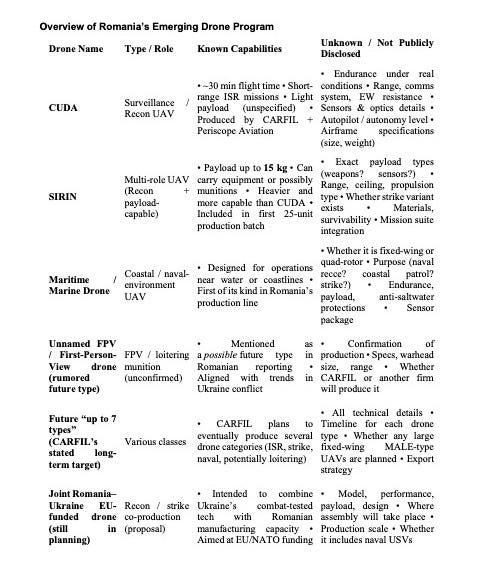
State-owned defense manufacturer Carfil S.A. represents the most visible pillar for Romania’s emerging drone ambitions. Historically known for artillery and ammunition, Carfil has shifted into UAV development through a cooperation agreement with Periscope Aviation, a United States–based drone systems company. The partnership aims to produce multi-role drones suitable for surveillance, reconnaissance, and potentially strike missions. According to company announcements, manufacturing is beginning at Carfil’s Brașov facility, marking the country’s first entry into domestic serial drone production.
Initial production includes a small family of drone systems, beginning with the Cuda and Sirin models. These early platforms emphasize simplicity, reliability, and low-cost production—reflecting lessons learned from ongoing drone warfare in Ukraine, where attritable systems often outperform complex but expensive platforms. While full technical specifications remain limited in open sources, Romanian officials state that the Brașov plant could scale to produce up to several thousand drones per year, with output increasing through 2025.
Romanian goals extend beyond equipping its own armed forces. Bucharest is shaping its drone sector to become a regional exporter and potential NATO supplier as part of its new long-term national industrial strategy. Toward this goal Romania seeks to move from being a consumer of foreign drone systems to that of an active European producer. Romanian objectives aligns with its broader national investments in explosives, munitions, and defense-industry infrastructure, including cooperation agreements with German and American partners.
One of the most strategically significant milestones in Romania’s drone development is its signing of a joint drone-production venture agreement with Ukraine whereby Bucharest seeks to tap into Kyiv’s vast drone experience after four years of war with Russia. Backed by European Union defense-industrial funding Romania’s drone initiative would merge Ukraine’s combat-tested UAV technology with its own emerging drone manufacturing sector. If implemented, the partnership could turn Romania into a regional hub for mass-produced reconnaissance and strike drones—while also cementing closer defense ties between the two countries at a time of protracted tension with Russia.
Carfil Enters the Drone Race
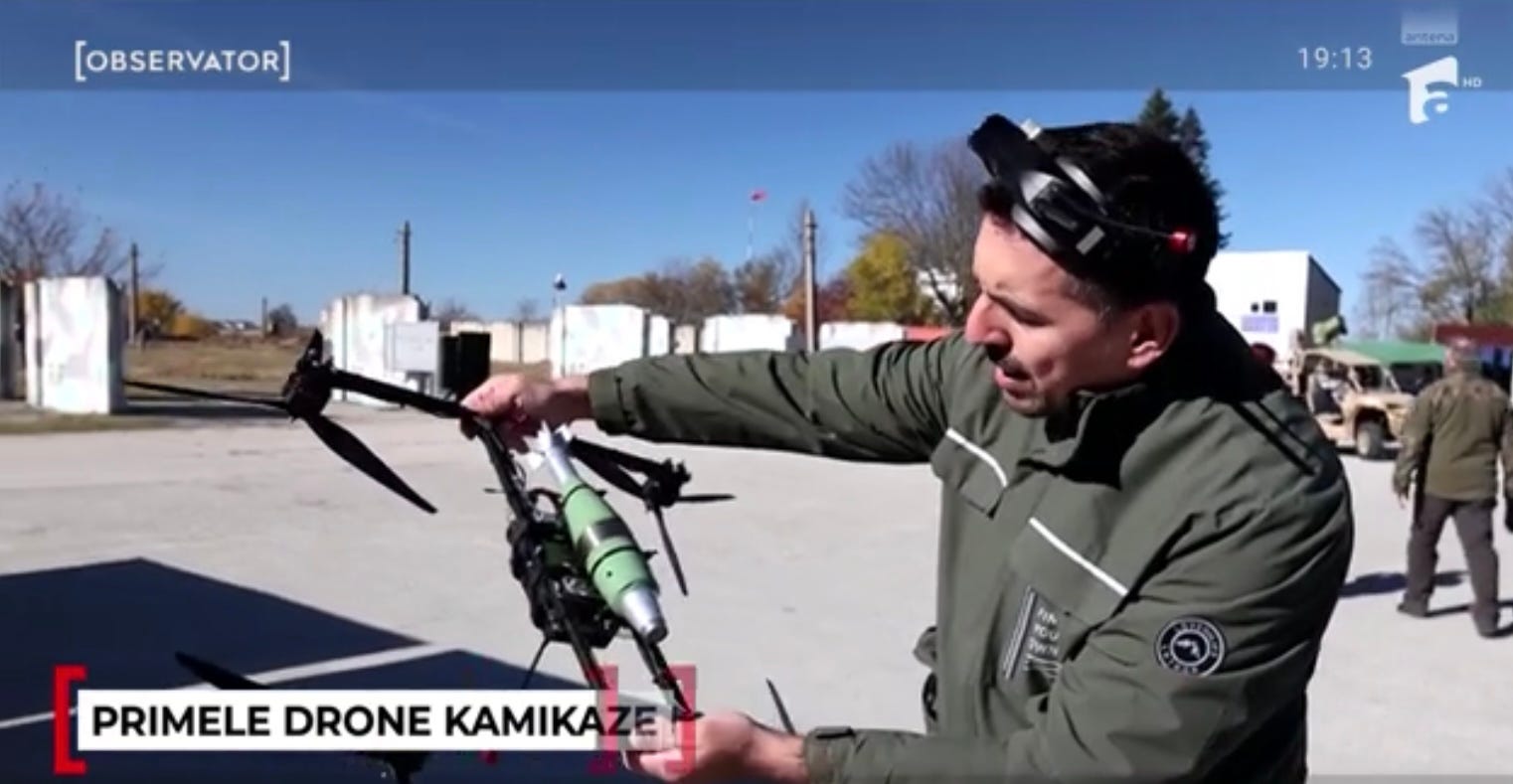
Romania reached a major milestone in the pursuit of a drone defense industry in November when the military manufacturer Carfil located in the Romanian city of Brasov tested the first FPV (First-person view) kamikaze drones (Cuda and Sirin), which constitute one of the first UAVs (Unmanned Aerial Vehicles) ever produced in Romania.
The same Romanian factory achieved a major technological breakthrough by launching a new rocket system named Hydra that uses drone systems to target potential threats from a very high distance (approximately 6 kilometers). These events highlight not only an important technological evolution for Romania, but also a geopolitical one. Drones and unmanned systems generally represent a new strategic asset with a tremendous potential.
Strategically located in Southeastern Europe, Romania has access to two areas which are critical from a strategic and economic point of view - the Danube river and the Black Sea. The ongoing conflict in Ukraine has had a direct effect on the security of these two important areas, due to constant outbreaks in fighting between Russian and Ukrainian forces as Russian drones frequently violate Romanian airspace. Drone warfare has become a constant reality in these areas, with repeated strikes of Russian UAVs and USVs on Ukrainian ports in nearby Izmail and Odessa.
Since 2022, Romania has experienced several drone provocations in the Danubian and Black Sea Region, with a notable incident occurring on the 13th of September 2025, when a Russian Geran drone entered Romanian airspace for approximately 50 minutes. The most recent drone incident occurred during the night of November 10-11, 2025, with a Russian UAV falling on Romanian territory near Tulcea, a city located in the Danube Delta. These reoccurring security threats required a strong response, which can only be achieved by modernizing and reinforcing Romanian military capacities, with unmanned systems (UAVs, USVs, Kamikaze FPV drones etc.) being a top priority.
The Black Sea Region and the Danube Delta have emerged as a major ‘’laboratory’’ of drone warfare, with dozens of UAV and USV fights between the Russian and Ukrainian forces every day. The war at the border underscores a crucial reality for Romanian defense industry: unmanned systems have become an indispensable part of modern war. Drones are relatively cheap products that can inflict severe damage to the enemy’s military infrastructure (the successful attacks of Russian battleships by Ukrainian USVs is a relevant example). Moreover, these new components of everyday conflict ensure an efficient operational deterrence, while offering medium and small sized geopolitical actors better defense capabilities (asymmetric warfare). With all these aspects taken into account, it would be reasonable to ask ourselves: how does Romania, as a key regional actor, treat the question of integrating unmanned systems into its armed forces and in which way?
Romanian UAV Priorities
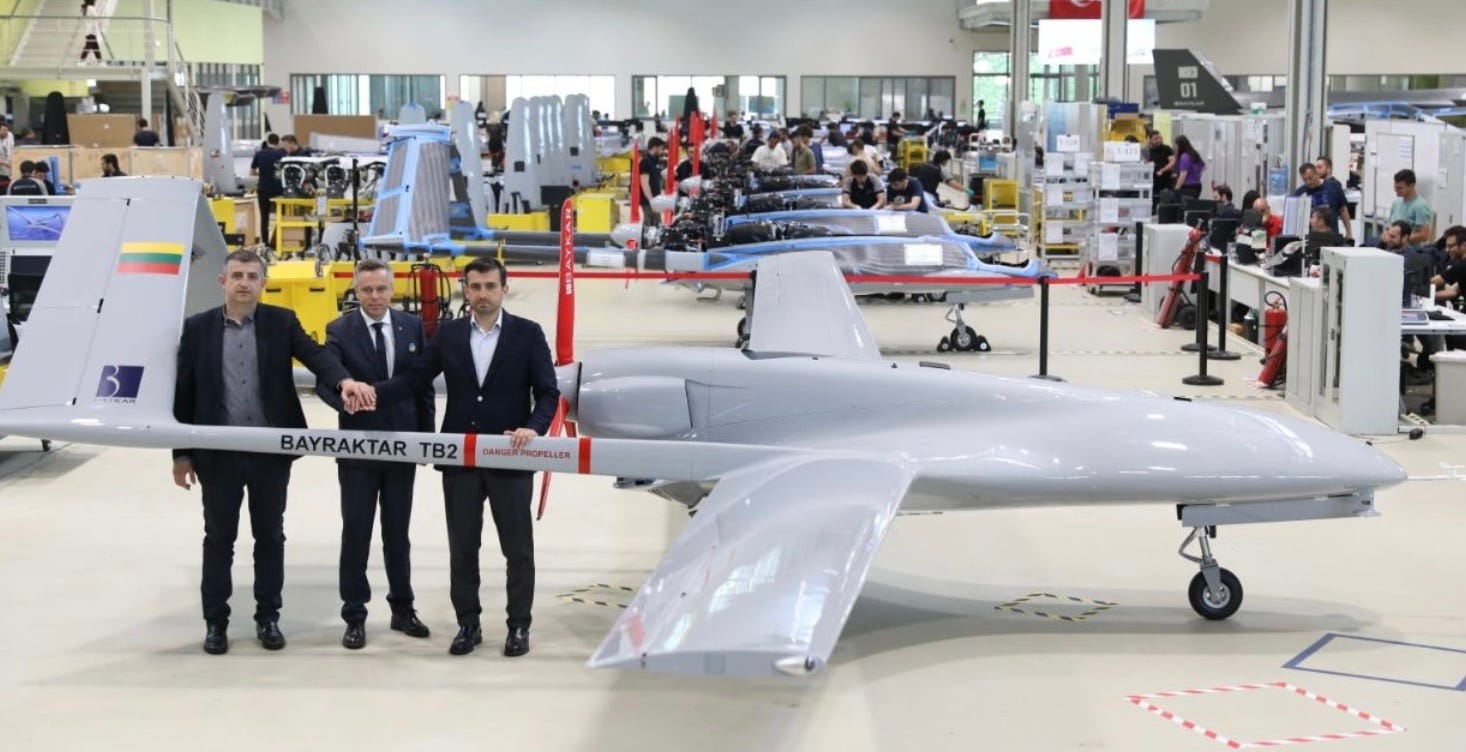
Since 2022, the Romanian Government has begun purchasing UAV’s from foreign manufacturers to bolster its drone capabilities, notably the Turkish made Bayraktar TB2 model purchased from Turkey, three systems for a total of 18 drones. Other important acquisitions made by Romania, in terms of unmanned systems, include 7 Watchkeeper X systems (in partnership with the United Kingdom and Israel), MQ-9B SeaGuardian systems from the US, which use VTOL drones (Vertical Take-Off and Landing) and last but not least, the American-built Switchblade 300/600 loitering ammunition
The new Romanian army equipment plan 2025-2034 prioritizes the purchase of military unmanned systems (especially UAVs). Their purpose is dual nature: consolidating ISR (Intelligence, Surveillance and Reconnaissance) capabilities and preparing potential military operations, with full cover (aerial, land and maritime).
The joint drone project with Ukraine to establish a drone factory in Romania will help strengthen Romanian capacities outlined in the army 2025-2034 plan and enable it to become a true technological hub in terms of producing unmanned systems. In addition it will help Bucharest solidify its aspirations to become a pillar of aerial and maritime operational deterrence along NATO’s volatile eastern flank. This aspect would also represent an economic breakthrough, as it fosters cooperation and continuous development of defense-related businesses, particularly in Romanian efforts to demonstrate its strategic importance to the EU.
Romania’s Role in the EU Drone Wall
Russian drone intrusions into Polish airspace this past September proved to be a wake-up call for the EU. On September 10, 2025, European Commission President Ursula von der Leyen publicly proposed the creation of a European Drone Wall — a continent-wide air-defense network designed to counter a surge in drone and airspace incursions believed to be carried out by Russian forces. Rather than a physical barrier, the Drone Wall would consist of a layered “system of systems”: sensors, radar, electronic-jamming and interceptor drones or other counter-UAV weapons that can detect, track, and neutralize unauthorized drones entering EU airspace — especially along the bloc’s eastern flank. The initiative gained broad support from EU leaders in Copenhagen days after Russian conducted multiple airspace violations over Poland, Denmark and other member states which triggered alarm across the continent. According to a draft of the outgoing Defense Readiness Roadmap 2030, the EU aims to have a fully integrated drone-defense capability in place by the end of 2027.
By contributing toward the establishment of an EU Drone Wall, Romania will ensure an efficient defense of the eastern flank and enable Romania to bolster its aerial defense to ward off the constant security threats created by the ongoing conflict in Ukraine and the drone incidents that occur regularly on the EU border with countries of the Eastern Flank (Baltic States, Poland, Romania). Romania stands to play a crucial role in ensuring the establishment and development of this ‘drone wall’ defense strategy being called for by the European Union.
Geographically, Romania can assume the role of an eastern anchor for the ‘drone wall’ because it shares both land and maritime borders with Ukraine, which has an approximate length of 649 kilometers (403 miles). This makes Romania the EU country with the largest border with Ukraine, which highlights the key role it will have in putting this initiative into practice. In addition, Romania also shares a 681 kilometer (423 miles) border with the Republic of Moldova, a country historically linked to Romania, but strongly affected by Russian hybrid war operations and disinformation campaigns. The Russian backed separatist region of Transnistria constitutes a major security threat for both Moldova and Romania. Therefore, establishing an efficient drone wall in the east would foster greater operational deterrence for Romania in a highly unstable neighborhood.
Conclusion
Looking toward the future, Romania’s emerging drone industry faces several challenges. First, Romanian authorities need to find a way to integrate UAVs into its northeastern border, for surveillance and defensive purposes. Second, concerning the Danube Delta and the maritime border with Ukraine, the EU drone wall would have to integrate a mix of UAVs and USVs, in order to deter and counter any potential threat and any violation of Romanian territory. Third, the Romanian military and civilian authorities would have to create a unified system of air defense that incorporates its emerging drone capabilities into its national security architecture.
Despite rapid progress, other challenges remain. Open-source analysis suggests that Romania is planning to produce only a limited number of drone prototypes as part of its early production runs. It remains unclear how quickly Romania can expand its new joint Ukraine drone venture into the creation of more advanced UAV classes or even Uncrewed Surface Vessels (USVs). Romanian industry must adapt continually to the evolving realities of drone warfare—from electronic warfare survivability to low-cost FPV systems—if it is to remain competitive in an autonomous drone market that is growing by leaps and bounds .
Nonetheless, Romania’s military-drone sector is advancing swiftly. If current plans come to fruition, Romania could transition within a few years from having virtually no indigenous drone production to becoming a meaningful European supplier—bolstering NATO capabilities and improve its own capacity to intercept Russian drones intruding into Romanian airspace
By adding new “Drone forces’’ Romania would be developing a new element of operational deterrence for its armed forces as both the Romanian Navy and Air Force would likely oversee the integration of these platforms. Romania’s drone predicament is particularly urgent given the repeated Russian provocations Romania has endured since the start of the Russo-Ukrainian war in 2022. Aside from filling the drone gap in its armed forces, Romania must also introduce changes to its military doctrine and prioritize what kinds of drones it seeks to bring into production given that it has an array of foreign made drone systems in combination with the short range drones being produced by Carfil.
Officials in Bucharest are searching for a cheaper and more reliable way of ensuring border and maritime security to adapt to the emerging geopolitical challenges emerging within the Black Sea region, particularly in the Danube Delta. New combat drone systems would allow the Romanian Armed Forces to counter its external threats more strategically and cost-effectively, but to do so it must first establish the drone production infrastructure to be able to deal with these long-term threats.
Romania’s drone initiative reflects a broader trend of medium and small states using technology to offset security disadvantages, moving away from traditional notions that military strength depends merely on large numbers of ground forces and conventional military equipment.
In the context of Russia’s war in Ukraine, the lessons of that war demonstrate how technology can overcome numerical disadvantages caused by superior manpower. Romania’s recent progress in unmanned systems marks the beginning of a broader effort to incorporate wartime lessons into its defense-modernization plans and to strengthen its dual role as both the anchor of NATO’s eastern flank and a frontline state contributing directly to the EU’s emerging “drone wall.”
About the Author:
Andrei Veres is an independent defense and security analyst specializing in Romanian defense and security issues.
Thank you for your support! Please remember that The Saratoga Foundation is a non-profit 501(c)(3) organization. Your donations are fully tax-deductible. If you seek to support The Saratoga Foundation, you can make a donation by clicking on the PayPal link below! Alternatively, you can also choose to subscribe on our website to support our work.
https://www.paypal.com/donate/?hosted_button_id=XFCZDX6YVTVKAx
Thanks for reading! This post is public, so feel free to share it.