
👉 The National Interest
February 11, 2026
By: Glen E. Howard and Ray Wojcik
…One of NATO’s most vulnerable points needs greater military interoperability and training grounds for its member states’ armed forces.
On January 25, 2026, during a trilateral meeting in Vilnius with Polish president Karol Nawrocki and Ukrainian president Volodymyr Zelensky, Lithuanian president Gitanas Nausėda unveiled a proposal to significantly enhance security in the highly vulnerable Suwalki Corridor.
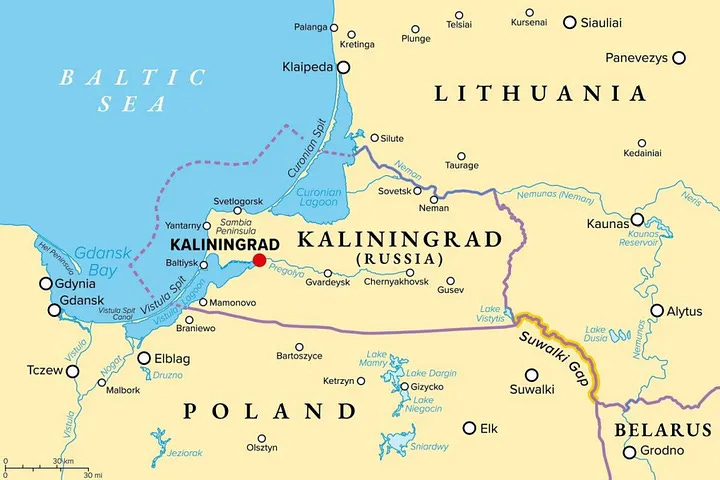
The Suwalki Corridor, or Suwalki Gap, is the narrow strip of land along the border between Poland and Lithuania. Often described as the “Achilles heel” of NATO’s eastern front, the corridor is threatened by Russian forces in Kaliningrad on the Baltic coast and Russian forces operating within Belarus joining together to sever the land access between Poland, Lithuania, and the other Baltic states
After Russia’s invasion and annexation of Crimea in 2014, the Suwalki Corridor rose to a strategic dilemma for NATO. The term was originally coined by the former Commanding General US Army Europe Ben Hodges, who feared that Russian forces could either seize Suwalki or render the border impassable by artillery, missile, and drone forces. NATO’s three Baltic allies would then be cut off from crucial ground reinforcement, allowing Russia to attack Lithuania, Latvia, or Estonia elsewhere.
Lithuania’s recent offer of enhanced international cooperation near Suwalki gives Poland, Europe’s rising military power within NATO, an opportunity to offset this threat and solidify military cooperation with Lithuania. For its part, Vilnius has already committed €100 million ($118 million) to establish a new brigade-sized training ground in Kapčiamiestis at the heart of the Suwalki Corridor.
The real innovation behind Lithuania’s offer is that it’s not just another training area, which NATO definitely needs, but an invitation for Poland to help expand this facility across an international frontier. This announcement would create a massive joint, cross-border training area (TA) that effectively turns the Suwałki Corridor into a “borderless” stronghold for NATO, staffed by Polish and Lithuanian forces.
Both countries are key NATO allies and are rapidly modernizing their defense capabilities, with Poland on track to have the third (perhaps second) largest military in NATO and to achieve 5 percent of GDP for defense in 2026, while neighboring Lithuania is on pace to achieve this in the next several years.
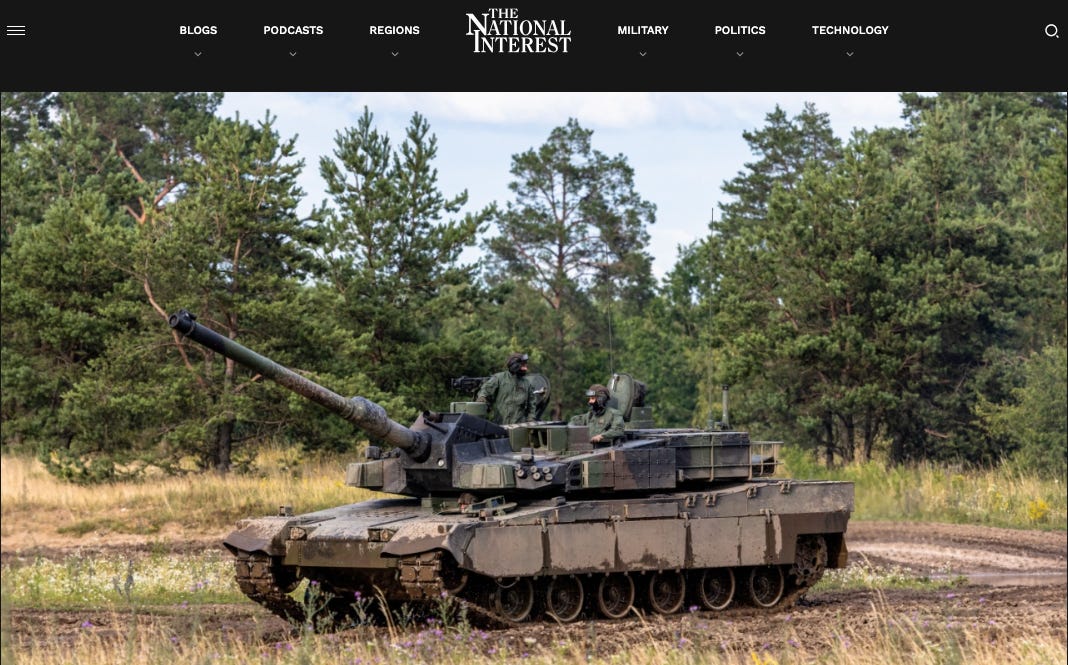
Poland and Lithuania Are Turning the Suwalki Gap into a NATO Training Ground
The Lithuanian-Polish decision has major implications for Baltic security. In recent years, with the dangers posed by revisionist Russia, the Suwalki region has been the focus of multiple cross-border exercises to test allied “crisis” readiness and military mobility. Over many years, road and rail infrastructure has improved, making it easier for Poland and other allies to reach Lithuania and, therefore, Latvia and Estonia. For Poland, this cross-border TA concept fits perfectly with its defense strategy to defend itself, and to strengthen cooperation—especially at the seams—with allies up and down NATO’s eastern flank.
It aligns closely with Poland’s ongoing Eastern Shield (ES) strategy to fortify its northern and eastern borders. Overall, Poland seeks to bolster alliance-wide cooperation and ensure Russia understands the massive costs it would incur if it ever attacks across NATO’s eastern frontier. For Lithuania, this new TA concept will bolster the Baltic Defensive Line (BDL). Similar to Poland’s ES, the BDL is the Baltic States’ strategy to fortify their borders with Belarus and Russia. All of these efforts support the US European Command’s Eastern Flank Deterrence Line.
The EFDL is now a NATO-wide concept to ensure allies implement a “deterrence by denial” strategy from Finland to Turkey. The United States remains concerned about regional security. This is demonstrated by Congress’s recent approval of the 2026 National Defense Authorization Act (NDAA), which includes $175 million for the Baltic Security Initiative.
Since 2014, demand for larger, more sophisticated training complexes has increased along NATO’s eastern flank, particularly in Poland. Approximately 10,000 American rotational forces have been based in Poland for years, including an armored brigade. These forces must be trained to US standards, and Poland has embarked on a program to support American requirements across multiple training complexes.
Still, with the Polish Armed Forces (PAF) doubling to 250,000 by 2026 and potentially reaching 500,000 by 2039, demand for high-quality TAs continues to grow. This is exactly why this large cross-border TA in Suwalki is mutually beneficial for Poland and Lithuania. Lithuania is also upgrading its training complexes to support sophisticated American training. In addition to the new Suwalki region TA, Lithuania is investing up to $285 million in its Pabrade training complex and expanding other training facilities nationwide. The new Polish-Lithuanian cross-border TA will be a welcome addition to the allied TA network.
Meanwhile, Poland and Lithuania have both fully embraced the US Department of Defense’s Joint All-Domain Operations (JADO) doctrine. The new Lithuanian-Polish TA can be built with JADO in mind, to provide the ability to exercise next-generation warfare capabilities, and apply lessons learned from Russia’s brutal war on Ukraine.
The “Military Schengen” concept championed by Poland, Lithuania, and the Baltic States enables the rapid, frictionless movement of battalions and brigades across international borders. This will shatter preconceived notions about NATO’s inability to initiate rapid “wartime” military mobility during peacetime. Several innovative training scenarios can be imagined.
A Polish brigade mobilizing in a snap exercise to deploy to the Kapčiamiestis range, crosses into Lithuania to exercise alongside a Lithuanian brigade. Polish artillery and precision High Mobility Artillery Rocket Systems (HIMARs) units, for example, could be called up to reinforce those units deployed to Poland’s side of the Suwalki range complex and provide precision fire support to Lithuanian forces. The sky is the limit in new innovations to test international force integration, increase interoperability, and practice JADO together, including with American forces and other allies.
Importantly, this decision enables Poland, Lithuania, and other allies to exercise and test the JADO doctrine in the high-stakes Baltic region. It supports the Polish military’s evolution into a key regional powerhouse and offers American forces flexible JADO training opportunities, even as the United States places greater strategic emphasis on the Indo-Pacific.
How to Revive the Lithuanian-Polish-Ukrainian Brigade
Perhaps the most notable aspect of the Vilnius announcement was President Zelensky’s decision to revive the Lithuanian-Polish-Ukrainian Brigade (LITPOLUKRBRIG). The multinational brigade is a Polish initiative, created in 2014. Before the Russian invasion of Ukraine in 2022, affiliated units from all three nations regularly exercised together, often with Canadian forces, demonstrating a unique level of intra-regional cooperation.
By emphasizing this important trilateral group, President Zelensky is reaffirming Ukraine’s commitment to a future role in defending the Baltic region, in addition to its own war with Russia. Zelensky recognizes that Ukraine’s strategic front begins in the Black Sea and extends to the Baltic. The defense of the Suwalki Corridor squarely fits within that strategic thinking.
For more than a decade, the LITPOLUKRBRIG has existed as a staff-level symbol of cooperation. With the creation of a cross-border training ground in Kapčiamiestis, the training ground will serve as a future home for the multinational brigade to evolve and adapt to the JADO battlefield. Moreover, battlefield lessons learned by Ukrainian forces can be incorporated into training, making the TA a permanent laboratory for applying NATO lessons learned from the war.
This will immensely benefit other allies in learning from Ukraine’s experiences and ensure NATO’s eastern defense is built in recognition of the reality of modern war, including drone warfare. Making this trilateral even more powerful is the fact that Poland already hosts NATO’s Russia-Ukraine lessons-learned center.
Poland and Lithuania Are Taking the Initiative in Eastern European Defense
The Polish-Lithuanian announcement is a prime example of the allies not waiting for the United States to “take the next step” or recommend the next initiative to defend Europe. Rather, it offers allies the opportunity to work closely together on planning for future conflict scenarios. It also presents an opportunity for the United States to capitalize on regional developments and defense innovations. US JADO is far from solidified. Allies willing to do the hard work to practice this new doctrine are exactly the kind of allies the United States will continue working closely with in NATO.
Thus, the Lithuanian-Polish project, including Ukraine, will be an ideal opportunity for the United States to continue conventional forces integration in Europe. Allied innovative efforts like this give the United States a major reason to stay engaged, not just to help with deterrence, but to continue working with willing allies eager to advance JADO to better prepare for future conflict, wherever it may occur. For the Trump administration, that’s America First and advances Peace through Strength.
By embracing this cross-border opportunity, Poland can secure both its northern and eastern flanks, deepen its ties with the Baltic States, and turn the Suwałki Gap from a point of vulnerability into a NATO hub for deterrence by denial, as well as innovation and cooperation—while fostering new opportunities for sustained US regional engagement and cooperation.
About the Authors: Ray Wojcik and Glen Howard
Ray Wojcik is a senior research fellow at The Saratoga Foundation and a defense expert and consultant with the Kosciuszko Chain. Mr. Wojcik is the former director of the Warsaw office for the Center for European Policy Analysis. During three decades in the US Army, he served as a soldier, non-commissioned officer, and officer in aviation, intelligence, infantry, special operations, and as a foreign area officer.
Glen Howard is the president of The Saratoga Foundation. Mr. Howard is the former president of The Jamestown Foundation. An expert on Russia and Eurasia, Mr. Howard is the editor and co-editor of Black Sea Battleground: The Road to Ukraine and Russia’s Military Strategy and Doctrine.
Thank you for your support! Please remember that The Saratoga Foundation is a non-profit 501(c)(3) organization. Your donations are fully tax-deductible. If you seek to support The Saratoga Foundation, you can make a one-time donation by clicking on the PayPal link below! You can also subscribe on our website to support our work.
https://www.paypal.com/donate/?hosted_button_id=XFCZDX6YVTVKA