
by Andrew McGregor
Like many other peoples overrun by European imperial powers in the late 19th and early 20th centuries, Africa’s Somalis found themselves divided into regions governed by rival powers: French Somaliland (Djibouti), British Somaliland (modern Somaliland), and Italian Somaliland (modern Somalia).
A former British protectorate, Somaliland joined the former Italian Trust Territory of Somaliland to form the new nation of Somalia in 1960. However, after General Siad Barre, the Marxist-Leninist commander of the Somali Army, took control of Somalia in a coup d’état in 1969, he mounted a brutal repression of the Isaaq clan, the dominant clan of the Somaliland region. When Barre fled from power in 1991 in a tank loaded with Somalia’s gold reserves, Somaliland broke with the rest of Somalia to declare independence. Since then, it has struggled to find international recognition as a sovereign state in the face of Mogadishu’s claim that it remains part of Somalia.
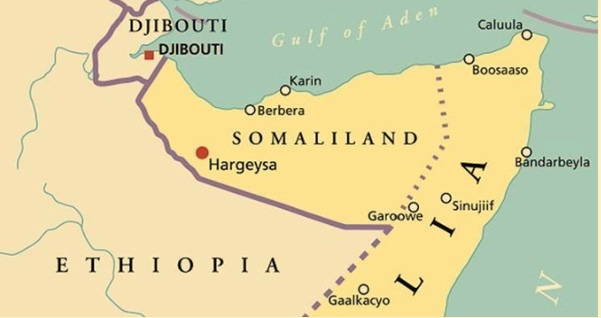
Map of Somaliland: (Source: Port Management Association of Eastern and Southern Africa (PMAESA)
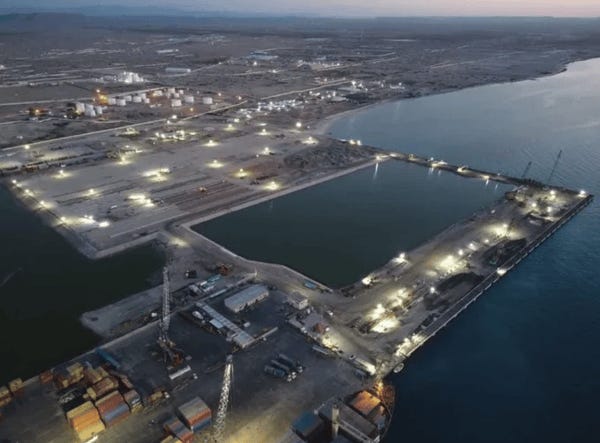
A territory of 68,000 square miles and over 6 million people, Somaliland has a highly strategic location on the south coast of the Gulf of Aden near the Bab al-Mandab strait that provides access to the Red Sea and the Suez Canal. Though several states have proved sympathetic to Somaliland, last December Prime Minister Benjamin Netanyahu announced Israel would be the first UN-member state to recognize Somaliland’s independence. Somaliland’s intention to accede to the Abraham Accords was confirmed by Netanyahu on January 30. Problems exist, however, with the legitimacy of the PM’s announcement, as Netanyahu apparently failed to ask for the approval of the cabinet or the Knesset, possibly rendering the recognition invalid under Israeli law. At the center of Netanyahu’s recognition of Somaliland is Israeli access to the port of Berbera, used and expanded for naval use by both the Soviets and later the Americans.
Israel Recognizes Somaliland
Israel’s initiative was opposed by 50 countries and groups, including Somalia, Turkiye, Saudi Arabia, Egypt, Qatar, Ethiopia, Djibouti, the African Union, the European Union, the Arab League, and the Organization of Islamic Cooperation (OIC). Riyadh described the new partnership as “an action that entrenches unilateral secessionist measures that violate international law.” Qatar suggested that if Israel wanted to recognize new nations, it could start with the State of Palestine.
Israel needs another port in the region; Eilat, its port at the northernmost point of the Gulf of Aqaba, normally gives Israel access to the Red Sea, but after two years of disruption and a Houthi drone strike in September 2025, revenues at Eilat have dropped to zero as the port barely functions. Aware of its exposure, the Israel Defense Forces (IDF) carried out military exercises in Eilat on February 12, simulating attacks from both Iran, Yemen, and various armed groups.
The Houthi conflict with Israel began in October 2023, with missile strikes on Israeli-bound ships and even Israel. In response, Israel mounted long-range bombing strikes on Houthi targets in Yemen. Use of Berbera’s airstrip for Israeli Air Force operations would reduce flying distance to Yemen by more than two-thirds while allowing for regular manned and drone surveillance operations in the sensitive Gulf of Aden region. At the same time, however, Berbera could become an easily reachable target for Houthi missiles; Houthi leader ‘Abd al-Malik al-Houthi warned that an Israeli presence in Berbera would be a threat to Yemen and Somalia, and would therefore be treated as a “military target.”
Believing that the United Arab Emirates (UAE) had attacked its national unity and sovereignty by facilitating Israel’s recognition of Somaliland, Mogadishu cancelled all agreements with the UAE relating to ports, security, and defense, though it has no enforcement power in Puntland or Somaliland. Hersi Ali Haji Hasan, chairman of Somaliland’s ruling Waddani party, defended Somaliland’s agreement with Israel, claiming that “There is no choice before us but to welcome any country that recognises our existential right.” News of the deal brought thousands of residents of the Somaliland capital of Hargeisa into the streets in protest, some waving Palestinian flags. Large protests against the agreement were also observed in most Somali cities.
Despite denials from both Israel and Somaliland, Somalia’s Defence Minister, Ahmed Moalim Fiqi, claimed in January that Somalia had confirmed the existence of an Israeli plan to resettle Gazan Palestinians in the breakaway state, claiming as well that Israel’s recognition of a Somaliland state was part of a regional strategy: “Israel has long had goals and plans to divide countries — maybe for 20 years — and it wants to divide the map of the Middle East and control its countries... it wants to create a military base to destabilise the region.” Both Hamas and the Palestinian Authority condemned Somaliland’s acceptance of Israeli recognition and suggestions that the territory might act as a destination for expelled Gazans.
Israeli sources quoted a leading member of Somaliland’s foreign ministry on January 8 as saying there are active discussions regarding an Israeli military base at Berbera and the establishment of an embassy in Jerusalem. The official added that accepting Gazans was not part of the agreement with Israel.
DP World Berbera and the Emirati Network
The UAE’s DP World, one of the planet’s largest logistics companies, began a major modernization and expansion of the Berbera port in 2016. DP World holds a 51% stake in the $442 million project, the Somaliland Ports Authority 30%, and British International Investment (BII) the remaining 19%. The BII is a development finance institution whose sole shareholder is the UK’s Foreign, Commonwealth & Development Office (FCDO). The BII works “in partnership with DP World to strengthen economic development across the African continent by investing in improving and expanding ports.”
The project includes the construction of the Berbera Corridor, a highway connecting Berbera to Hargeisa and land-locked Ethiopia. A 2024 agreement laid the groundwork for an Ethiopian lease of facilities at Berbera, leading to eventual recognition of Somaliland as a state by Addis Ababa. Berbera will provide a valuable option for Ethiopia, 95% of whose trade currently goes through Djibouti.
In 2017, Hargeisa agreed to the establishment of an Emirati naval and air base near the Berbera commercial port. The site includes an existing Soviet-built 4-kilometer-long runway, once leased by NASA as an emergency landing strip for the space shuttle. US Africa Command has inspected the airport twice recently, in 2022 and 2025. Berbera is now one of a network of Emirati bases established around the Red Sea region and the Gulf of Aden, including the port of Bosaso in neighboring Somali Puntland, the Yemeni port of Mocha, and various islands, including Mayun, a strategically important rock in the middle of the Bab al-Mandab.
In July 2025, Somaliland offered to host a US military base at Berbera and grant access to critical mineral resources in exchange for diplomatic recognition. The White House, however, demonstrated no interest; when asked for comment on the offer last December, President Trump replied, “Big deal,” adding, “Does anyone know what Somaliland is, really?”
Conclusion
Somaliland’s growing relations with Israel are a bold gambit to attract international recognition at the risk of antagonizing other potential regional partners. Israel is likewise antagonizing important nations already signed on to the Abraham Accords in order to have one small, non-Arab country join the pact. Israel’s motivation is more likely to be found in its perceived need to create alternative access points to the Red Sea and not to be left out of the ongoing militarization of the Red Sea as tensions increase with Iran and its Houthis in Yemen. In the process, Somaliland risks becoming a target for the Islamic State and al-Qaeda (al-Shabaab), both of whom operate in Somalia.
About the Author
Dr. Andrew McGregor is director of Aberfoyle International Security, a Toronto-based consultancy specializing in the security issues of Africa and the Islamic world.
.
Thank you for your support! Please remember that The Saratoga Foundation is a non-profit 501(c)(3) organization. Your donations are fully tax-deductible. If you seek to support The Saratoga Foundation, you can make a one-time donation by clicking on the PayPal link below! You can also subscribe to our website to support our work.
https://www.paypal.com/donate/?hosted_button_id=XFCZDX6YVTVKA