
By Giorgi Lebanidze
Georgian Prime Minister Irakli Kobakhidze has ordered a change in the status of the Circassian Cultural Center (CCC) that will likely lead to its permanent closure. The CCC has been a major window for Georgia on the North Caucasus for the past 14 years promoting cooperation with the Circassians since its creation in 2012. During the past decade it has organized numerous conferences and events, but now is on the verge of being permanently shut down. While the center continues to functionally operate, its main office house in the Georgian Ministry of Culture has been significantly downgraded since the decision was made on January 1st, 2026.
The Center’s status was changed earlier this year when its status was reclassified by the Prime Minister from a Legal Entity under Public law (LEPL) to that of a Non-Entrepreneurial Non-commercial Legal Entity (NNLE). This was not just a mere name change. The downgrading of its LEPL status allowed the “Center” to be more active, attract donors, and expand into the international arena. Furthermore, the LEPL “Circassian Cultural Center” operated under the “umbrella” of the Georgian Ministry of Culture, which increased its administrative and financial capabilities. Moreover, the change in status to an NNLE will likely result in the CCC being integrated into Tbilisi State University, where the organization will have even fewer resources and limit its operations even further.
This information was confirmed by CCC founder Merab Chukhua who served as director from 2012 to 2023, during an April 7 interview with the author. Chukhua, who is a professor and linguist, noted that Georgian authorities have long wanted to close the Circassian Cultural Center, but the government was unable to achieve that goal while he was director. Chukhua said that: “We had broad international support, primarily from the United States” and “authorities were unable to completely liquidate the Center” so they opted to change its status “hoping there would be no outcry from its supporters in Europe and the United States. Formally, the Circassian Cultural Center is now integrated into Tbilisi University, but this is merely an opportunity to pursue its final closure,” he said.
Chukhua is convinced that the Georgian authorities are acting on Moscow’s orders and essentially seeking to “destroy everything Georgian and especially everything Caucasian in our country.” Chukhua left the center several years ago to begin political activities as the leader of a new Georgian opposition party known as ‘On the Behalf of Georgia Party.’ The CCC is currently led by Nugzar Antelava, who has proven unable to resist the decision made by the Georgian Dream government to alter its status.
CCC’s Soft Power Influence on Abkhazia and the North Caucasus
Georgian-Circassian relations have a long history, both in the Middle Ages and in modern times. On May 11, 2011, upon the initiative and support of then-President Mikheil Saakashvili, the Georgian Parliament recognized the Circassian genocide. The parliamentary resolution established several state institutions, and a Circassian genocide memorial was built on the Black Sea coast in the village of Anaklia.
The LEPL “Circassian Cultural Center” was formally established in 2012 under the Georgian Ministry of Culture, where it has continued to operate until recently. During his recent interview, Chukhua reflected on the CCC’s achievements over the past decade, stating: “We enjoyed great popularity among Circassian diasporas worldwide. We held special conferences on Circassian culture and history.” Chukhua described how the CCC fought for the rights of Circassians living in Russia and the Circassian diaspora living in more than 50 countries around the world, making great progress in elevating global understanding about the historical tragedy that fell on the Circassians and their important role as a long-suffering people in the North Caucasus.
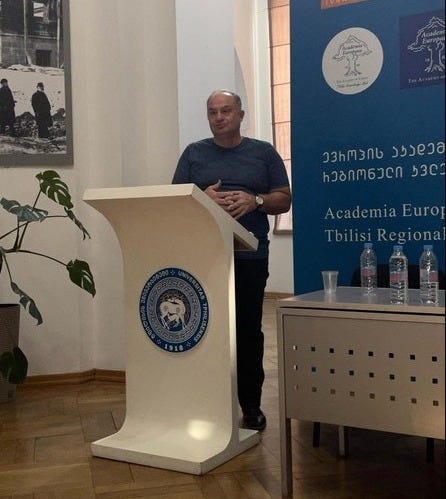
*Image: Merabi Chukhua, noted Georgian ethnographic expert on the North Caucasus
Chukhua and his “On the Behalf of Georgia Party” is part of a broader organized opposition movement inside Georgia whose goal is a peaceful change in the current government controlled by the Georgian Dream (GD) party. Chukhua asserted that “I have always felt the interest of the Russian special services behind this effort to shut down the CCC and I have even been declared persona non grata in Russia.” Not surprisingly, Russian authorities have listed the CCC as among the five most hostile organizations to Russia.
In 2014, at the invitation of Glen E. Howard, a North Caucasus expert living in the US who previously worked for Dr. Zbigniew Brzezinski, Chukhua and other CCC leaders visited the United States to participate in a conference on the impact of the 2014 Sochi Winter Olympics on the North Caucasus. Merab Chukhua spoke at several Washington, D.C. based thinktanks, including the Carnegie Center.
Chukhua emphasized in his interview with the author that the creation and functioning of the CCC in Tbilisi was welcomed and positively received in Abkhazia and the North Caucasus due to its soft power impact on the region. For example, many Circassians who fought in Abkhazia against Georgia from 1992 to 1993 spoke in favor of Georgian-Abkhaz reconciliation after these efforts began. In fact, one of the leaders of the Circassian movement, Ibrahim Yaganov, who fought in the 1992-1993 Georgian-Abkhaz war on the side of Russian-backed Abkhaz forces, and was awarded the title “Hero of Abkhazia” radically changed his views on Abkhazia, its relations with Russia, and the prospects for resolving the Georgian-Abkhaz conflict.
In particular, Yaganov believes that Abkhazia has failed as an independent state and risks eventually being fully absorbed by Russia. According to Yaganov, the only solution is for Abkhazia to reach out and come to an agreement with Georgia and reconcile their differences with Tbilisi. Yaganov’s changed views about Georgia is emblematic of the lasting effects of Georgian soft power diplomacy toward the Circassians which significantly altered some of the negative stereotypes created by the Kremlin about Georgia in the decades after the Abkhaz war.
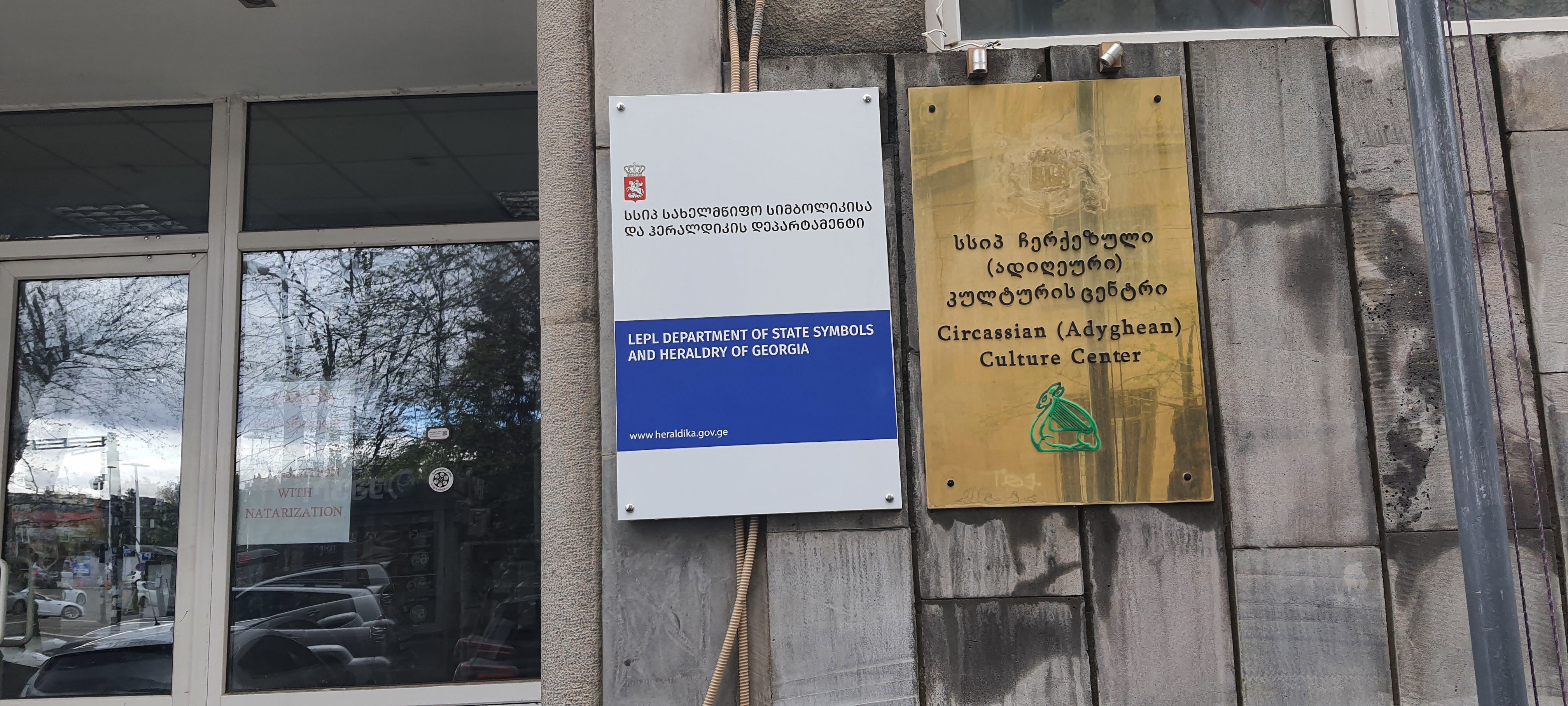
*The picture above is of the Circassian Culture Center in Tbilisi
The Circassian Cultural Center, which the Georgian Dream party is moving closer to permanently shutting down, officially opened on February 16, 2012, in the building of the Ministry of Culture and Monument Protection of Georgia in Tbilisi. The opening ceremony was attended by Mirza (Papuna) Davitaia, State Minister of Georgia for Diaspora Issues; Nugzar Tsiklauri, Chairman of the Parliamentary Committee on Diaspora Issues; David Tskhadadze, Deputy Minister of Culture of Georgia; and several renowned Caucasus scholars and special guests from the Caucasus and abroad. “The Georgian state extended a helping hand to the Circassian people by creating one of the main centers of Caucasian culture in Tbilisi so that they can preserve their language, culture, and identity. This is difficult for them in exile,” Davitaia stated during a recent interview.
According to Davitaia, the CCC’s purpose is to research and popularize the history and culture of the Circassians, as well as other Caucasian peoples. “Protecting the cultural heritage of the Caucasian peoples is one of the priorities of the Georgian state. Restoring Georgia’s functions as a regional leader and political center is also a priority for Georgia. The creation of this center was another step in this direction,” Tsiklauri said during a recent interview. In attendance at the time of the opening of the center was Iyad Youghar, President of the Circassian Cultural Center based in Patterson, New Jersey. Patterson is home to over 7,000 Circassian Americans and remains one of the largest bastions of support for the Circassians in North America.
During that ceremony, Youghar said: “It is gratifying that the Circassian Cultural Center has opened in Georgia. This center will facilitate the study and popularization of the history and culture of the Circassians and the Caucasian peoples in general, which is very important. This will deepen relations between our peoples.” In a recent interview with the author regarding the looming closure of the CCC, Youghar said he was “deeply concerned about the closure of the Center” and noted that “the CCC in Georgia under Chukhua’s leadership had been immensely helpful to many Syrian Circassians fleeing the Syrian Civil War, who had sought refugee status and relocation to Georgia when Russian officials repeatedly blocked their efforts to relocate back to their homeland in the North Caucasus. Circassians will be immensely grateful to Chukhua’s efforts and those of Georgia in helping Circassian refugees from Syria.“
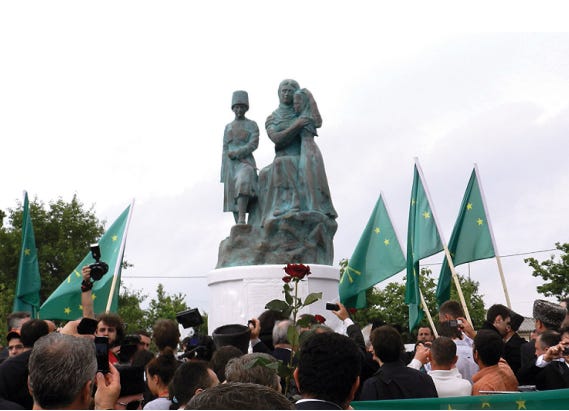
*Picture Above: Circassian monument in Anaklia, Georgia, site of Russian deportations.
Georgia’s Circassian Memorial in Anaklia
A year after becoming the first country to recognize the 19th-century massacre and deportations of Circassians by Tsarist Russia as “genocide,” Georgia opened a monument in 2013 dedicated to the victims of those tragic events almost 150 years ago in Anaklia on the Black Sea coast. The site is near the administrative border of Abkhazia, known as the “Memorial for the Victims of the Circassian Genocide.” Papuna Davitaia. The Georgian minister in charge of diaspora issues attended the ceremony in 2013 to unveil the monument dedicated to the deportation of Circassians.
May 21st remains a highly symbolic event to Circassians because it is the day when, in 1864, the Russian Empire declared its victory in its decades-long war against the North Caucasus peoples, removing the Circassians, who were the last peoples in the region to resist Russian rule, having defeated the Imam Shamyl and his Chechen and Dagestani followers several years before. May 21st is considered by Circassians to be their day of commemoration as victims of that deportation. Each year from May 21st to 22nd, a number of events are held in Anaklia to mark that day, including a conference to discuss the results of the recognition of the Circassians genocide by Georgia.
“This [monument] is an important step towards the Caucasian solidarity,” Papuna Davitaia, the Georgian state minister for diaspora issues, said, adding that the Georgian state was now capable to carry out its Caucasian policy and engage with the peoples of the North Caucasus. May 21st is also marked in Georgia’s breakaway region of Abkhazia as the Day of Remembrance of the Caucasian War as well. Abkhaz leader, Alexander Ankvab, took part in a wreath-laying ceremony at the monument to the Muhajirs – those Muslim Abkhazians who were forcibly deported to the Ottoman Empire in the 19th century.
Moscow has intensely monitored the Georgian-Circassian dialogue and often tried to interfere in this process, especially after the change of power in Georgia in 2012 and the formation of a new government led by the Georgian billionaire Bidzina Ivanishvili and his Georgian Dream (GD) party. In an interview on April 8, Paata Zakareishvili the former State Minister of Georgia for Reconciliation and Civic Equality (2012 to 2016), believes that at various diplomatic levels, Russian officials have demanded that Tbilisi disavow its recognition of the Circassian genocide. However, the Georgian parliament cannot make such a decision because it would create a major backlash of discontent from its neighbors in the North Caucasus.
Zakareishvili pointed out during a recent interview that “as we see now, the Georgian authorities are acting in '“small steps,” and with these ‘small steps,” such as ‘“changing the status of the Circassian Cultural Center, the Georgian government is clearly sending a message of loyalty to Moscow.” He noted further, “Georgia no longer cooperates with the peoples of the North Caucasus. Delegations from Caucasian peoples no longer travel to Tbilisi. The parliamentary committee on relations with the peoples of the North Caucasus has been liquidated, as well as the Mir TV Company, which previously broadcast news and cultural programming to the North Caucasus” Mir (which means peace in Russian), aired programs in the three principal languages of the region: Cherkess (Circassian), Chechen and Avar languages, the former state minister underscored.
When he was in office from 2012 to 2016, Zakareishvili noted that “we financed the studies of students from the North Caucasus at Georgian universities.” Paata Zakareishvili calls relations with the peoples of the North Caucasus “very important.” Even during Soviet times, he pointed out, many Caucasians, including Circassians, came to Tbilisi to study because of the attractiveness of the Georgian capital, which was widely regarded as a center of higher learning and education in the Caucasus. Today, however, the Georgian capital has lost its status as a “center of attraction” for the North Caucasians, and their only opportunities for higher education lie in Moscow, which is often closed to those seeking opportunities to study from outside the Russian capital. Regardless, Zakareishvili remains confident that the peoples of the North Caucasus will remember their identity, and the restoration of relations between Georgia and the Circassians depends on Ukraine’s victory in its war against Russia.
Despite the GD ruling party’s support for Moscow, only Georgia and Ukraine have recognized the Circassian genocide. But more recently, a third country, Lithuania, is joining the ranks of former captive nations (the first in the Baltics) to consider recognition of the Circassian genocide, creating new momentum and support from among the former captive nations of the Soviet Union. No other country, including those with a Circassian population, has made such a decision, fearing it might provoke anger from Moscow. This precedent is crucial because it creates the conditions for Circassians to fight for their rights and historical truth.
Outlook
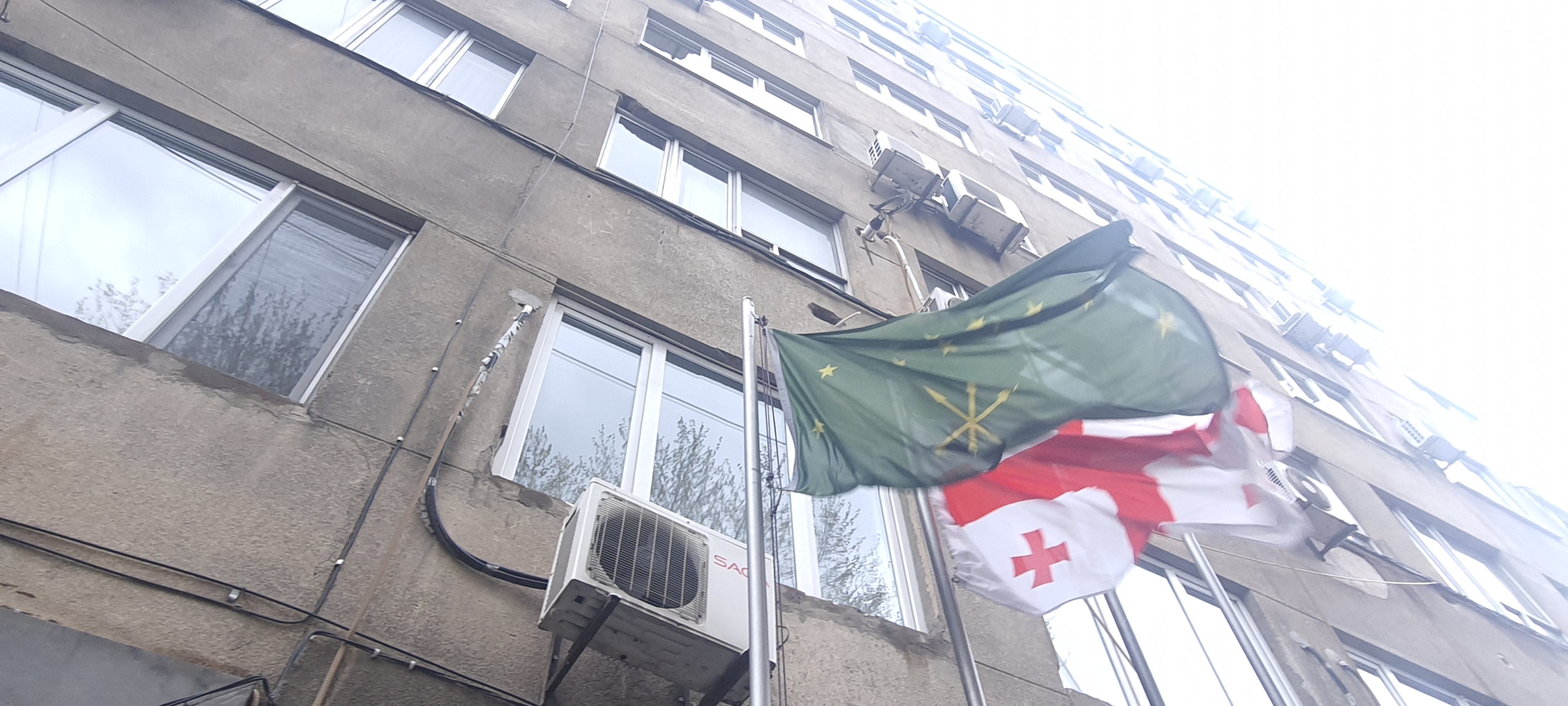
Georgian society continues to maintain a strong amount of affinity for the Circassians. This, too, is a historical tradition. Perhaps for this reason, despite the CCC’s change in status, its office in the Georgian Ministry of Culture has not yet been fully closed. A plaque with the CCC inscription still hangs on the wall outside the main building, where the Georgian and Circassian flags continue to fly.
While the looming closure of the Circassian Cultural Center could be viewed as a setback to the Circassians, noted Caucasus expert Paul Goble recently emphasized that the Circassian movement has achieved several major milestones in the past decade, notably: “What makes this change so important is that Circassians both in the homeland and in the diaspora have invested great importance in Georgia’s support both in the opening of the Center and recognition of the genocide in 1864. Anything which appears to be backsliding from that is thus not surprisingly viewed as being even more significant than it may ultimately prove to be.”
About the Author:
Giorgi Lebanidze is a Georgian journalist and expert based in Tbilisi, Georgia.
About the Saratoga Foundation
The Saratoga Foundation is a research and analysis organization focused on Eurasian security and geopolitical developments. Founded in 2023, the Foundation provides analysis on timely security issues shaping U.S. strategic interests related to the Eurasian chessboard.
Thank you for your support! Please remember that The Saratoga Foundation is a non-profit 501(c)(3) organization. Your donations are fully tax-deductible. If you seek to support The Saratoga Foundation, you can make a one-time donation by clicking on the PayPal link below! You can also subscribe to our website to support our work.
https://www.paypal.com/donate/?hosted_button_id=XFCZDX6YVTVKA