
by Vusal Guliyev
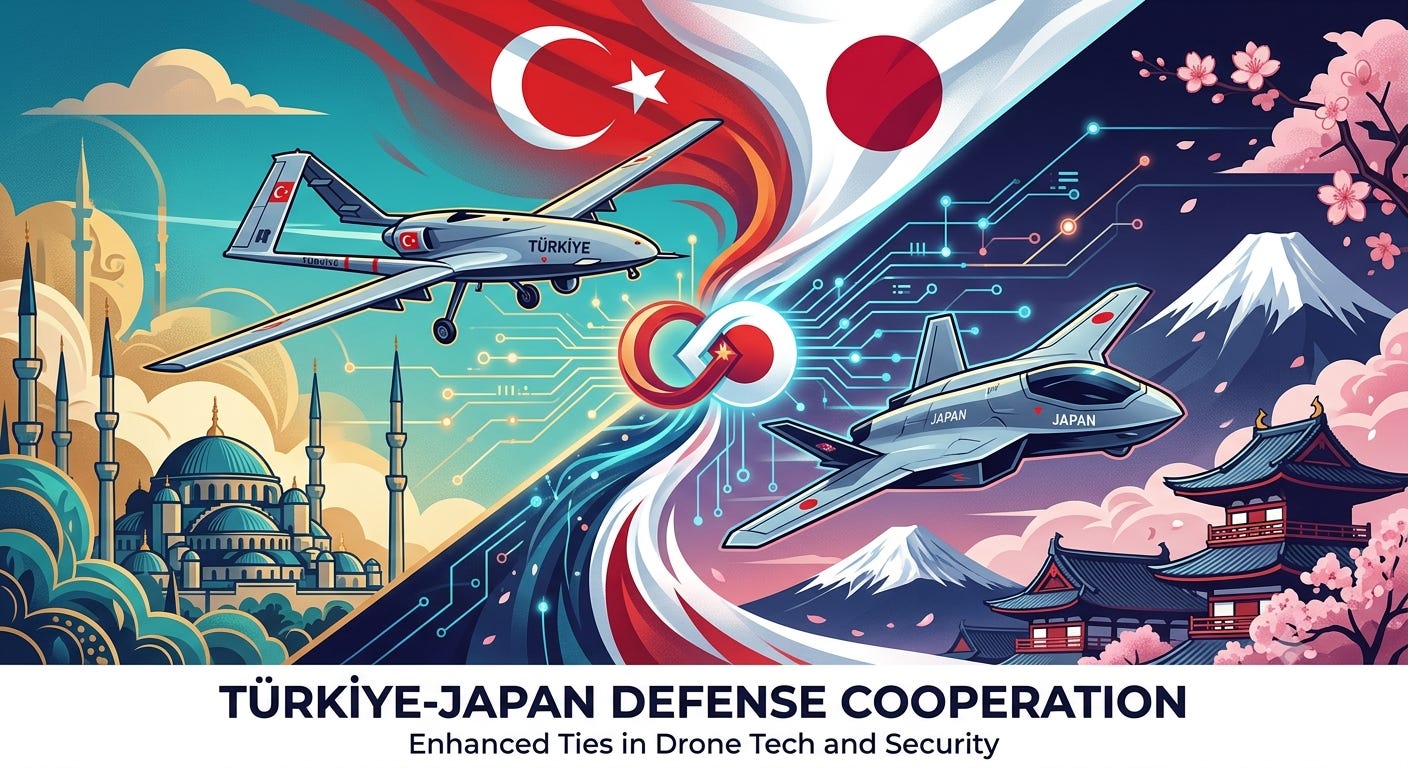
On May 30, 2026, Turkish Foreign Minister Hakan Fidan signaled a potentially significant turn in Türkiye–Japan defense relations when he told Nikkei Asia that Ankara sees considerable potential for cooperation with Tokyo in unmanned aerial systems (UAS). Fidan highlighted prospects for joint development and co-production, arguing that the two countries possess complementary technological strengths that could create mutually beneficial opportunities. His remarks came amid a broader intensification of defense contacts between Türkiye and Japan, including high-level ministerial exchanges, visits by Japanese officials to Turkish defense companies, and growing Japanese interest in combat-tested Turkish unmanned systems.
Before Hakan Fidan’s recent remarks, former Turkish Foreign Minister Mevlüt Çavuşoğlu had previously signaled Ankara’s interest in strengthening defense cooperation with Tokyo, laying an important foundation for the closer Türkiye–Japan partnership that is now taking shape. Speaking at a press conference in Tokyo in September 2022, Çavuşoğlu stated that Türkiye saw significant potential for deepening ties with Japan and expressed hope that Turkish defense companies would eventually be able to export armed drones to the Japanese market. He also noted that several Asian countries, particularly Malaysia and Indonesia, had already demonstrated a strong interest in Türkiye’s defense industry
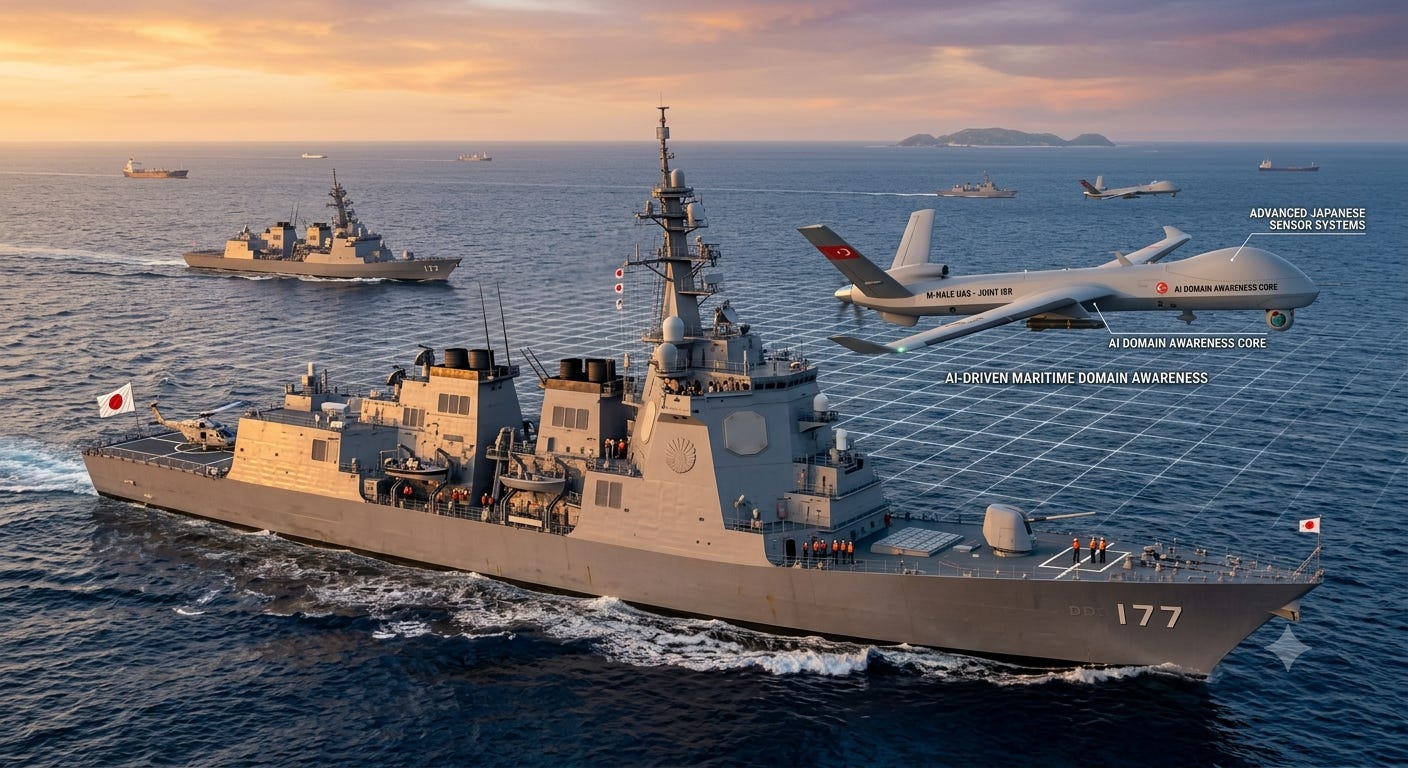
The growing momentum behind Türkiye–Japan defense cooperation was further demonstrated on May 6, 2026, when the two countries held the first-ever Japan–Türkiye Defense Industry Cooperation Day on the sidelines of the SAHA 2026 International Defence and Aerospace Exhibition in Istanbul. During the event, Japan’s Acquisition, Technology and Logistics Agency (ATLA) and Türkiye’s Presidency of Defense Industries (SSB) signed a Letter of Intent aimed at establishing a working-level framework for deeper collaboration in defense equipment and technology. The gathering brought together approximately 40 Turkish and Japanese defense companies and drone manufacturers to explore opportunities for joint research, technology transfer, co-development, and industrial partnerships.
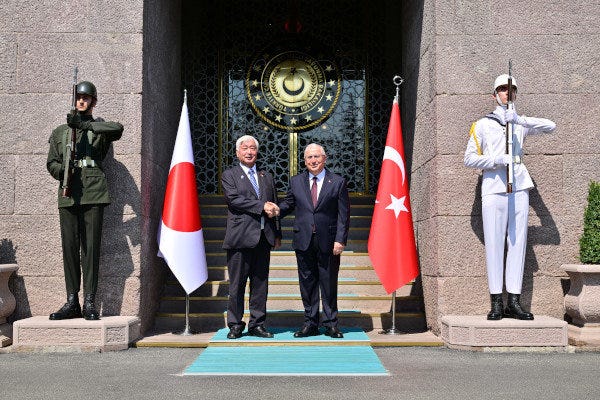
*Image above: Japanese Defense Minister Gen Nakatani meeting with Turkish Defense Minister Yaşar Güler
Ministerial-level defense engagement received a significant boost in mid-August 2025 when Japanese Defense Minister Gen Nakatani became the first Japanese defense minister to pay an official visit to Türkiye. During his meetings with Turkish Defense Minister Yaşar Güler in Ankara, the two sides agreed to deepen cooperation in defense industries and technology and launch consultations between senior defense officials. Nakatani also visited leading Turkish defense companies and facilities, including Baykar, Istanbul Naval Shipyard, and Turkish Aerospace Industries (TUSAŞ).
Later, in January 2026, Turkish Defense Minister Yaşar Güler highlighted the growing potential of Türkiye–Japan defense-industrial cooperation, describing it as a partnership that could eventually reach a “strategic level.” In an interview with Japan’s Kyodo News, Güler emphasized that combining Japan’s advanced technological capabilities with Türkiye’s production capacity and operational experience could create significant opportunities for collaboration in defense technologies. He also pointed to Turkish unmanned systems, including the ANKA and Bayraktar platforms, as cost-effective and operationally proven solutions that could contribute to Japan’s efforts to modernize its defense ecosystem.

Tokyo’s growing interest in Turkish drone technologies is closely linked to its rapidly changing security environment. Japan is undergoing a rapid transformation from a traditionally pacifist economic power into a more assertive military and geopolitical actor amid intensifying strategic competition in the Indo-Pacific. The strategic vision first advanced by former Prime Minister Shinzo Abe is now being further expanded under Prime Minister Sanae Takaichi through increased defense spending, the acquisition of counterstrike capabilities, enhanced military diplomacy, and historic reforms to Japan’s arms export policy. Recent developments—including the expansion of defense cooperation with the Philippines and Australia, as well as agreements on combat drone cooperation with Ukraine—underscore Tokyo’s transition toward a more proactive and strategically assertive security posture.
As part of this transformation, Japan has invested heavily in emerging defense technologies, including artificial intelligence, autonomous systems, space capabilities, and unmanned platforms. However, despite possessing one of the world’s most advanced technological sectors, Japan’s domestic defense industry has faced challenges in developing cost-effective and combat-proven unmanned systems. At the same time, Tokyo is grappling with a shrinking population and persistent manpower shortages within the Self-Defense Forces, increasing the need for force-multiplying technologies that can reduce reliance on personnel-intensive operations.
In this context, Turkish unmanned aerial systems offer a potentially attractive solution. They combine relatively affordable production costs with extensive operational experience across multiple conflict zones, providing unmanned capabilities that have already demonstrated effectiveness under real battlefield conditions.
Türkiye’s Battle-Tested Drones
The international reputation of Turkish unmanned systems has been significantly enhanced by their performance in several recent conflicts. During the 2020 Second Karabakh War, Turkish-made drones operated by Azerbaijan played an important role in improving battlefield reconnaissance, target acquisition, and precision-strike capabilities. Their effectiveness contributed to Azerbaijan’s military successes and attracted considerable attention from military planners worldwide.
Similarly, during the initial stages of Russia’s full-scale invasion of Ukraine in 2022, Turkish drones gained international recognition for their ability to support intelligence gathering, surveillance missions, and strike operations against Russian military assets. These experiences have transformed Türkiye into one of the world’s leading drone exporters and elevated its status within the global defense industry. Turkish manufacturers have demonstrated an ability to rapidly innovate, adapt to battlefield lessons, and produce systems that offer an effective balance between capability and affordability
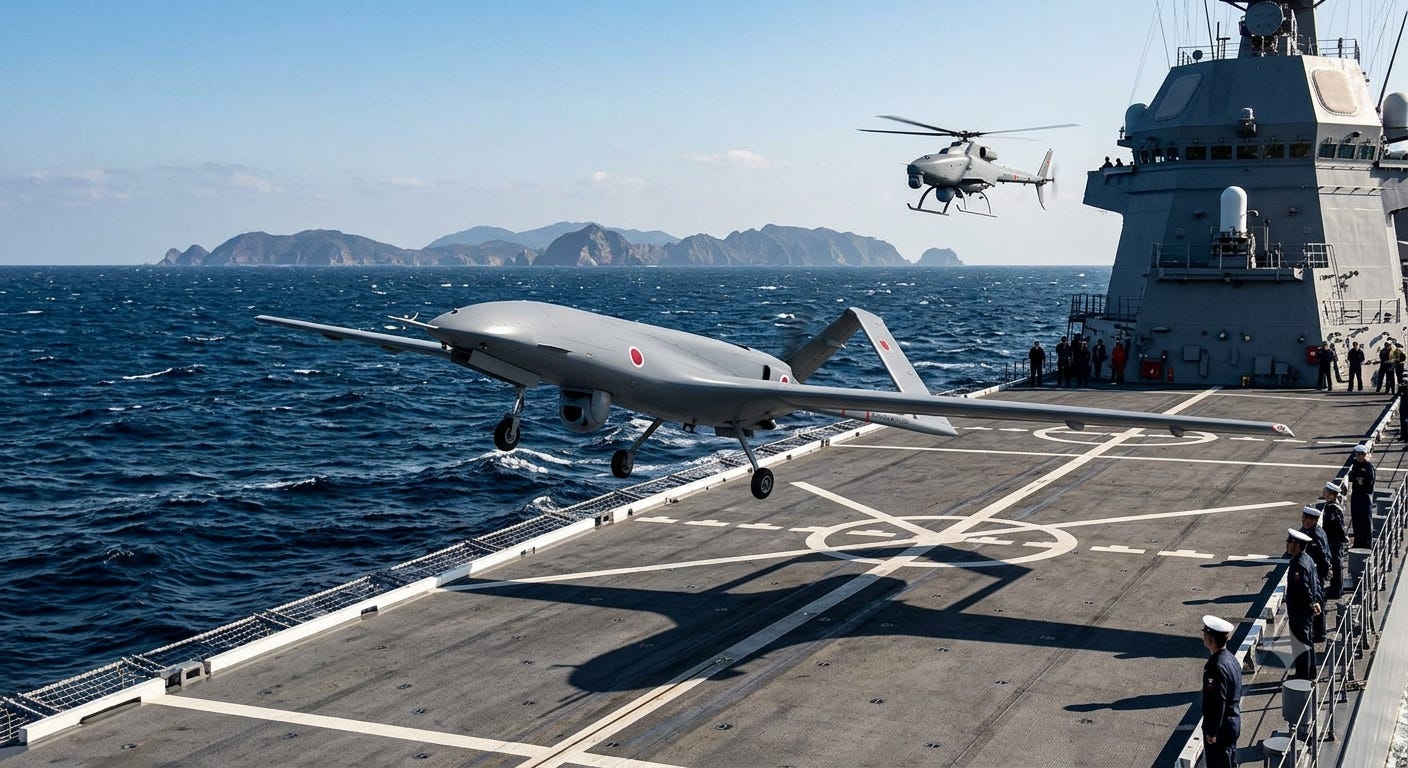
As Türkiye’s defense industry matures, Ankara is increasingly seeking partnerships that move beyond traditional export relationships. Ankara has strong incentives to deepen defense cooperation with Tokyo. Cooperation with Japan offers access to one of the world’s most sophisticated technological ecosystems, providing opportunities to integrate advanced Japanese expertise in areas such as sensors, artificial intelligence, robotics, semiconductors, advanced materials, and precision manufacturing. Such cooperation could help accelerate the development of next-generation unmanned systems while enhancing the competitiveness of both countries’ defense industries.
Several areas appear particularly promising for future collaboration. One potential avenue involves intelligence, surveillance, and reconnaissance (ISR) platforms designed for maritime operations. As an island nation with extensive maritime responsibilities, Japan requires persistent surveillance capabilities to monitor vast stretches of surrounding waters. Turkish expertise in unmanned aerial systems could complement Japanese sensor technologies and maritime surveillance infrastructure, creating more effective platforms for maritime domain awareness.
Artificial intelligence and autonomous systems offer another promising field for cooperation. The future of unmanned warfare is increasingly shaped not only by platform performance but also by software, machine learning, and autonomous decision-support systems. In April 2026, Japan’s Ground Self-Defense Force (GSDF) established the Unmanned Defense Capability Promotion Office and the Unmanned Systems Office as part of a broader effort to integrate unmanned and AI-enabled technologies into military operations. Japan’s strengths in robotics and advanced computing could complement Türkiye’s experience in deploying unmanned systems under operational conditions, potentially leading to the development of more sophisticated autonomous platforms capable of operating in complex environments. On the other hand, expanded cooperation in unmanned defense systems could help Tokyo adapt its defense posture to the challenges posed by a shrinking population.
Beyond bilateral considerations, the emerging partnership carries broader regional implications. In East Asia and the Indo-Pacific, the potential integration of Turkish drone technologies into Japan’s defense architecture could contribute to Tokyo’s efforts to strengthen its Pacific defense. This objective is reflected in the establishment of the Pacific Defense Initiative Office by Japan’s Ministry of Defense in April 2026, a move that underscores Tokyo’s growing focus on strengthening its defense ecosystem through enhanced operational coordination, advanced military technologies, and more integrated deterrence strategies. Greater access to advanced drone capabilities would strengthen Japan’s ability to monitor and respond to emerging threats while reducing operational burdens on manned platforms.
For Türkiye, expanding defense cooperation with Japan would further demonstrate its transformation from a regional security actor into a globally connected defense-industrial power. Ankara has already established defense partnerships across the Middle East, Central Asia, Africa, and Europe. A deeper relationship with Japan would also extend Türkiye’s strategic reach into Indo-Pacific defense markets and reinforce its growing reputation as a supplier of advanced military technologies.
Outlook
While defense cooperation between the two countries has historically remained limited, changing geopolitical realities and evolving security priorities are creating new incentives for collaboration. The emerging drone partnership reflects a broader convergence between two technologically capable middle powers seeking to enhance their strategic autonomy, strengthen their defense-industrial bases, and respond to increasingly complex regional security challenges. The strategic rationale for closer Türkiye–Japan collaboration appears increasingly compelling. Both countries face evolving security environments that require innovative technological solutions, and both seek to strengthen their defense-industrial capabilities while reducing excessive dependence on external suppliers. The convergence of these interests provides a strong foundation for expanded cooperation in unmanned systems and related technologies.
In sum, Japan possesses advanced expertise in sensors, communications systems, materials, and electronics, whereas Türkiye offers extensive operational experience and internationally competitive unmanned platforms. If successfully institutionalized, cooperation in drone and counter-drone systems could become one of the most important pillars of a broader Türkiye–Japan strategic partnership and a noteworthy example of how middle powers are adapting to the changing dynamics of global security and technological competition.
About the Author:
Vusal Guliyev is a frequent contributor to The Saratoga Foundation. He is the Indo-Pacific & Eurasian Affairs Analyst at the Baku-based Center of Analysis of International Relations (AIR Center). Mr. Guliyev’s professional and academic experience spans leading research institutions, think tanks, and fellowship programs across Azerbaijan, Türkiye, China, Japan, South Korea, and the United States.
Thank you for your support! Please remember that The Saratoga Foundation is a non-profit 501(c)(3) organization. Your donations are fully tax-deductible. If you seek to support The Saratoga Foundation, you can make a one-time donation by clicking on the PayPal link below! You can also subscribe to our website to support our work.
https://www.paypal.com/donate/?hosted_button_id=XFCZDX6YVTVKA