
War-related drone strikes by Ukraine are increasingly reaching Russia’s Northwest Caucasus, underscoring the growing vulnerability of the historic Circassian homeland even as Moscow intensifies efforts to win over the global Circassian diaspora estimated to be 5 to 7 million.
On November 10, a residential building in the town of Novaya Adygea, located in the republic of Adygea, caught fire during a reported Ukrainian UAV attack, according to an OSINT analysis. Residents of the affected residential complex reported seeing a helicopter flying over the area and hearing machine-gun fire. Shortly afterward, video emerged showing the roof of one of the buildings on fire. Residents said the blaze was caused by drone debris falling onto the building. The complex sits across the Kuban River from Krasnodar, just a few minutes’ drive from the city. Preliminary reports indicate that no one was injured. However, residents said some buildings sustained broken windows, with the damage appearing localized and resembling bullet impacts.
Previously, on the night of November 4, Ukrainian drones struck an Ozon logistics center in Adygeysk, also in Adygea. Ozon is one of Russia’s largest e-commerce companies, often described as the Russian equivalent of Amazon. The company said all employees were evacuated and there were no reported injuries. The facility is one of Southern Russia’s largest logistics hubs. At its opening in 2024, Adygea’s authorities stated that the center had an area of more than 100,000 square meters (about 1 million square feet) and would employ nearly 2,000 people.
However, it is not always Ukrainian drones that damage this Circassian republic. In January 2026, an explosion struck a residential complex in Novaya Adygea, killing one person and injuring 13 others. Murat Kumpilov, head of Adygea, said the building had been attacked by a Ukrainian drone. For example, one OSINT group’s analysis of eyewitness videos concluded that the building most likely was struck by a Russian air-defense missile. Later, another investigative group geolocated an S-300/400 air-defense position in Adygea and said it was the launch site of the missile that struck the complex on January 20, 2026.
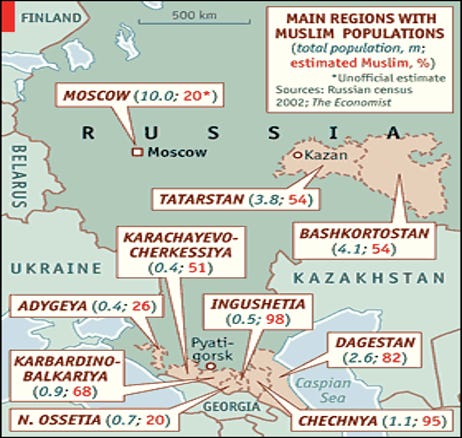
Adygea is less than 300 miles away from the battlegrounds in Ukraine. Since Ukraine has attacked multiple Russian targets hundreds of miles into Russia, Adygea, as well as other North Caucasian republics, is well within the range of Ukrainian aerial drone strikes. Adygea is the closest to the Ukrainian war theater. In addition, it is quite close to the Krasnodar region, which is packed with dozens of potential military targets for Ukrainian drone attacks, including Putin’s billion-dollar palace at Gelendzhik.
Moscow Renews its Outreach to Circassian Diaspora
Even as the conflict encroaches on Adygea—the westernmost Circassian republic—the Kremlin has stepped up soft-power outreach to Circassian communities abroad, seeking to reinforce historical ties and blunt growing anti-Moscow sentiment in the volatile North Caucasus.
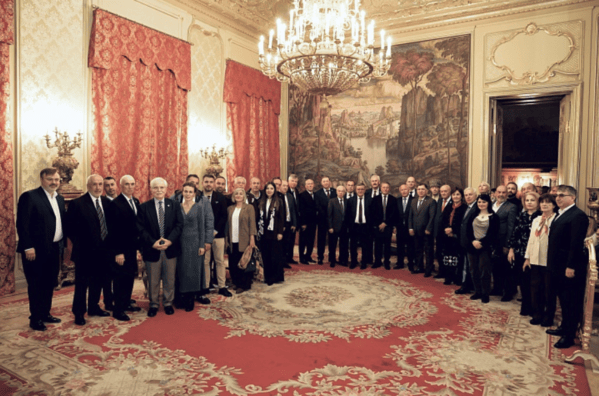
A delegation of 40 representatives from Circassian diaspora communities abroad recently took part in a Russian government-sponsored familiarization tour under the “Russia - Land of Opportunity” program in late October 2026. The event was organized by Russian state agencies and the International Circassian Association (ICA), a Russian front organization controlled and operated by the Russian Federal Security Service (FSB). According to the ICA, the trip was designed to strengthen ties between diaspora Circassians and Russia. Russian Foreign Minister Sergei Lavrov and Igor Chaika, head of Russia’s state cultural outreach agency Rossotrudnichestvo, sent greetings to the participants.
The ICA-sponsored delegation visited Moscow, Kabardino-Balkaria, and Karachay-Cherkessia, touring historical, cultural, educational, and religious sites connected to Circassian heritage. Activities included visits to museums, universities, memorials, cultural centers, government institutions, and tourist attractions, as well as roundtables on Circassian history, language preservation, and cooperation with diaspora communities.
ICA organizers emphasized the historical connection between Circassians and Russia, the promotion of Circassian culture and languages, educational opportunities, and strengthening engagement between Russia and Circassian communities in countries such as Syria, Turkey, Jordan, Israel, and Germany.
Not all Circassian diaspora groups were happy with the Russian-backed visit. The Circassian Associations Federation (CAF) in Turkey, which is home to 90 percent of the diaspora, issued a statement strongly criticizing the Moscow meeting held on October 28. Entitled “Through the Centuries, Hand in Hand with Russia, Gaining Honor and Glory.” The CAF statement clearly expressed dissatisfaction with the way Moscow whitewashed Russian involvement in the 19th-century deportations of the Circassians and the way ICA brought together Russian officials and carefully selected representatives of Circassian organizations from the homeland and diaspora.
According to CAF, the event was not merely a cultural gathering but part of a broader effort by Russia to incorporate the Circassian diaspora into its official historical and political narrative. The statement rejected the portrayal of Circassian-Russian relations as a story of voluntary unity beginning in the 16th century, arguing instead that Circassians experienced a long war, genocide, and mass exile.
The organization also challenged Russian claims that Circassian language and culture are being adequately protected, pointing to educational reforms that reduced mandatory instruction in local languages. It also criticized diaspora organizations that participated in the meeting, arguing that they cannot speak on behalf of all Circassians or declare historical reconciliation. The CAF’s statement called for recognition of the Circassian genocide and exile, concrete legal protections for language and cultural rights, and greater transparency from organizations that engage with Russian authorities. The Circassian organization stated that while it supports dialogue, it also rejects perceived attempts to rewrite history and use diaspora institutions to advance Russian state interests.
Outlook
With the increase in Ukrainian drone strikes against Russian military targets in Adygea, Moscow appears to be panicking that Circassians in the North Caucasus and their powerful overseas diaspora are increasing their opposition to the Ukraine war. This was particularly evident in the recent death of Nurdin Qaraf, a Circassian repatriate from Syria whose family relocated to the North Caucasus. Qaraf was forced into the Russian army and later died, causing his father, Nurdin Qaraf, to launch a campaign in Adygea to search for his son, which sparked an outpouring of public support among Circassians both in the North Caucasus and overseas. Circassian mistrust and fears of forced Russian military conscription have been exacerbated by the threatening behavior of the Russian security services against the Qaraf family.
Cases of non-Russian nationalities refusing to fight in the Ukraine war inside Russia are not confined to just the North Caucasus. Across Russia’s non-Slavic republics, years of disproportionate battlefield deaths and coercive conscription are rapidly exhausting the pool of local manpower in these regions. In the non-Russian region of Bashkortostan, for example, it was recently revealed that the Middle Volga republic has suffered the highest number of absolute losses of residents due to the war in Ukraine. At the beginning of 2023, the republic ranked as one of the top five regions in terms of the number of combat deaths, and in September 2024 it rose to first place on the list of Russian regions with 11,990 confirmed war dead as of November 2026. Bashkortostan recently became the first region in Russia to officially admit in its budget documents that fewer residents are signing military contracts, forcing the non-Russian republic to slash 2027–2028 sign-on bonus allocations by 1 billion rubles ($12.2 million).
In light of these developments, Russian mobilization efforts across the board are increasingly heading toward a dead end as Moscow is simply running out of personnel to throw into the war. Non-Russian nationalities like the Circassians and Bashkirs are paying for it. Mindful of these developments, critics and diaspora activists among the Circassians point to a stark contradiction between Moscow’s carefully curated cultural outreach and its domestic policies in the North Caucasus.
Despite an estimated 5-7 million Circassians living in Turkey and the Middle East, Russian authorities tightly restrict repatriation and diaspora business investment in their ancestral homeland in the North Caucasus, which consists of three non-Russian republics: Adygea, Kabardino-Balkaria, and Karachai-Cherkessk. Circassian activists in these regions have long accused the Russian security services of harassing and persecuting returnees. While the Kremlin frames the ICA-sponsored tours around cultural preservation, observers warn that Moscow’s renewed interest in foreign Circassian communities—particularly in the Middle East—could also serve broader geopolitical goals, including narrative control and even potential recruitment pools as the war in Ukraine drags on.
About the Author
Valery Dzutsati is a Fellow in Eurasian Affairs at The Saratoga Foundation and is an Assistant Professor of Political Science in the Department of Social Sciences at Augusta University. He received a Ph.D. in Political Science from Arizona State University in 2017 and is a long-time expert on Russia and the North Caucasus.
Thank you for your support! Please remember that The Saratoga Foundation is a non-profit 501(c)(3) organization. Your donations are fully tax-deductible. If you seek to support The Saratoga Foundation, you can donate by clicking on the PayPal link below! Alternatively, you can also choose to subscribe to our website to support our work.
https://www.paypal.com/donate/?hosted_button_id=XFCZDX6YVTVKA